


X-rays – a type of energy-carrying electromagnetic waves – were discovered in 1895 by Wilhelm Conrad Röntgen. For this breakthrough, the German physicist received the first Nobel Prize in Physics. Since then, X-rays have become widely used in medicine and many other fields of science.
By the mid-20th century, it was already known that X-rays also occur naturally in space. In 2002, Riccardo Giacconi received the Nobel Prize in Physics for discovering the first cosmic sources of X-ray radiation beyond the Solar System. For astronomers, however, the origin of this radiation is even more important than the radiation itself, as it reveals key information about the structure of the universe and the objects within it.
X-rays are produced by extreme phenomena deep within galaxies and galaxy clusters. They can be emitted in binary star systems, where hot matter is pulled onto a black hole or a neutron star. They also arise from the remnants of supernova explosions. And that is only part of the picture. Thanks to modern observational techniques, astronomers can now detect far more subtle signals from space, pointing to less violent sources. This has made it possible to identify entirely new objects in the cosmic landscape.

Polish space breakthroughs
Previously unknown sources of X-rays have recently been identified in the Magellanic Clouds. An international team of scientists led by Dr. Przemysław Mróz from the Astronomical Observatory of the University of Warsaw made the discovery using more than 30 years of observations collected within the OGLE project.
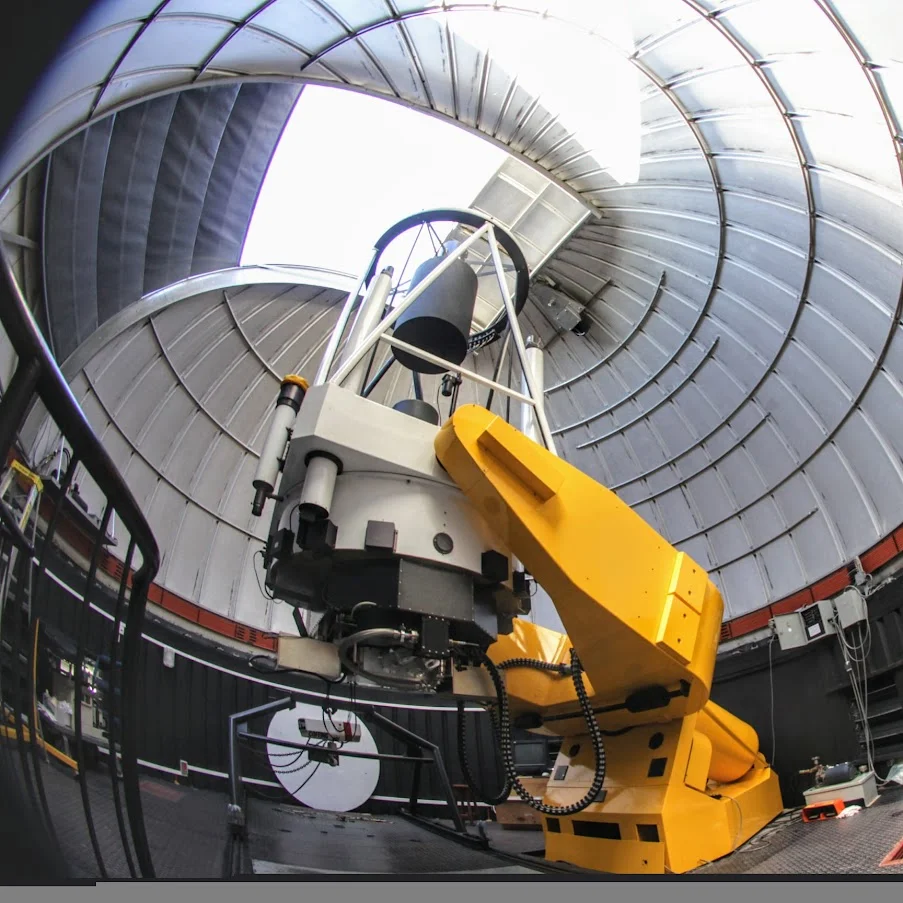
Led by Prof. Andrzej Udalski and run by the University of Warsaw, the Optical Gravitational Lensing Experiment (OGLE) uses a telescope at Las Campanas Observatory in Chile. Its primary mirror is 130 cm in diameter. For comparison, the Hubble Space Telescope has a 240 cm mirror, while the largest modern ground-based telescopes feature mirrors of around 10 meters. The Extremely Large Telescope (ELT), currently under construction, will have a 39-meter mirror.
The instrument used by the University of Warsaw team continuously monitors selected regions of the sky – the plane and center of the Milky Way, as well as two nearby galaxies, the Magellanic Clouds. This allows astronomers to detect a wide range of unusual cosmic events. As part of OGLE, the brightness of more than 2 billion stars is regularly measured, building one of the world’s largest databases of variable stars.
The Magellanic Clouds are close cosmic neighbors – satellite galaxies orbiting the Milky Way under its gravitational influence. Rich in diverse astronomical objects, they provide a unique laboratory for astrophysical research. Thanks to long-term photometric monitoring carried out within OGLE, researchers identified a group of objects showing unusual, repeating outbursts.
Follow-up observations of one of these sources using the Swift X-ray telescope revealed X-ray emission about 100 times stronger than the total luminosity of the Sun. Combined with earlier data from the Swift and Chandra X-ray observatories, astronomers have identified a new class of X-ray sources. In simple terms, Polish scientists have discovered previously unknown objects in space, which they have named “millinovae.”
“Every discovery of a new class of objects can lead to intriguing and significant insights. After all, no one had previously anticipated that such objects might exist. In the case of millinovae, it is crucial to understand the processes responsible for the X-ray emission we observe. There are several possible explanations, but only further observations can test them. To this end, my colleagues and I plan to carry out additional measurements using the most advanced X-ray telescopes, such as the European Space Agency’s XMM-Newton” explains Dr. Przemysław Mróz.

New celestial objects: Millinovae
Millinovae are objects about a thousand times fainter than classical novae, which briefly emit X-rays during outbursts. Unlike classical novae, these events are not linked to the ejection of matter from the system.
One theory suggests that millinovae are binary systems in which one star is a white dwarf – an extremely dense remnant of a Sun-like star – while the other star supplies it with matter. As gas from the companion star flows onto the white dwarf’s surface, it may produce long-lasting flares that generate X-ray emission.
Another hypothesis proposes that the X-rays result from thermonuclear processes on the surface of white dwarfs. In this scenario, a thin layer of hydrogen-rich gas heats up to several million degrees Celsius until ignition occurs, releasing X-rays.
“The explosion is not strong enough to eject the matter accumulated on the white dwarf’s surface. If that is the case, its mass would continue to increase. Eventually, it could exceed the maximum limit for white dwarfs – the so-called Chandrasekhar limit (about 1.4 solar masses) – at which point the star is completely disrupted in a Type Ia supernova explosion. These objects are crucial because they are used to measure distances in space. The challenge is that astronomers still do not know which systems actually end their lives as Type Ia supernovae, which raises questions about how precise these measurements really are,” Dr. Mróz says.
Cosmic lighthouses
Type Ia supernovae can be used to measure distances in the universe because their intrinsic luminosity is well understood. By comparing their observed brightness – as seen from Earth – with their intrinsic luminosity, scientists can determine how far away the explosion occurred. In cosmology, these events are known as “standard candles.”
Type Ia supernovae have already provided key insights into the accelerating expansion of the universe, a discovery recognized with the Nobel Prize in Physics in 2011. The identification of millinovae opens up entirely new directions in astrophysics, broadening research into stellar evolution and the origins of supernovae.
New observing programs are already being planned to study these phenomena in greater detail. One of the key instruments will be the Athena telescope – a next-generation X-ray observatory under development by the European Space Agency, scheduled for launch later this decade. Polish scientists and research institutions are also playing an important role in this mission.

Poles in Space
For years, the University of Warsaw’s Astronomical Observatory has been developing its own projects, such as OGLE, while also contributing to some of the world’s largest astronomical databases. It operates one of the most important optical telescopes in the Southern Hemisphere.
The discovery of millinovae – a completely new class of X-ray sources – is not only a breakthrough in studies of binary star evolution, but also an important step toward understanding the processes that lead to supernovae. These findings also help inspire the next generation of researchers, showing that world-class discoveries are possible in Poland as well, given strong collaboration, patience, and access to cutting-edge infrastructure.

The article was originally published in Polish on the Serwis Naukowy UW website on April 29, 2025.