
In western Georgia, on the Black Sea coast about 15 kilometers south of the seaside resort city of Batumi, lie the ruins of a Roman fort known in antiquity as Apsaros. Built around 2,000 years ago, it played a crucial strategic role on the eastern frontier of the Roman Empire. A maritime route leading to the Roman provinces in Asia Minor and to the Kingdom of Bosporus in the north also ran through the area surrounding the fort.
The name of the site is linked to Apsyrtos, a figure from Greek mythology. He was the son of the ruler of Colchis, a land that once stretched along the southeastern coast of the Black Sea. According to myth, his older sister Medea murdered him and dismembered his body to help her escape – together with her beloved Jason – from their father’s pursuing army. Apsyrtos was believed to be buried near the site where the remains of the fort now stand.
However, this remains a myth, and any search for the tomb of the Colchian prince would be futile. What can be found in the present-day village of Gonio, though, is tangible evidence that helps reconstruct the region’s history. A Polish-Georgian team led by Prof. Radosław Karasiewicz-Szczypiorski from the Polish Centre of Mediterranean Archaeology at the University of Warsaw and Dr. Lasha Aslanishvili from the Cultural Heritage Protection Agency of Ajara (with the Georgian team previously led by Prof. Shota Mamuladze of the Gonio-Apsaros Archaeological and Architectural Site) is working to uncover and study these fragments of the past.
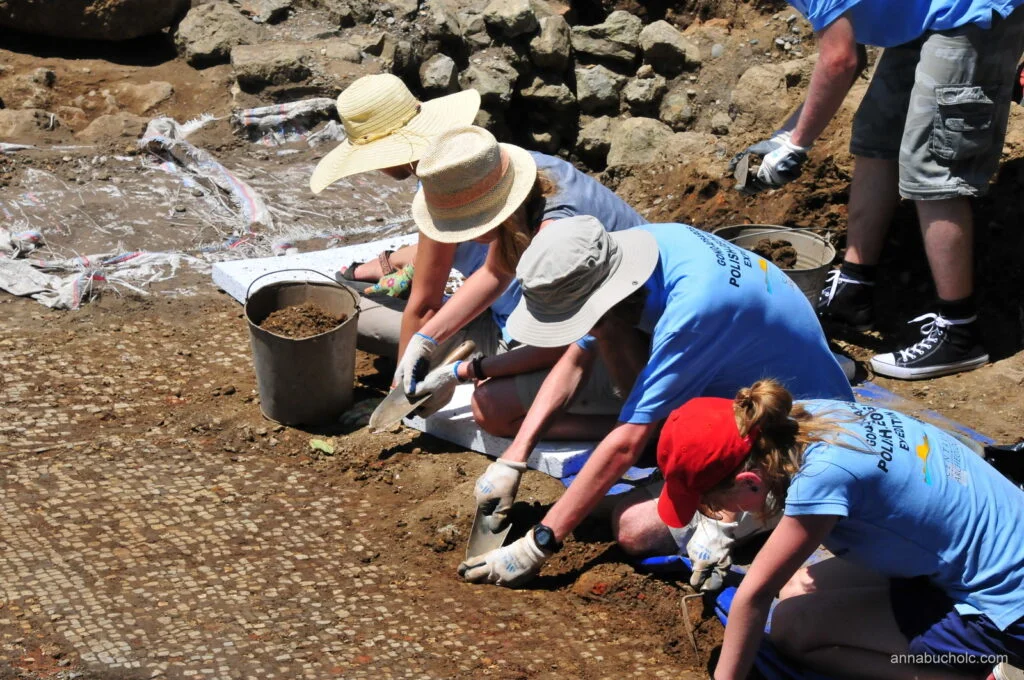
Since 2014, researchers from Poland and Georgia have been conducting joint excavations here. Each year brings new discoveries that allow them to reconstruct the Roman fort and its surroundings with increasing precision and to learn more about the people who once lived there.
The fort and winery
Gonio-Apsaros is today a major tourist attraction – not only because it is a site steeped in legend, or rather myth, but above all because of its remarkably well-preserved defensive walls dating to the Late Roman and Byzantine periods. Interestingly, however, Apsaros was not solely a military outpost; it also functioned as an important production site, as wine was made there.
This conclusion was reached by a Polish-Georgian research team based on discoveries made in 2022 and 2023. Archaeologists uncovered the remains of a wine press dating to the 2nd and 3rd centuries CE, most likely used to produce wine for the Roman army stationed in the area as well as for local inhabitants.
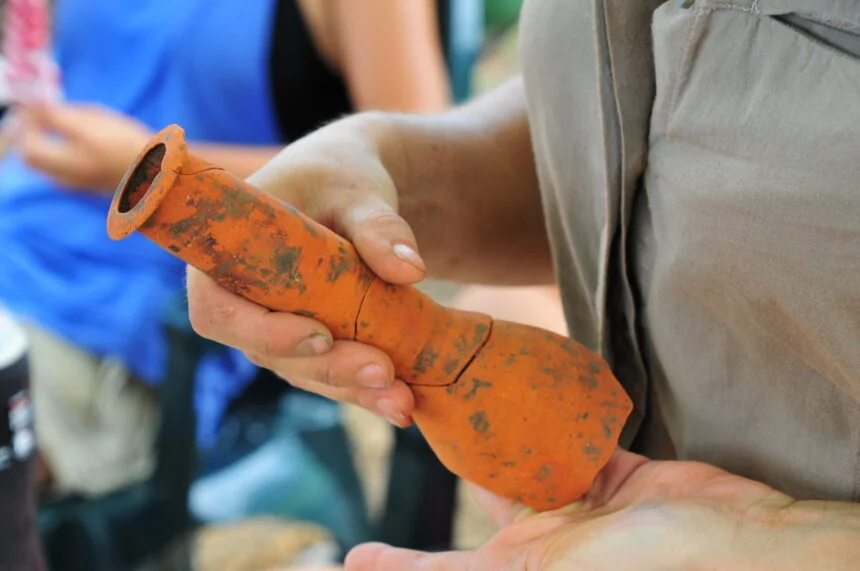
The wine press is not the only evidence of winemaking at Apsaros. In the central part of the fortress, pottery kilns were also discovered. One of them was found filled with broken amphorae. This kiln, along with others uncovered later, was used to produce Colchian amphorae intended for the transport of wine. The vessels left inside suggest that the firing process was abruptly interrupted.
As Prof. Radosław Karasiewicz-Szczypiorski notes, the number and size of the kilns indicate the scale of production. So far, four have been identified, with a fifth awaiting excavation. He emphasizes that the wine produced in the Apsaros area most likely did not reach markets beyond the Black Sea basin and was instead intended primarily for Roman troops stationed in the region.
Most importantly, Apsaros is the first scientifically confirmed site where Colchian amphorae were produced. Until now, no evidence of their manufacture – such as kilns – had been found, let alone kilns containing amphorae still inside.
Searching for the temple of Jupiter Dolichenus
The presence of Roman troops suggests that places of worship must also have existed in the area, dedicated to deities serving as patrons of soldiers. One such god, particularly popular among the Roman army, was Jupiter Dolichenus, not to be confused with Jupiter Capitolinus, whose cult was widespread across the Roman Empire.
The cult of Jupiter Dolichenus originated in the region of present-day Turkey and Syria. Although initially a local deity, he became especially popular among soldiers as a protector of warriors.
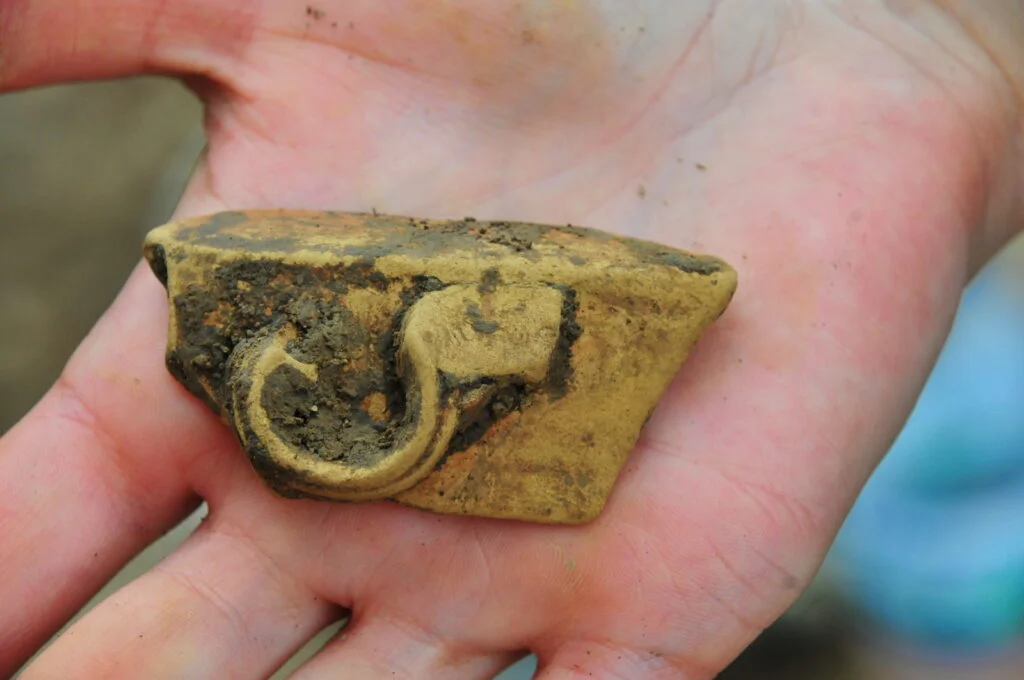
In 2024, a gold votive plaque inscribed in Greek and dedicated to Jupiter Dolichenus was discovered at Apsaros. It provides concrete evidence of the presence of his worshippers at the site. Researchers believe that the cult spread from Asia Minor toward the Danube region via Apsaros.
As Prof. Radosław Karasiewicz-Szczypiorski notes, temples of Jupiter Dolichenus – typically founded by soldiers – were usually located outside fortress walls, often within nearby civilian settlements. The Polish-Georgian research team is now continuing its search for such a sanctuary.
Like pieces of a puzzle, these discoveries are coming together. What comes next?
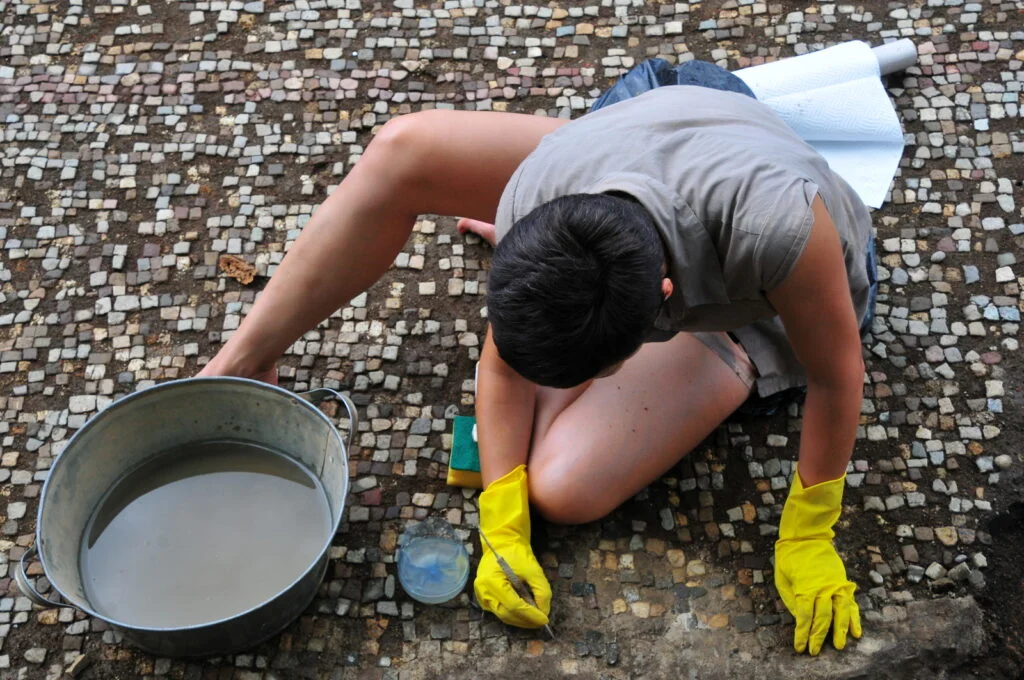
One of the most significant achievements of the research team led by Prof. Radosław Karasiewicz-Szczypiorski is the discovery of floor mosaics in the house of the garrison commander, known as the Arrian’s House. So far, the mosaics have not been made accessible to visitors, but this is expected to change in the future.
“The mosaics from the garrison commander’s house are currently awaiting conservation, as well as the construction of a protective pavilion that will allow them to be presented to the many tourists visiting the fort. The conservation program requires considerable time and significant financial resources,” notes Prof. Karasiewicz-Szczypiorski.
Meanwhile, a new field season is approaching. Will the team continue its excavations? The answer is yes.
“In 2025, we plan to excavate a section of the Roman fort’s moat, which we already know quite well thanks to non-invasive methods such as aerial LiDAR mapping, coring, and geophysical surveys,” explains the researcher.
The University of Warsaw’s partner in Georgia is the Adjara Cultural Heritage Protection Agency.

The article was originally published in Polish on the Serwis Naukowy UW website on April 24, 2025.