
From Paris to Warsaw: The making of a botanical archive
Herbaria have their roots in the Renaissance. As botany and medicine took shape in 16th-century Europe, scholars began systematically collecting plants to compare species and make identification easier. These dried specimens soon became an essential tool of the trade, complementing the descriptions and illustrations that had been the main way to study plants.
Over time, herbarium came to mean both the collection itself and the institution responsible for building, preserving, documenting, and sharing it. Today, more than 4,000 herbaria around the world hold hundreds of millions of specimens. The largest collections are in Leiden, Paris, and Kew. Poland has 37 herbaria, with the University of Warsaw Herbarium ranking second in size.
The Warsaw collection began in Paris – years before the University of Warsaw itself opened its doors. In 1813, botanist Michał Szubert, who would later become the first director of the University of Warsaw Botanical Garden, returned from Paris with roughly 7,000 plant specimens. He had collected them while working at the Museum of Natural History under the renowned botanist Antoine Laurent de Jussieu. Those specimens became the foundation of the Warsaw herbarium.
The collection continued to grow, fueled by fieldwork, scientific exchanges, and donations from researchers in Europe and around the world.
Then came World War II. The Germans seized the entire collection from Warsaw and planned to ship it deep into the Reich. But as the front collapsed and German institutions withdrew from Poland, the collection was abandoned in Cieplice, a spa town in Lower Silesia, southwestern Poland. It was later recovered and safely returned to Warsaw. After the war, the herbarium began growing again – and it has never stopped. Today, it holds around 750,000 specimens.
“The upward trend has continued,” says Dr. Kamil Frankiewicz of the University of Warsaw’s Faculty of Biology. “We still receive specimens from researchers at the University of Warsaw and from other institutions, who often donate the scientific work of their entire careers. So our Herbarium documents not only the past, but also biological diversity today.”
A specimen like a Sèvres standard
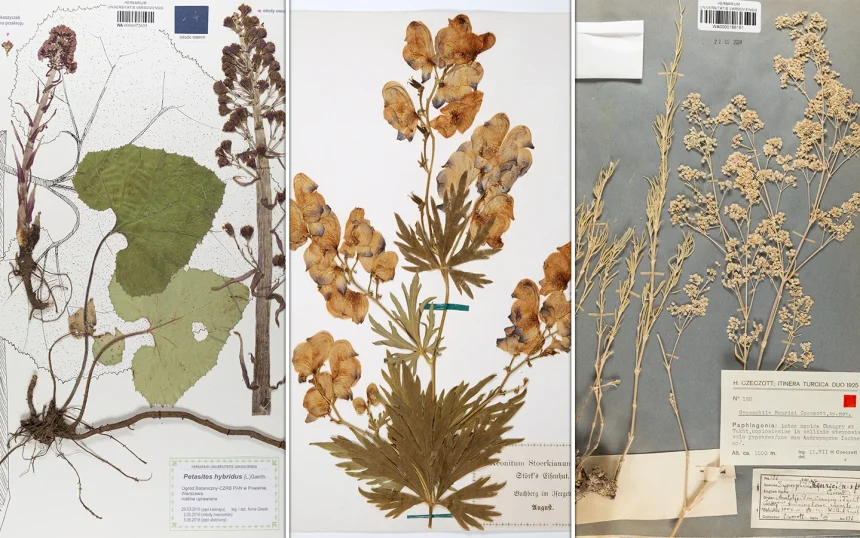
At the heart of the collection are dried plants, some of them truly one of a kind. Among the most valuable are type specimens – the individual plants used to describe a species and establish its scientific name.
“A new name has to be tied to one specific specimen,” says Dr. Frankiewicz. “By definition, these are unique specimens on a global scale.”
Even after more than two centuries, the University of Warsaw Herbarium still holds specimens that have never been correctly identified. Some were never labeled in the first place; others were assigned to the wrong species. Reexamining them can turn up something entirely new.
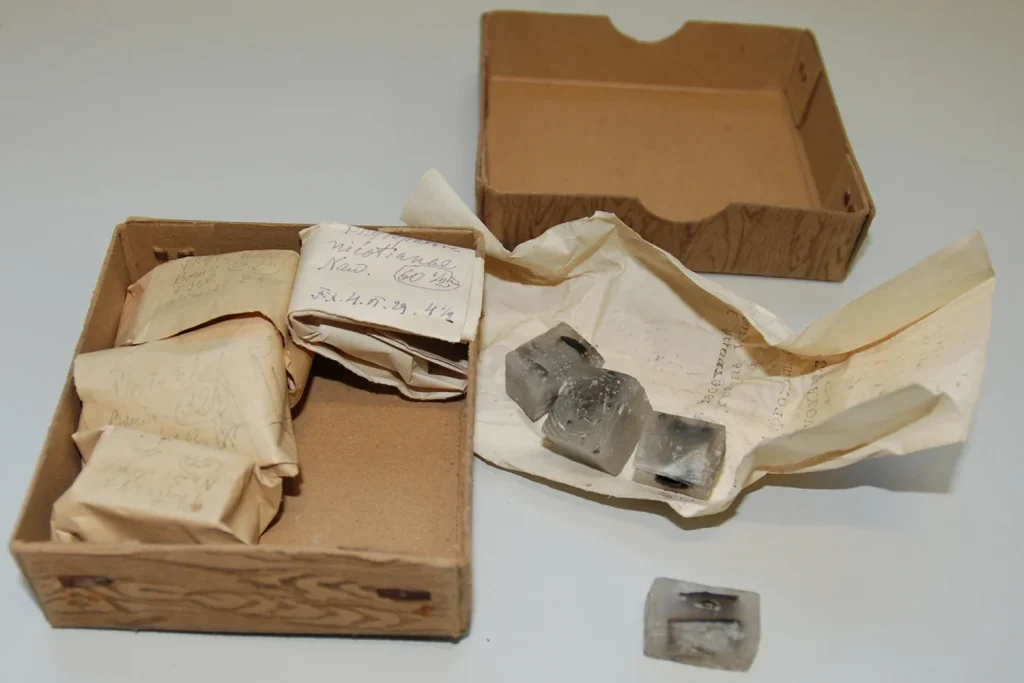
That happened with one of the exsiccata collections. Several new species were recently described from diatoms mounted on glass slides, wrapped in paper, and pasted into an old notebook.
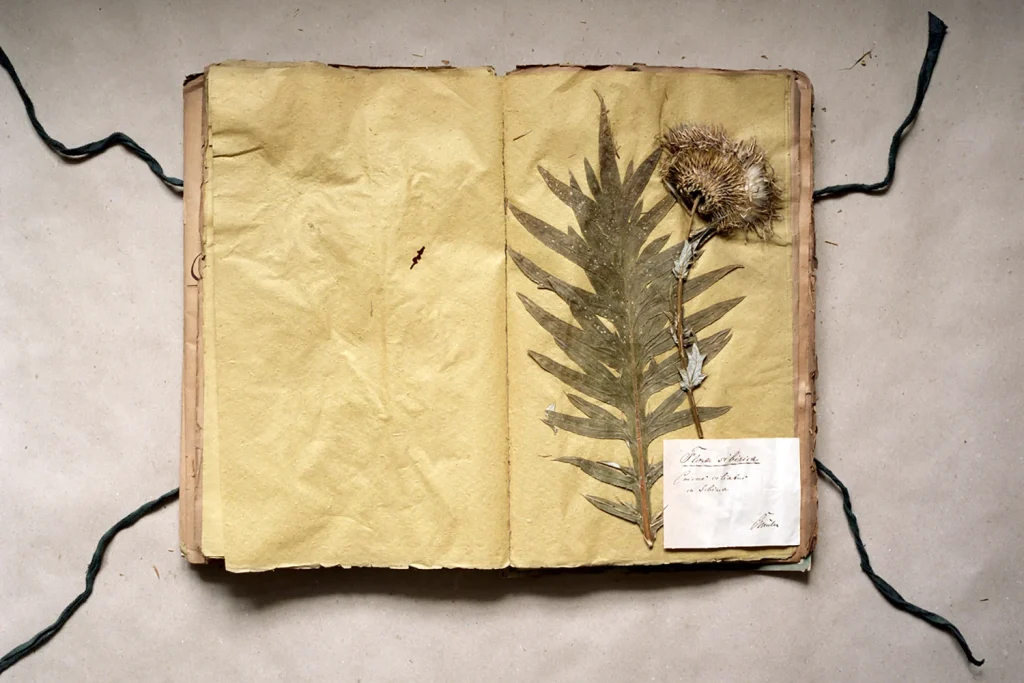
And then there are the fascicles – some 3,000 bundles of specimens tied together with string. Each can contain 50 to 200 plants. What’s inside? In many cases, no one knows.
One of the biggest mysteries is a collection of mosses brought back by Tadeusz Wiśniewski from his 1938–1939 expedition to the Rwenzori Mountains.
“We have about 15 packages of these mosses, each about the size of a banana box. Because that’s what he actually used – banana boxes!” Frankiewicz says. “We don’t know what species they are because there aren’t many moss experts who can examine them.”
Those packages could contain a wealth of undiscovered life. The mosses may harbor microorganisms that have never been described – and perhaps even species that have disappeared from the wild.
That is what makes a herbarium more than a catalog of known plants. It is an archive with pieces of the unknown still waiting to be found.
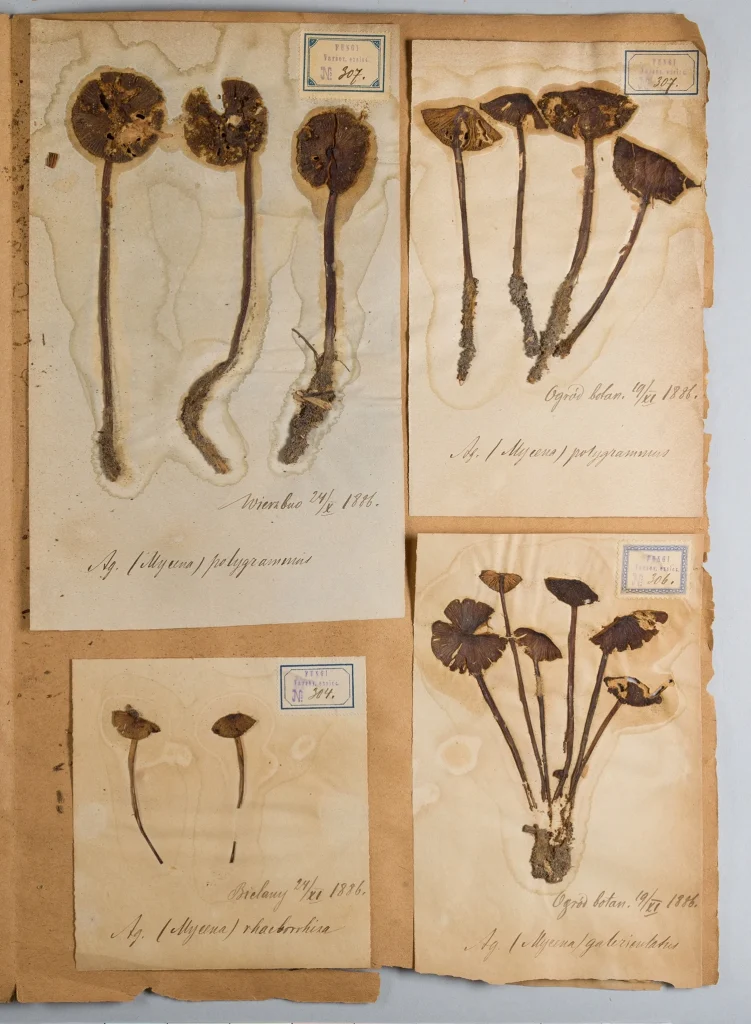
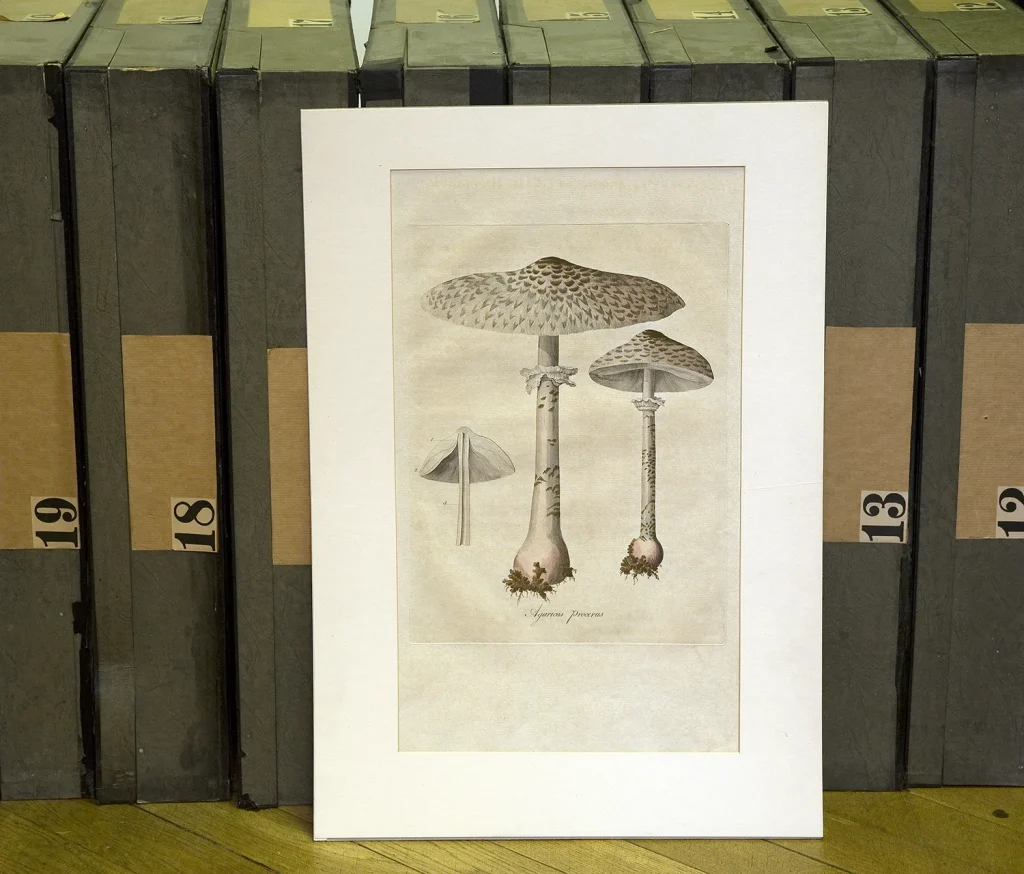
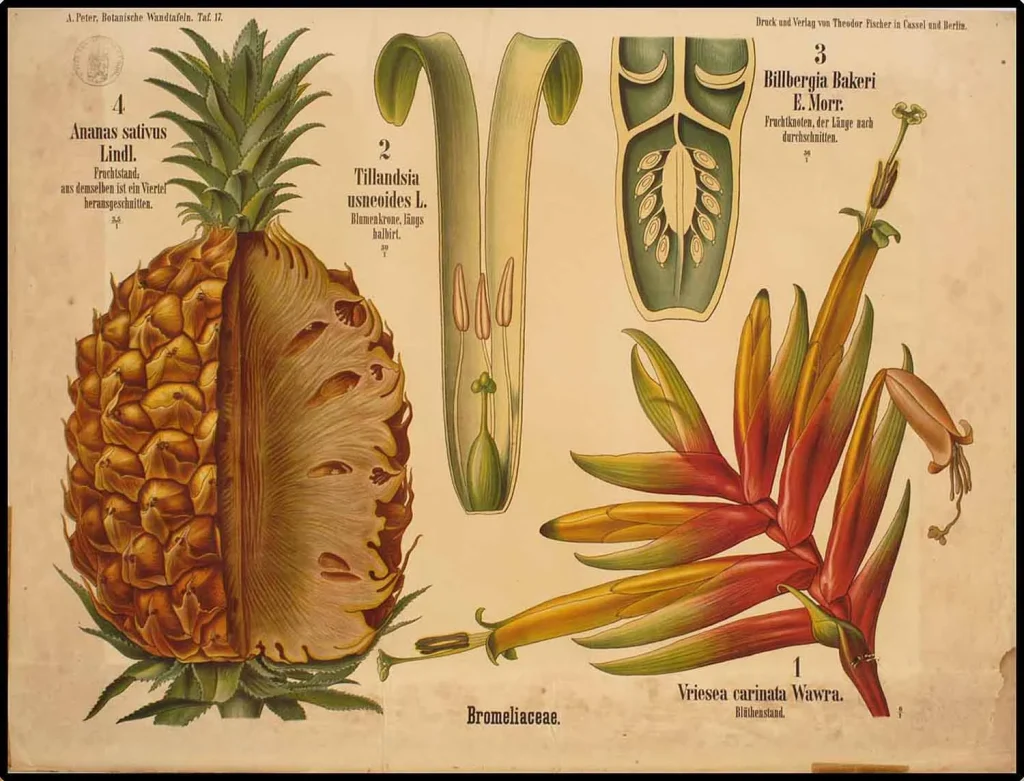
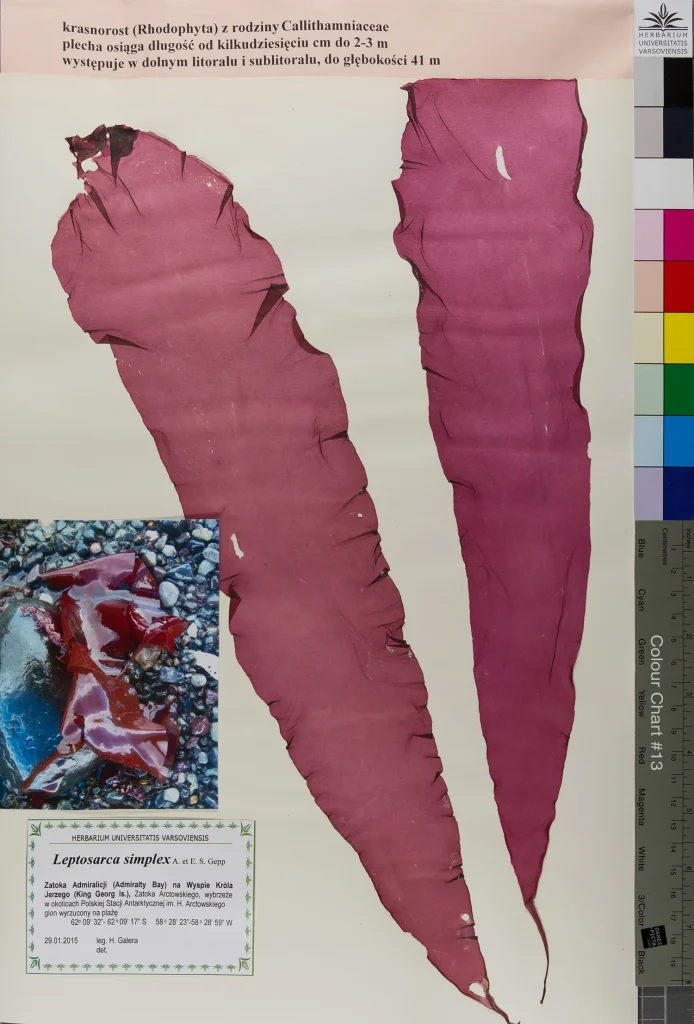
The collection also reaches beyond science. It contains watercolors of fungi painted by members of the Polish nobility, historic educational charts, and early-20th-century postcards bearing specially prepared algae. Among its most precious treasures is the 1717 herbarium of botanist Boretius, believed to be the only surviving copy of the few ever made.
The art of keeping plants for centuries
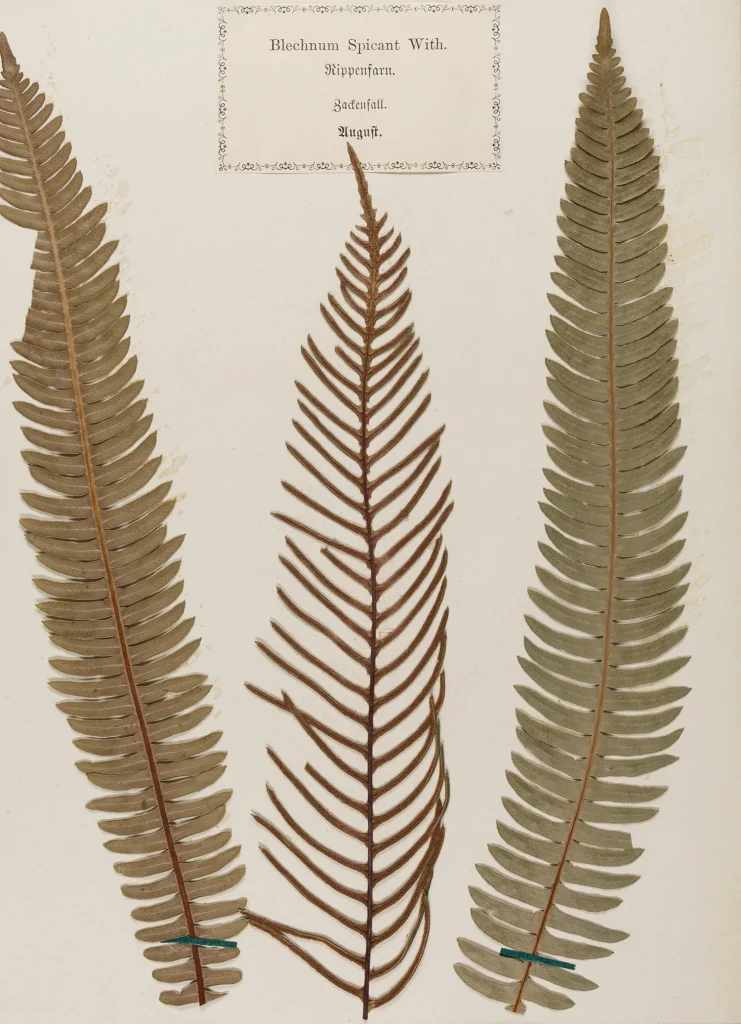
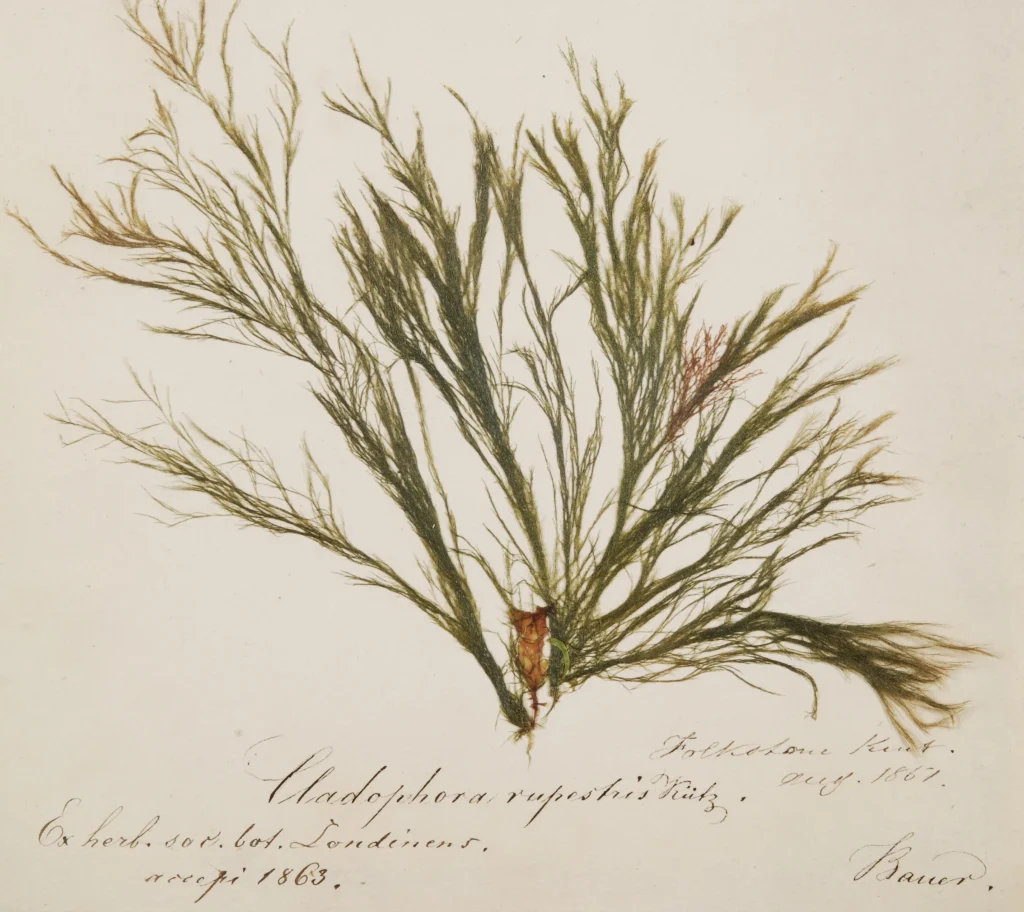
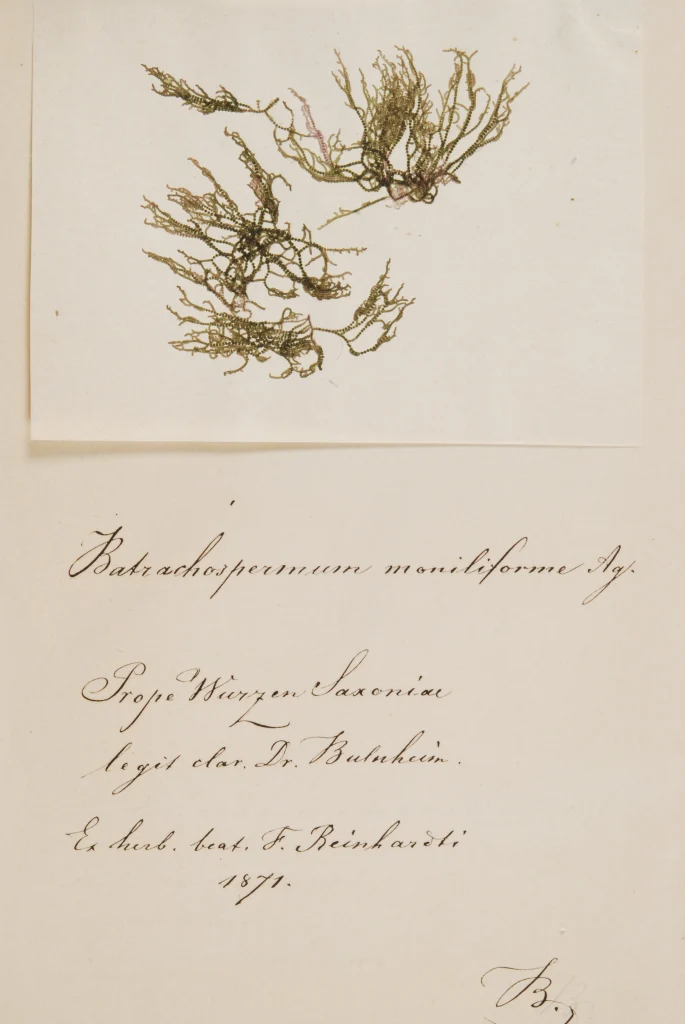
Every herbarium specimen has a label indicating what kind of plant it is, who collected it, and where and when it was collected. Sometimes the description also includes information about the plant’s condition, the environment in which it grew, or how it was used by the local community. Without such documentation, the specimen loses much of its scientific value.
Preparing a plant involves drying and pressing it quickly.
“It always comes down to the same thing: you have to collect the plant and kill it as quickly as possible,” explains Dr. Frankiewicz.
The simplest method is to place the plant between layers of paper and press it with heavy books or in a special press. Succulents, which contain a lot of water, are dried for several days in an oven set to 40°C, while for more delicate specimens, an iron is also used.
“Some specimens we simply press with an iron. This method works well if the species has very delicate flowers, a color that changes easily after drying, or intensely green leaves that we want to preserve.” This is a method developed by Dr. Maja Graniszewska of the University of Warsaw Herbarium, who is constantly coming up with new ways to make dried plants look as if they were still alive. She has already experimented with freeze-drying specimens and drying them in semolina. Sometimes the results are spectacular. “The dried plant is glued to acid-free cardboard, because acidic paper crumbles and falls apart over time,” explains Dr. Frankiewicz.
Storage conditions are equally important. At the University of Warsaw Herbarium, the temperature is around 20°C, and the relative humidity is around 40%. These conditions are similar to those used to preserve old documents and manuscripts. The greatest threats to the collection are mold and insects.
“Some collections shut down the entire building once a year and release toxic gases to eliminate anything that might have infested the space, primarily various types of insects. In contrast, we freeze the specimens throughout the year. We put them in the freezer for three days, after which the next batch goes in. And so on. It takes us about a year to freeze the entire collection,” says the researcher.

Plants as time capsules
Herbaria are vast archives of the natural world. They can tell us what grew in a particular place decades – or even centuries – ago. Compare those historical records with what we see today, and patterns emerge: plant ranges shift and ecosystems change under pressure from climate change and human activity.
That historical perspective can also help determine which places should be protected.
“To choose protected areas that safeguard the greatest possible number of species, we need to know what grows where,” says Dr. Frankiewicz. “Field trips and on-site surveys take time and money, and relatively few people can carry them out. In the Herbarium, we have a record of all the species that have ever been collected from a particular area.”
The specimens also preserve the history of biological invasions. Researchers can trace when an invasive plant or parasitic fungus first appeared, how quickly it spread, and what may have helped it take hold. Those clues can help scientists potentially prevent future invasions.
DNA, light, and environmental clues
A herbarium specimen can reveal far more than where and when a plant was collected. It also preserves DNA, giving scientists a way to study relationships between organisms and build phylogenetic trees – diagrams of evolutionary relationships.
“Instead of traveling around the world, we can visit a few herbaria and get an overview of entire branches of taxonomy,” says the researcher.
And DNA is only part of the story. One method is spectral reflectance analysis: researchers shine a standardized beam of light onto a leaf and measure which wavelengths are absorbed and which are reflected. This can reveal a plant’s anatomical traits, help identify its species, and even detect trace elements and toxins.
These analyses can help reconstruct the history of environmental pollution. By comparing modern plants with specimens collected from the same location 10, 50, or even 100 years ago, researchers can trace how an environment has changed.
“If they differ in nitrogen content, that tells us something is happening in the environment,” Dr. Frankiewicz explains. “In this case, it could be the leaching of synthetic fertilizers from agricultural fields.”
Historical collections can therefore do more than show us what nature looked like in the past. They can help reconstruct how – and why – it has changed under human pressure.
From old varieties to modern medicines
The data and biological material preserved in herbaria could play an important role in food security. Preserved specimens help protect species diversity and their wild relatives, as well as revive old crop varieties that may have been more resistant to disease, frost, or the effects of climate change.
“There are already studies showing that seeds preserved in herbaria can remain viable for surprisingly long periods,” says Dr. Frankiewicz. “Of course, it depends on how the collection was stored.”
And the potential goes beyond agriculture. The specimens may also hold clues to new medicines. By combining phytochemical analyses with artificial intelligence, researchers can probe the chemistry of historical plants and identify molecules with potential biomedical activity. The University of Warsaw Herbarium is planning to pursue this approach in collaboration with a research group at the University of Warsaw Center Biological and Chemical Centre.
The University of Warsaw Herbarium is planning such a collaboration with a research group at the University of Warsaw Biological and Chemical Research Centre.
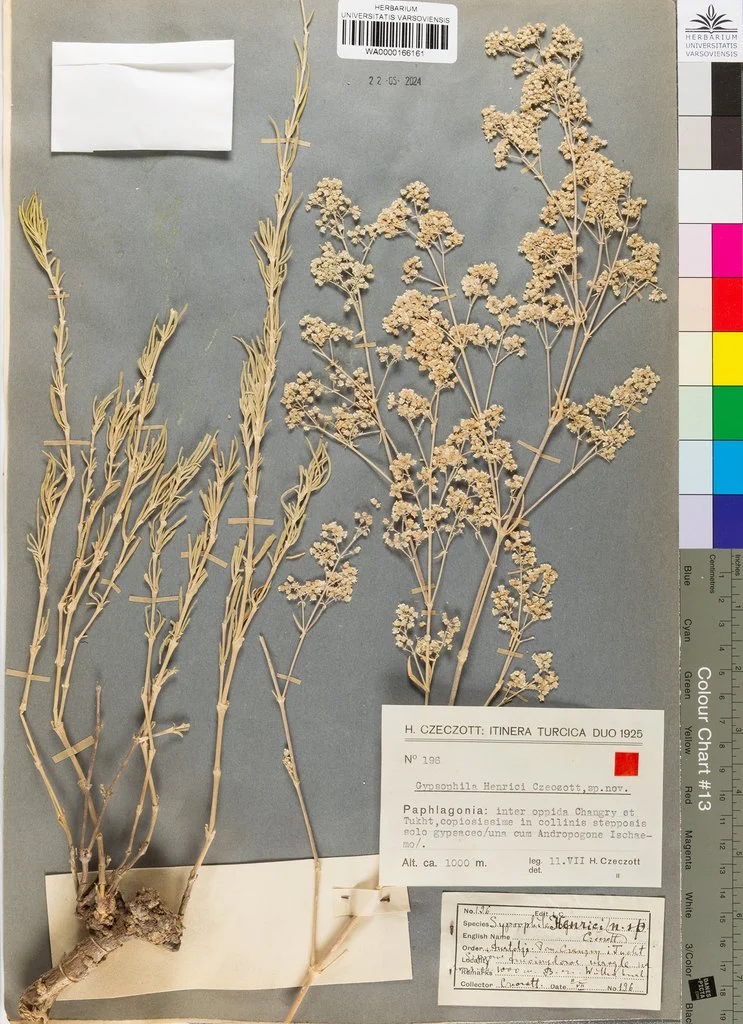
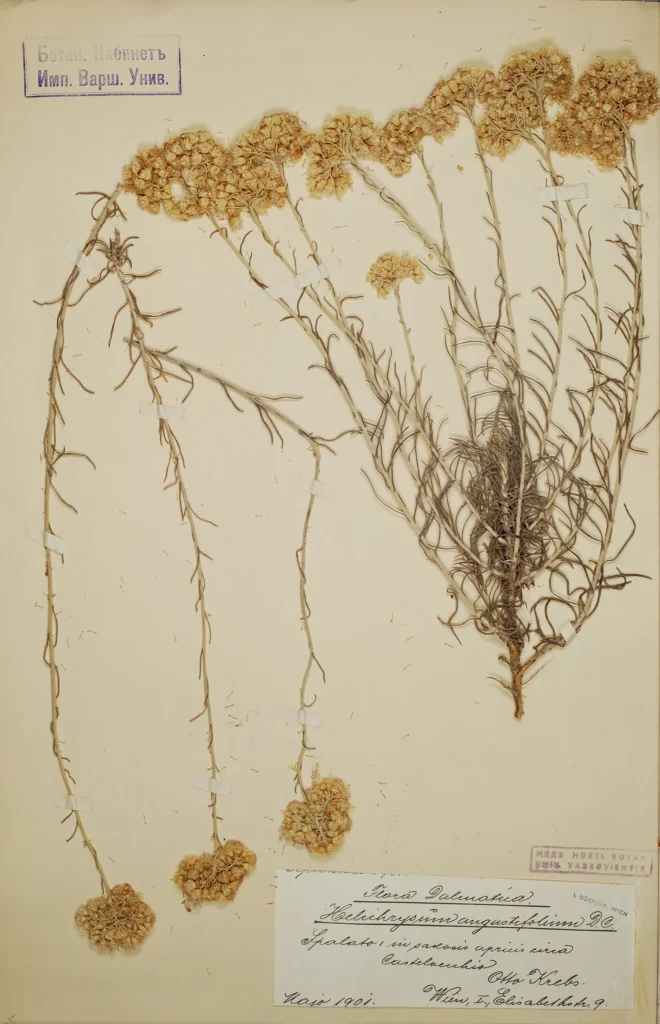
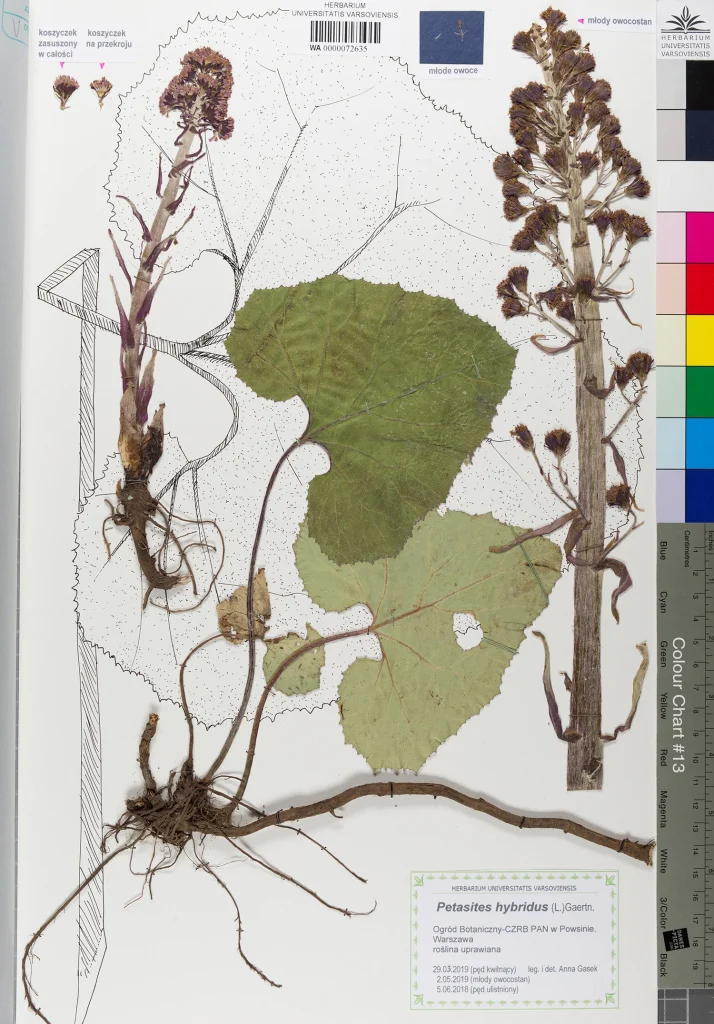
One specimen, many databases
A single herbarium specimen can tell many stories. Its photo, label, DNA, proteins, and chemical profile can all become valuable sources of data. The problem is that these pieces often end up in different databases, where connecting them later can be difficult.
“If we extract DNA from a leaf, the sequence goes into GenBank. If we analyze its protein composition, the results go into UniProt. Information about the specimen’s taxonomy and distribution, meanwhile, goes into GBIF,” explains Dr. Kamil Frankiewicz.
That’s where collectomics comes in. This emerging field aims to bring all the data linked to a single specimen together – from photographs and descriptions to field notes, environmental information, DNA sequences, and chemical analyses.
There is one major obstacle: these databases currently lack a common identifier that would allow researchers to recognize the same specimen across different systems.
“Collectomics aims to connect data from a single specimen that are now scattered across very different databases and bring them together in one network,” Dr. Frankiewicz notes. “Artificial intelligence could be a breakthrough in making that possible.”


Who owns the knowledge in these collections?
Bringing all this data together raises a bigger question: who owns it – and who gets to use it?
Many major natural history collections have colonial roots. Specimens collected in countries across the Global South often ended up in museums and herbaria in Europe and North America. Today, that legacy raises difficult questions about who controls the specimens and their data, and who should benefit from the research they enable.
“Before December 1993 – when the Convention on Biological Diversity came into force – biodiversity was treated as the common heritage of humanity. Only later was it recognized that countries have sovereign rights over their own biological resources,” explains Dr. Frankiewicz. Together with an international team of researchers from four continents, he recently co-authored “Ethical Collectomics” [link] in BioScience, examining the ethical challenges surrounding natural history collections.
Returning specimens physically is not always realistic. Some countries lack the facilities or resources needed to store and preserve them. Digitization can offer one way forward, by making specimens and their associated data accessible without requiring the physical collections to be moved.
One example is the REFLORA program, which has given Brazilian researchers access to digital copies of plant specimens collected in Brazil but now held abroad.
But digitization alone is not enough if it simply reproduces old power imbalances in digital form. Researchers argue for greater transparency about where specimens come from, stronger partnerships with institutions in their countries of origin, fairer sharing of data and benefits, and safeguards for information about the locations of rare species.
Collectomics, then, is about more than connecting databases. It also forces us to ask who controls knowledge, who benefits from it, and what responsibilities come with preserving the natural world’s records.

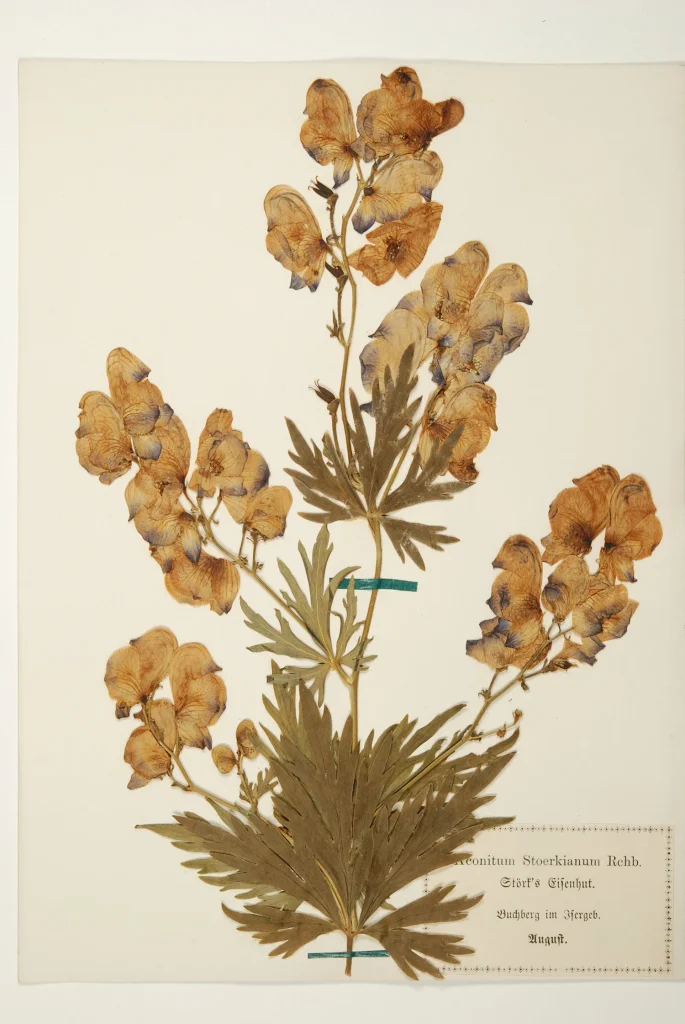
Photo source: University of Warsaw Herbarium.
The text was originally published in Polish on the Serwis Naukowy UW website on August 10, 2026.