

Every year, an estimated 4.8 to 12.7 million tons of plastic enter the oceans. According to the European Parliamentary Research Service, at least 150 million tons have already accumulated in the world’s largest bodies of water. This pollution threatens aquatic life – animals often die after ingesting items such as bottles, caps, plastic wrap, bags, or fishing line, or after becoming entangled in nets. It may also pose risks to human health.
In recent years, growing attention has focused on microplastics – tiny plastic particles ranging from 1 μm to 5 mm in size. Even smaller particles, below 1 μm, are known as nanoplastics. These particles form when larger plastic fragments break down and when already manufactured microplastic particles – such as those in personal care products – are released. Many organisms ingest them – but how harmful are they? The answer depends on their properties, including type, size, density, and even color.
Despite extensive research, the true amount of microplastics in the environment remains unclear and may, in some cases, be lower than previously estimated. One possible explanation is that degradation has been underestimated. This process alters the chemical, mechanical, electrical, and optical properties of microplastics and leads to their fragmentation.
So far, studies on the role of living organisms in microplastic degradation have focused mainly on microorganisms such as bacteria, fungi, and unicellular algae. Scientists at the University of Warsaw, however, set out to examine how fish and aquatic invertebrates interact with microplastics.
The fish swallowed… plastic
An international team of scientists set out to investigate how passage through the digestive tracts of aquatic animals affects microplastic particles – their surface structure, size, and ability to be colonized by bacteria. The team includes researchers from the Faculty of Biology and the University of Warsaw Biological and Chemical Research Centre: Dr. Ewa Babkiewicz, Dr. Julita Nowakowska, Marcin Żebrowski, Katarzyna Jarosińska, and Dr. Piotr Maszczyk.
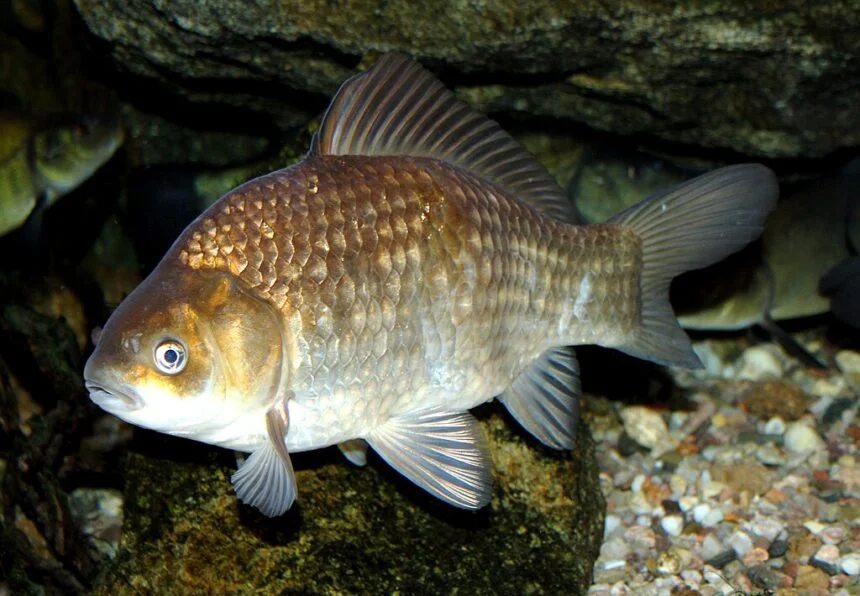
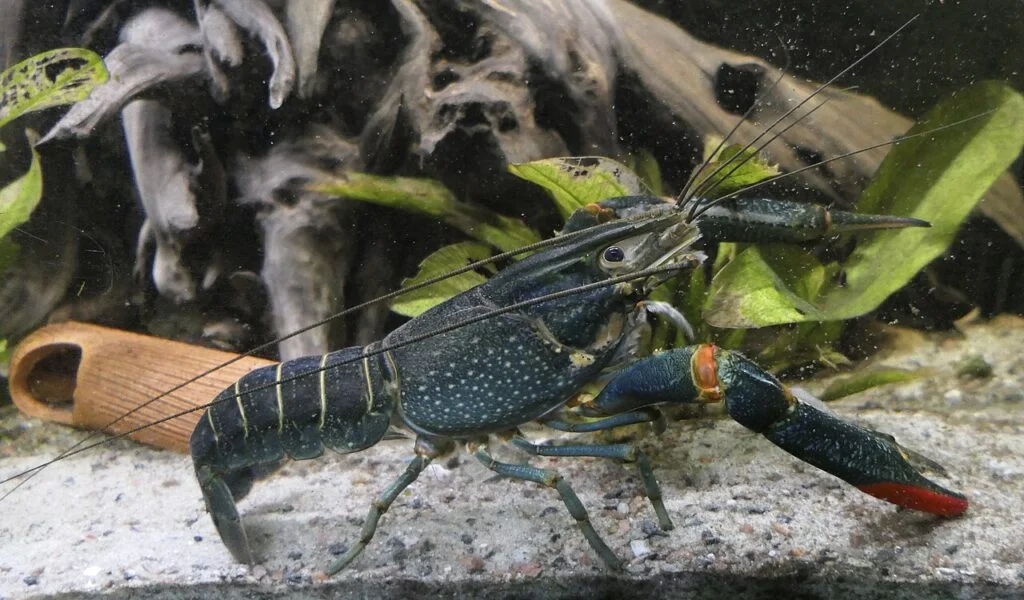
To find out, the researchers focused on two freshwater species: the crucian carp (Carassius carassius) and the Australian redclaw crayfish (Cherax quadricarinatus). They designed two parallel experiments – one with fish and one with crayfish – each divided into two stages representing successive passages through the digestive tract.
The animals, housed in aquaria, were fed groundbait mixed with polyethylene particles, a plastic commonly used to make plastic bags. During routine water changes, any uneaten groundbait and plastic were removed to ensure that only particles that had passed through the digestive tracts remained in the tanks. After 24 hours, feces were collected, and the water was filtered to recover all polyethylene particles, which were then stored in glass bottles. The scientists split these particles into two groups: they analyzed one immediately and used the other in the second stage of the experiment.
The scientists also conducted a smaller, supplementary experiment. In each of two tanks, a pair of crayfish and a pair of fish were observed: one individual was fed plastic-containing bait, while the other received plastic-free food. This allowed scientists to track what happens to polyethylene inside the body. Tissue samples from the internal organs of both species were then analyzed.
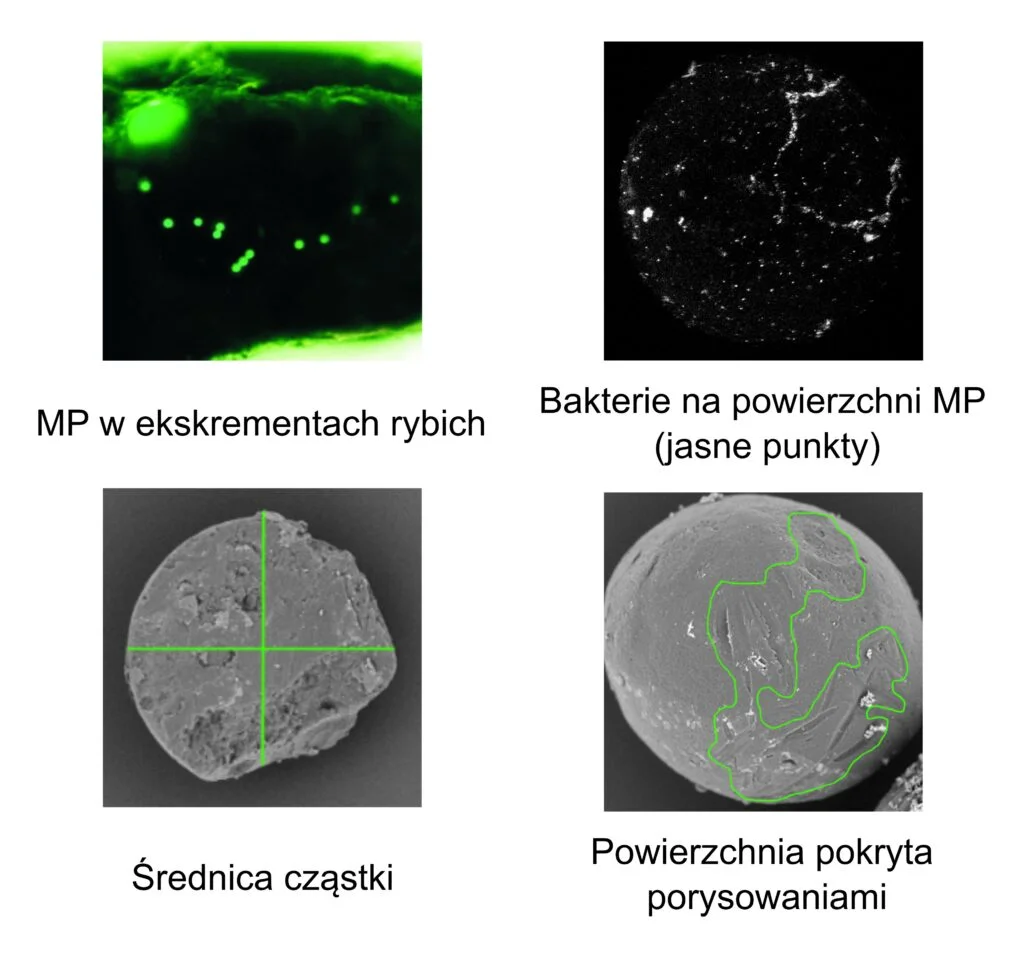
Finally, the recovered microplastics were examined under a scanning electron microscope (SEM). This enabled the team to assess surface damage, particle size, biofilm coverage (complex structures of microorganisms such as bacteria and fungi), and bacterial density. They also identified the chemical composition of the particles and analyzed their molecular structure. Crucially, they checked whether nanoplastics had penetrated the animals’ internal organs.
What does microplastic go through?

The researchers found that microplastic passage through the fish and crayfish digestive tracts alters the properties of microplastics. The particles become damaged and fragmented (their size decreases while their number increases). This mechanical fragmentation occurs within about 24 hours of ingestion. As the particles break down, they are more easily colonized by bacteria, which may speed up biodegradation. However, no polyethylene was detected in the form of nanoplastics in the animals’ gut tissues or digestive glands, and the chemical composition of the excreted particles remained unchanged.
In other words, microplastics are physically altered during digestion, which could facilitate further degradation. At the same time, the polyethylene passes through the animals’ bodies without penetrating their tissues. As Dr. Piotr Maszczyk explains, this may be due to the short exposure time:
“In our experiment, the duration of microplastic exposure – more specifically, the passage time through the digestive tract – was very short (24 hours). As a result, the microplastics did not break down significantly into nanoplastics, and even highly sensitive detection methods failed to detect their presence in fish tissues. However, prolonged exposure could lead to the accumulation of nanoplastics in the animals’ bodies.”
The scientists note that their findings are limited to specific species and a single type of plastic. What happens after ingestion may vary depending on feeding behavior and the type of material involved.
Human responsibility, not nature’s
The study suggests that animals can play a role in reducing plastic in the environment through their feeding behavior.
“Animals are already ‘helping’ remove plastic from the environment. Their feeding behavior may help explain why the amount of plastic in lakes, seas, and oceans is significantly lower than estimates based on production and environmental input would suggest. By breaking down plastic particles, they accelerate degradation and promote their deposition in bottom sediments, reducing their impact on ecosystems,” says Dr. Ewa Babkiewicz.
Understanding how feeding behavior shapes the fate of plastic could prove highly valuable.
“This knowledge can help us better understand what happens to microplastics in aquatic environments and support the development of more effective monitoring and risk assessment methods,” adds Dr. Maszczyk.
So, can animals help us tackle plastic pollution? While the idea may sound promising, scientists warn that it raises serious environmental and ethical concerns.
“Increasing the biomass of organisms in a given environment could cause more harm than plastic alone. Treating animals as ‘tools’ for pollution removal is unacceptable, as exposure to microplastics may pose health risks. Our primary goal should be to reduce plastic emissions and develop biodegradable materials – not to shift responsibility onto nature,” Dr. Babkiewicz concludes.
The text was originally published in Polish on the Serwis Naukowy UW website on May 5, 2025.