
The weather is going haywire. Heat waves are becoming harder to ignore. And yet, talking about climate change is getting harder.
There’s a troubling pattern in the way the public responds: the more alarming climate headlines dominate the news, the more likely we are to tune out – or distance ourselves from the problem.
A 2024 study by ARC Rynek i Opinia found that the share of Poles who consider climate change a serious threat has dropped by seven percentage points. This is happening even as the economic costs of climate disruption are mounting. A forecast by ClientEarth and the Institute for Reforms estimates that by 2050, climate-related losses in Poland could reach PLN 124 billion a year.
Prof. Jacek Wasilewski of the University of Warsaw’s Faculty of Journalism, Information, and Book Studies and Prof. Piotr Welk of the Academy of Fine Arts in Warsaw are looking for a different way to break through the fatigue.
“We’ve noticed that the traditional climate narrative, built largely around facts and figures, has run its course,” Prof. Jacek Wasilewski says. “People are responding to the issue more emotionally, while climate change itself has become deeply politicized. Political polarization means that some people reject certain solutions regardless of what the data shows. This applies both to the energy transition and to how we protect nature and adapt to climate change.”
This exhaustion from years of climate warnings even has a name: climate fatigue. Among teenagers, meanwhile, eco-anxiety and eco-grief are becoming increasingly common, often bringing sadness and a sense of helplessness with them.
A tour of the Hundred Acre Wood
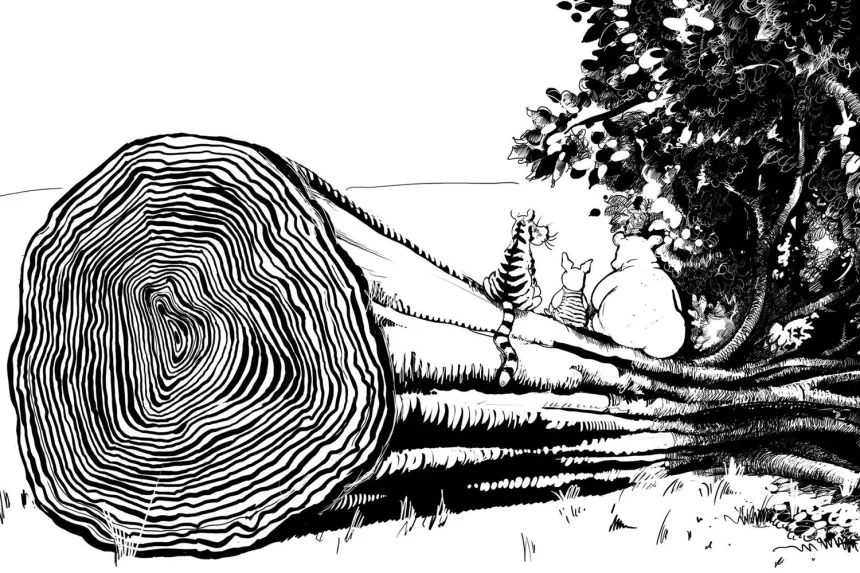
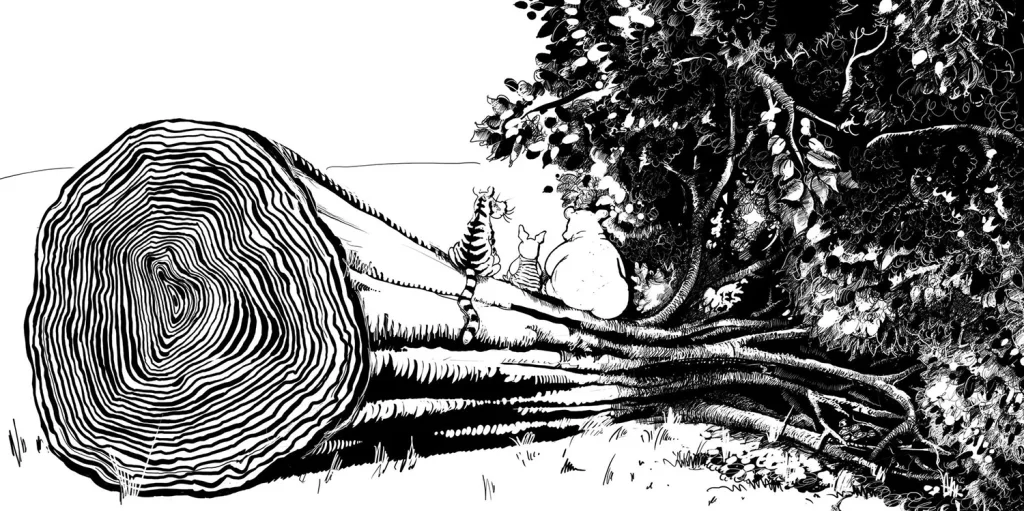
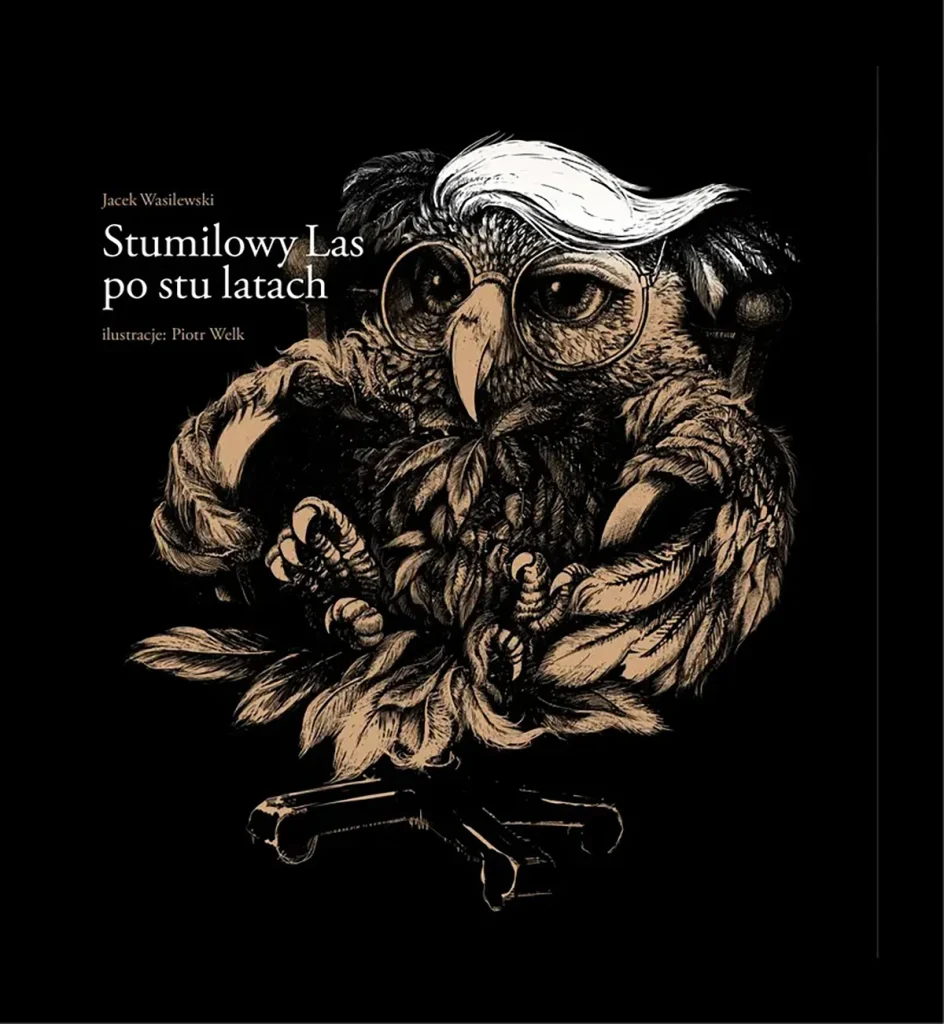
To tackle the problem, researchers launched ‘The Hundred Acre Wood After One Hundred Years” – a project that uses A.A. Milne’s beloved story as a safe, familiar starting point for talking about the climate crisis.
The timing is no accident. Winnie-the-Pooh was first published in 1926. Exactly a century later, the project’s creators return to the Hundred Acre Wood to see how much the world of its inhabitants has changed.
Instead of confronting readers with the harsh reality of climate change head-on, the project lets them see its effects from a little distance, through the stories of Pooh, Eeyore, Roo, and the rest of the gang. This makes the subject less frightening, lowers resistance, and opens the door to a conversation about climate change.
“Stories warning that things are only going to get worse and that we need to act certainly contain a lot of truth. We can see it in the droughts affecting Poland or in the growing danger that summer heatwaves pose to older people. But we’ve also noticed that many young people respond with indifference: If this is such a huge, global problem, what could I possibly do? Why bother getting involved? That’s what prompted us to look for a new narrative – one that would show a different way of thinking and, above all, speak to younger children without frightening them. The response to climate change should be neither denial nor depression,” explains Prof. Wasilewski.
The educational process takes students aged 12–15 on a three-stage workshop journey. First, they read an excerpt from the book and discuss the problems facing its characters.
Then they head outside. Armed with cameras, they explore their surroundings, looking for places particularly vulnerable to overheating, flooding, litter, or a lack of greenery.
In the final stage, the students create a map of local problems – and, crucially, possible solutions: flower meadows, retention basins, new tree plantings. The finished map goes up on the project website, turning it into a concrete proposal for change addressed to local authorities.
“A hundred years after Winnie-the-Pooh was published, a great deal has changed. We’ve kept the sequence of events familiar from the original story, but woven different climate-related phenomena into it. It’s learning through entertainment. People remember stories remarkably well: what happened, who said what, and to whom. Abstract chains of cause and effect – with no face, no character, no personal motivation – are much harder to remember. That’s why I chose to tell the story of these new phenomena through the inhabitants of the Hundred Acre Wood,” says the researcher.
The cooling trap – and radioactive honey
The story draws on real physical, climatic, and ecological phenomena.
In one chapter, Pooh and Rabbit try to cool down their den with a refrigerator and air conditioning. But there’s a catch: the machines pump so much heat outside that the area around them becomes even hotter. Soon, uninvited guests arrive – an invasive species of crab that takes over their den.
Scientists call this a “cooling trap.” And the Woolly-handed Crab featured in the story is no fantasy. Originally from East Asia, it has spread across Europe, probably hitching a ride in ships’ ballast water. Rising global temperatures could help it push even farther north. The species has already turned up in Polish rivers, including the Oder and the Vistula.
For many readers, the Kanga’s story may be even more unsettling. She is driven from her meadow after Owl buys up the land and turns it into a vast soybean monoculture.
When Kanga seeks refuge in the forest, she is met with hostility. The other residents mock her “strange pouches” and even try to drive her away with a catapult.
Behind this fairy-tale episode lies a very real story: land grabs by agribusiness and the forced migration of people displaced by climate change. World Bank projections suggest that by 2050, drought, water scarcity, and the loss of habitable land could force up to 216 million people across six regions of the world to move within their own countries.
The book also takes aim at another modern-day problem: economic exploitation.
In one story, Owl disposes of radioactive waste – but buries it far too shallowly. Soon, flowers spring up on the contaminated ground, producing poisonous, glowing honey.
Sowa adds a twist worthy of the real world: the warning about the contamination was hidden in the small print. Owl then sells the victims potassium iodide, presenting it as a remedy for the very danger he helped create. It’s a sharp illustration of real-world mechanisms such as information asymmetry, greenwashing, and the ruthless “problem + cure” business model – in which the person who creates the problem later makes money selling the solution.
“The book opens with a map of the Hundred Acre Wood. We all remember the map from a hundred years ago – a pleasant, idyllic landscape. But the map of the Wood today looks very different: paved over, dystopian, transformed. And yet, much can still be changed. The whole book encourages readers, inspired by Roo, who sets out to make a change of his own, to draw a map of their immediate surroundings. The idea is to give them a starting point – to look closely at what has changed right outside their door,” explains Prof. Wasilewski.


Ask your grandmother about the snow
One of the project’s most engaging elements is the intergenerational perspective. Before heading out into the field, students are asked to find out from their parents or grandparents what their neighborhood looked like when they were growing up.
“Talk to older people, and you can find out what the neighborhood used to look like, where people went sledding, and where today you can only do it once in a while,” Prof. Wasilewski says. “The next step is to turn those memories into a map. Students print a map of their neighborhood and, using Roo’s map as a model, mark out how they could make their surroundings better equipped for a changing climate.”
“It’s an invitation to ask what can be changed, what might be causing problems in light of what we’ve learned and what we’re beginning to understand, and what we want our surroundings to look like,” the researcher adds.
A story from a parent or grandparent can make the pace of change feel immediate in a way that numbers and charts often can’t.
The project’s role model is Roo, accompanied by Eeyore, the Wood’s resident pessimist, who has never been one to assume that “everything will somehow work out. That’s where the book ends. And that’s where the reader’s role begins. That’s what matters most,” Prof. Wasilewski says. “We don’t want to lecture readers or tell them, ‘Do this because it’s the right thing to do.’ We want to spark a different thought: ‘Hey, maybe we can do something, too.’”
“The idea is to turn climate education into a journey – part story, part scientific adventure. The information is already out there, and there’s plenty of it. The real question is whether we’re motivated enough to go looking for it,” the researcher concludes.
We do have the power to change things
“The Hundred Acre Wood After One Hundred Years” project demonstrates how the language of climate communication can be transformed. Instead of focusing solely on catastrophic scenarios, it guides young people from storytelling, through observing their immediate surroundings, all the way to designing concrete solutions.
Its goal is to strengthen a sense of agency and encourage students not to see themselves solely as passive observers of the global crisis, but also as agents of change who can make a difference right in their own backyard.
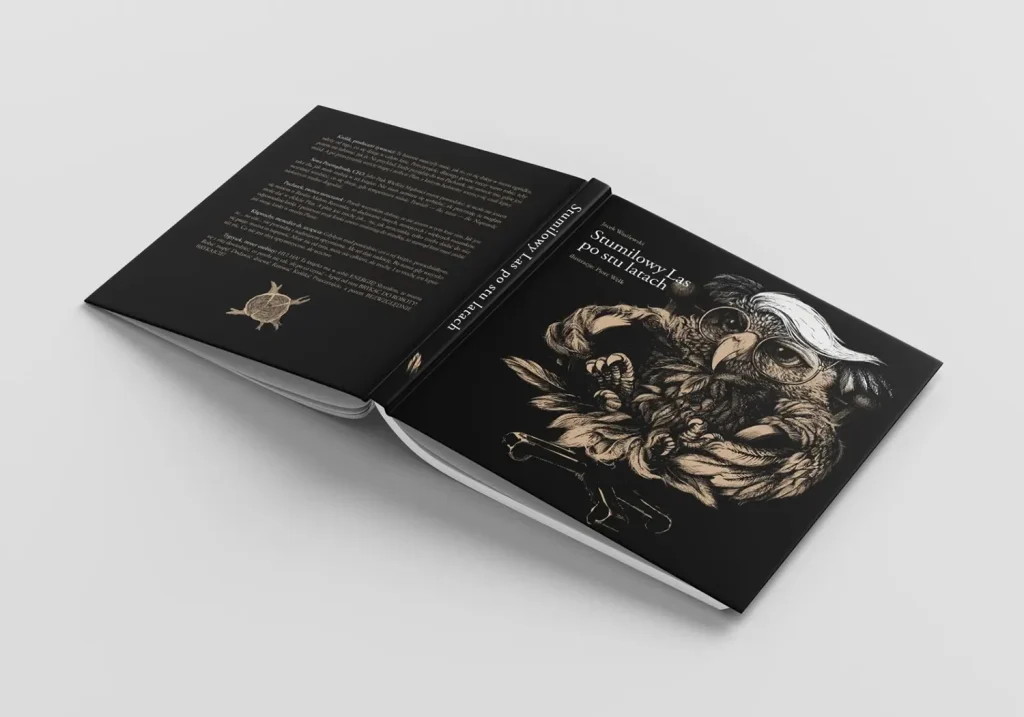
The text was originally published in Polish on the Serwis Naukowy UW website on August 7, 2026.