
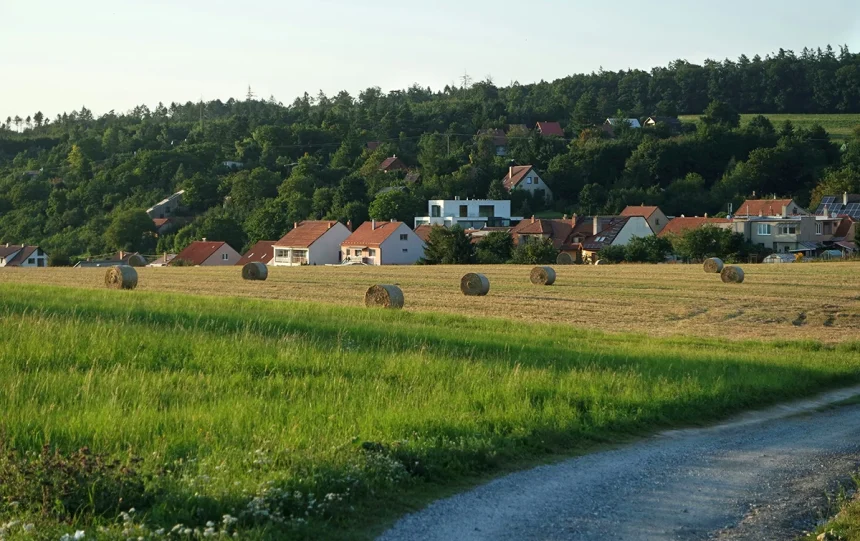
Changes to the rural landscape are about more than looks. Increasingly, they are fueling conflicts that can affect entire communities. The most visible disputes often pit farmers against newcomers buying land for single-family homes. But that is only one front in a much bigger struggle over rural space.
For decades, the countryside was primarily a place of production – a landscape shaped by farming and livestock. Today, it serves many purposes at once: residential, recreational, tourist, agricultural, and environmental.
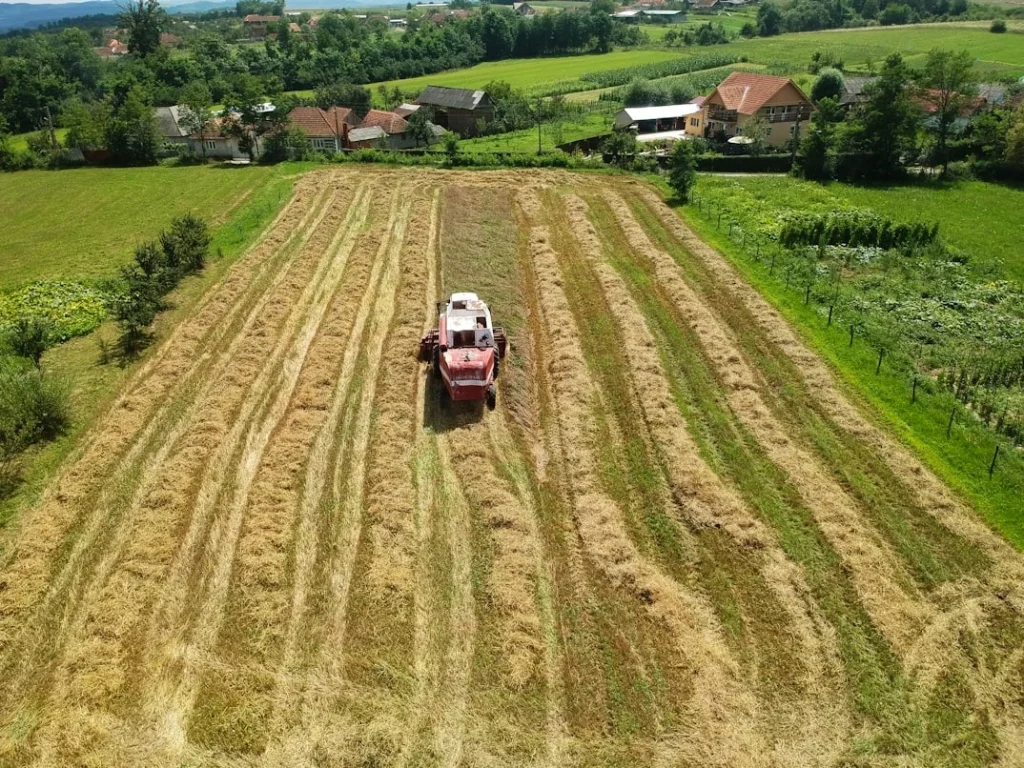
Farmers increasingly say that new neighbors are making it harder to run their operations. A tractor firing up at dawn, the smell drifting from a barn, or a combine harvester rolling down the road may be an ordinary part of farm life. To newcomers from the city, looking for peace, quiet, and comfort, they can feel like nuisances.
Investors have their own plans. Nature conservation bodies have their own priorities. One side may see an opportunity to develop the land; the other may be focused on protecting valuable ecosystems. Everyone has a case to make – and that is precisely what makes these disputes so hard to resolve. When dialogue breaks down, competing interests can quickly turn into open conflict. And Polish villages are seeing more of these clashes.
“The nature of these disputes is changing, with new fault lines emerging – for example, where agricultural production comes into conflict with nature conservation,” explains dr hab. Dominika Milczarek-Andrzejewska, prof. UW. “Our latest research on land-use conflicts focused on the Warmian-Masurian Voivodeship, where competition for land among different stakeholders is particularly intense. This is where the interests of owners of large-scale farms operating on land formerly managed by state-owned farms (PGR), smaller farmers, city residents looking for attractive places to live in the countryside, investors planning tourism projects, and local governments all converge.”
“It is also important to remember that land-use conflicts have implications beyond the local level,” the researcher adds. “They touch on broader issues such as food security, landscape quality, and spatial planning.”
The phenomenon is not new, but it has gained momentum over the past two decades. And the costs can be substantial. Time, money, and institutional resources that could otherwise go toward investment and development can instead be swallowed up by disputes that drag on for years.
From courtrooms to maps
An important step in the research was to turn to a source that had rarely been used before: administrative court rulings. Unlike media reports or interviews with residents, court decisions capture conflicts that have been formalized – and, crucially, have actually shaped decisions by public authorities.
“Analyzing these rulings gives us a unique perspective because it allows us to see conflicts that not only occurred but actually made it to court,” says dr hab. Milczarek-Andrzejewska, prof. UW. “These include disputes over land development plans, building permits, environmental protection, and expropriation – in other words, cases in which public administration is directly involved.”
The rulings offer more than a snapshot. They make it possible to track how conflicts have changed over time – not just in number, but in nature, with environmental issues taking on a growing role.
“Earlier research relied mainly on case studies or media reports. Our approach gave us a broader picture and allowed us to identify nationwide trends,” the researcher notes.
The analysis focused on two points in time: 2004, when Poland joined the European Union and the administrative court system was reformed, and 2019, the last full year before the COVID-19 pandemic disrupted social and economic life.
To examine how the number and structure of conflicts changed over this period and varied across regions, the researchers used quantitative methods, including Shannon entropy – a measure borrowed from mathematics and computer science that can be used to assess how diverse and disordered a dataset is.
Here, entropy was used to measure how much the structure of agricultural land conflicts changed between 2004 and 2019. If disputes in a given region in 2019 focused on issues very different from those seen in 2004, the entropy value was high. If the types of disputes remained broadly similar, it was low.
This allowed the researchers to compare regions based on the scale of change in their conflict patterns – and to identify areas where disputes were becoming more diverse or tensions were intensifying.
Additional statistical methods helped distinguish genuine trends from random fluctuations, making it possible to assess with greater confidence whether the changes reflected real shifts in land-use conflicts rather than chance.
The result was more than a tally of disputes. It offered a way to map how the landscape of conflict was changing and to ask bigger questions: Are conflicts spreading across an ever-wider range of issues, or are they clustering around a handful of recurring flashpoints? Where are social and spatial pressures building fastest?
Still, the researchers emphasize that the numbers tell only part of the story.
Quantitative methods can reveal the scale and direction of conflicts – where tensions are most acute, what processes are driving them, how regions compare, and how public policies may be shaping the landscape.
But statistics have blind spots. They cannot capture residents’ emotions, personal disputes between neighbors, or informal local arrangements that can shape how conflicts unfold.
It is like looking at a map without a legend: you can see the lines and colors, but you cannot always tell what they mean.
That is why the researchers stress the importance of combining quantitative and qualitative approaches. Only by putting hard data alongside interviews, field observations, and an analysis of local relationships can researchers get the full picture – and understand the complexity of land-use conflicts on the ground.
The geography of rural conflict
You might expect the areas surrounding Poland’s biggest cities – Warsaw, Kraków, or Wrocław – to be the country’s main hotspots for land-use conflicts. The research tells a different story. Disputes over land are unfolding across the country, with particularly strong tensions in tourist regions such as Lesser Poland (Małopolska) and Podhale region, where agriculture, tourism, and environmental protection all compete for space.
The findings from the Łódź and Lesser Poland Voivodeships were especially surprising. Despite high levels of urbanization and strong residential and commercial development pressure, both the number and diversity of conflicts were relatively low.
Why? One possible explanation is the weaker presence of agriculture and environmental protection. Where residential development dominates, and fewer strong institutions or interests defend agricultural and natural functions, there may simply be fewer flashpoints.
The finding challenges a common assumption – often echoed in the media – that suburban areas are always the country’s main conflict zones. Paradoxically, a more functionally homogeneous landscape, dominated by residential development without intensive agriculture or strong nature-conservation interests, may actually produce fewer conflicts.
“Conflicts also emerge in regions with a very high share of protected land, such as Warmia, Masuria, and Podlasie,” says Dr hab. Milczarek-Andrzejewska, prof. UW. “The Natura 2000 network covers a substantial portion of many municipalities there, which in practice has a significant impact on what kinds of land-use decisions are possible.”
The research team also looked at northeastern Poland, where urbanization pressure is particularly strong. The study involved 960 farmers from 14 municipalities representing different levels of urbanization.
The researchers used a Discrete Choice Experiment (DCE) to find how farmers assess different neighboring land-use scenarios.
Residential development and non-agricultural business activity were seen as the neighboring land uses most likely to generate conflict, while agricultural activity and nature protection were considered relatively less contentious. The findings are currently awaiting publication.
But it is not just the mix of land uses that matters. Their intensity – and their location relative to the farm – can make an important difference.
The sharpest tensions tend to emerge where agricultural, residential, and environmental functions collide in a small area. The same can happen with energy projects, including wind farms and agrivoltaic installations, which can divide both farmers and other rural residents.
These are the places researchers see as especially important to study because they offer a close-up view of just how difficult it can be to reconcile competing interests in the same space.
Fault lines in the landscape: Why does it matter?
This is about more than a fight over land. It is a fight over the future of the countryside.
Who gets to decide what the landscape should look like? Can farmers keep running their operations when a housing development goes up next door and new residents start complaining about the noise of farm machinery? And how can protecting nature be reconciled with investors’ plans?
The stakes go far beyond farmers and their immediate neighbors. These conflicts can affect entire communities, the economy, and the environment. Money, time, and energy that could go into local development may instead be consumed by protests, lawsuits, appeals, and administrative proceedings.
In the end, everyone can lose.
Poorly managed competition for land can also fuel spatial disorder. Fields, homes, commercial developments, tourism projects, and protected areas become increasingly interwoven – with no coherent plan tying them together.
“Land-use conflicts are a litmus test for broader social change,” emphasizes dr hab. Milczarek-Andrzejewska, prof. UW. “They show how the social role of space is changing, what values are at stake, and who has access to planning and decision-making power.”
An analysis of administrative court rulings found that the number of disputes involving agricultural land nearly tripled between 2004 and 2019.
But the researchers caution against seeing this increase as purely negative. Conflict does not necessarily mean that a community has failed. In some cases, it may be the only way for less powerful groups to make themselves heard and bring their arguments before public authorities.
In that sense, conflict can become a mechanism for negotiation – even when the process is difficult. It can also signal a countryside in transition, as different groups try to redefine the rules for sharing the same space.
“We are increasingly seeing conflict used as a way of putting interests on the table with public authorities or investors,” the researcher explains. “It can act as a safety valve, giving residents a way to voice their dissatisfaction and pressure authorities to respond. This can be especially important on the outskirts of major cities, where farmers may lose political influence as new residents and investors gain a stronger foothold in local governments.”
“In such situations, conflict may be the only way for farmers to make sure their voices are still heard,” she argues.
For groups with less political or economic power, these disputes have become a catalyst for mobilization. They seek allies and fight to defend their interests – sometimes by drawing on European Union agricultural and environmental policies.
Beyond regulation: Why dialogue matters
Regulations alone are unlikely to settle land-use conflicts. What is needed is a more integrated approach – one that brings together spatial planning, infrastructure investment, and social dialogue.
Dr hab. Dominika Milczarek-Andrzejewska, prof. UW, notes that many conflicts are ultimately resolved not in court, but through local negotiations and public consultations. At the same time, she says more research is needed to understand how these formal and informal mechanisms actually work.
“We need better-aligned spatial and environmental policies – ones that not only reduce the economic and social costs of conflict, but also enable us to manage resources more fairly,” the researcher says.
Future research should also take a closer look at conflicts between private parties, which may prove far more common than disputes that reach administrative courts.
New challenges are emerging, too. The effects of the COVID-19 pandemic – including the growth of agritourism and the wave of people moving from cities to rural areas – are changing how land is used and creating new sources of tension.
The research team’s findings also point to the importance of participation. Giving both newcomers and longtime farmers a meaningful say in decisions about the future of shared spaces can help keep disputes from escalating.
“New rural residents often don’t realize that living next to a farm means dealing with noise, odors, and farm machinery on the road at dawn,” says the researcher. “At the same time, farmers don’t always realize that some aspects of their operations may be perceived as a nuisance by their neighbors.”
When both sides understand the realities the other is dealing with, it becomes easier to build mutual respect. And then there is mediation. Sometimes it is the only way to get everyone around the same table and work out a compromise,” she notes.
In the end, the answer may lie as much in education and dialogue as in formal rules. They are soft tools, but they can be remarkably effective at building mutual understanding.
Real cooperation starts when both sides recognize – and understand – the other’s perspective.
Practical measures matter, too. Noise barriers, better access roads, and carefully planned building layouts can reduce everyday nuisances and keep tensions from escalating.
“These are the kinds of measures that can make a real difference and help prevent conflicts from spiraling,” the researcher adds.
The researchers emphasize that only a combination of systemic measures, targeted investment, and community engagement can truly ease tensions over competing demands on land.
Conflicts may be impossible to avoid entirely, but they can be made less damaging—and, in some cases, even turned into something constructive.
The text was originally published in Polish on the Serwis Naukowy UW website on September 15, 2025.