

Serwis Naukowy UWSerwis Naukowy UWSerwis Naukowy UW
  • Humanities
  • Social Sciences
  • Natural & Exact Sciences
  • Content Usage
Serwis Naukowy UWSerwis Naukowy UW
  • Humanities
  • Social Sciences
  • Natural & Exact Sciences
  • PL
  • Content Usage
Follow US
Copyright © 2026 Uniwersytet Warszawski

Strona główna » Just another job? Talking about “dirty work”

Culture

Just another job? Talking about “dirty work”

What happens when your job isn’t exactly the kind people brag about? Dr. Gabriela Jarzębowska of the University of Warsaw’s Faculty of “Artes Liberales” set out to explore how people talk about work that carries little social prestige. Her case study? Pest control technicians.

Last updated: 2026/09/02
12/09/2025
5 Min Read
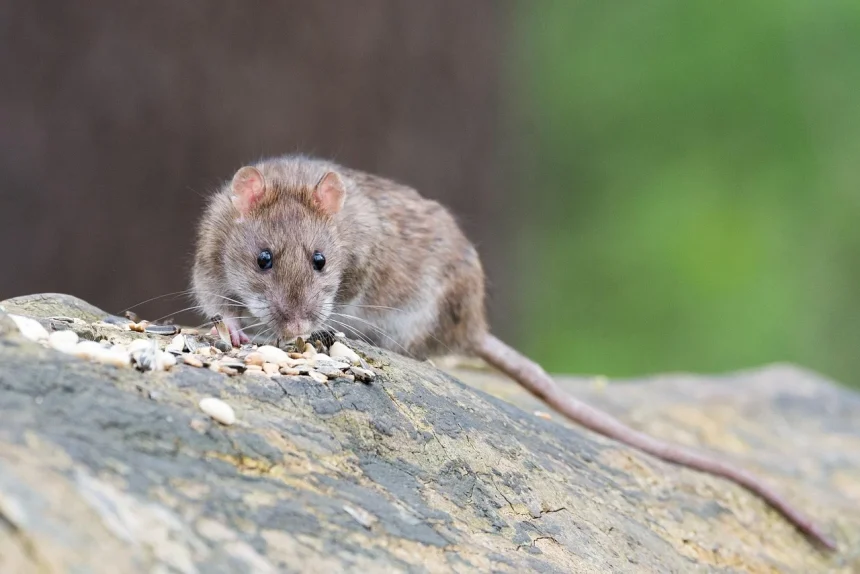
The brown rat (Rattus norvegicus)
SHARE

Here’s the scene: During a routine traffic stop, police pull over a car. After checking the driver’s ID, they ask what he does for a living. “I’m a hitman,” he replies. The officers’ alarm quickly fades when they realize he means that he works in pest control.

The anecdote raises several questions. What does the man’s answer reveal about his own – and society’s – attitude toward exterminating rats? How do other people in the profession construct a narrative around their work – and use it to define who they are? What exactly is “dirty work,” and what makes a job dirty in the first place?

“How now, a rat? Dead for a ducat, dead.”

The line comes from one of Shakespeare’s best-known plays. In Hamlet, the title character cries out before stabbing the spy Polonius, who is hiding behind a curtain. The choice of a rat as a metaphor is hardly accidental. In European culture, rats have long ranked among the most despised of creatures. Cast as vermin, they have symbolized demons, the devil, rape, destruction, disease, plague, the Black Death, famine, decay, and death itself.

So how much respect have the people who exterminate them received? According to Dr. Jarzębowska’s research, not all that much. Why? Could the disgust associated with rats somehow rub off on the people whose job is to get rid of them?

Dr. Jarzębowska points to three main forms of stigma traditionally associated with what sociologists call “dirty work.” The first is physical stigma: direct contact with things considered unclean. The second is social stigma: contact with stigmatized people or groups. The third is moral stigma, attached to occupations considered immoral. Some researchers also identify a fourth category: emotional stigma. Interviews with pest control technicians reveal how their profession intersects with all of these forms of stigma.

The pattern

“Until someone has a problem, they say, ‘Yuck.’ But once it happens to them, they say, ‘Jesus, how wonderful that people like you exist!’” This comment from one study participant captures the ambivalence surrounding pest control. The cultural association with disgust goes hand in hand with appreciation when the profession becomes useful – or even indispensable.

“Someone has a problem. We show up and solve it. It’s a win-win. I also believe in karma, to some extent. I leave a little positive energy behind,” another respondent said.

“Respect is a key element in building a positive identity narrative for this professional group,” says Dr. Jarzębowska. “The interviews suggest that the rhetoric shaping the identity of rat exterminators is largely built around it – particularly the tension between disapproval and respect from outsiders.”

Survival strategies

The idea of “karma,” however, takes on another meaning in some accounts. “I’ve seen too many animals die. I tell myself it’s a form of defense, so we have the right to do it. But I also try to make up for it. For example, I haven’t eaten meat in years. I kill here, but I earn points there,” one respondent explained.

At the same time, pest control technicians often use another strategy: they downplay or obscure the act of killing animals itself while emphasizing the social value of what they do.

“The construction of professional identity is clearly tied to how outsiders respond to the exterminator’s work,” Dr. Jarzębowska explains. “Respondents emphasize the social value of what they do, while pointing out that other people often fail to recognize that value. In most accounts, rat extermination is portrayed as a problem with no real solution. These narratives reveal the dynamic nature of exterminators’ professional identities, shaped in response to the social and ethical controversies surrounding pest control.”

The text was originally published in Polish on the Serwis Naukowy UW website on September 12, 2025.

Tourists as your neighbors: Should Warsaw restrict short-term apartment rentals?
Uninvited lodgers: Mucoromycota fungi in red wood ant’s nests
Motion сreates life: In conversation with Nobel Prize-winning Prof. Ben L. Feringa
Belief in magic: How long-term unemployment changes our psychological state?
A day on a smartphone: What are kids really doing online?
TAGGED:brown ratFaculty of “Artes Liberales”pest control technicianrat exterminationUniversity of Warsaw
Previous Article Silkworms, preserves, and menageries: How people cared for animals in old Poland
Next Article From combine harvesters to housing developments: The changing face of land-use conflicts in Poland’s countryside
 
Gabriela Jarzębowska, PhD

is an Assistant Professor at the Faculty of “Artes Liberales,” University of Warsaw, where she co-develops and teaches in the first anthrozoology degree program in Central and Eastern Europe. Her research lies at the intersection of environmental humanities, critical animal studies, cultural history, and the history of agricultural modernization. She is the author of Species Cleansing: The Cultural Practice of Rat Control (V&R / BRILL, 2024), which develops the concept of “species cleansing” as a framework for analyzing culturally legitimized violence against animals. Her current NCN Sonata-funded project, Farms, Animals and Meat Culture in Poland, explores livestock intensification and changing interspecies relations in socialist Poland. Her work has been recognized with the Fulbright Award, NCN Preludium and Sonata grants, the Inka Brodzka-Wald Award, and the Polish Minister of Science Award for Outstanding Young Academics.

UW Science Daily

Center for Cooperation and Dialogue, University of Warsaw

Office: ul. Dobra 56/66, 00-312 Warsaw

Tel.: +48 609635434 • redakcja@uw.edu.pl

Facebook Linkedin Instagram

About us

UW Home page

logotyp-IDUB-PL-poziom-inv

Accessibility statement

Cookie privacy policy

Site map

Copyright © 2026 University of Warsaw

Copyright © 2026 Uniwersytet Warszawski
Manage Consent
To provide the best experiences, we use technologies like cookies to store and/or access device information. Consenting to these technologies will allow us to process data such as browsing behavior or unique IDs on this site. Not consenting or withdrawing consent, may adversely affect certain features and functions.
Functional Always active
The technical storage or access is strictly necessary for the legitimate purpose of enabling the use of a specific service explicitly requested by the subscriber or user, or for the sole purpose of carrying out the transmission of a communication over an electronic communications network.
Preferencje
Przechowywanie lub dostęp techniczny jest niezbędny do uzasadnionego celu przechowywania preferencji, o które nie prosi subskrybent lub użytkownik.
Statistics
The technical storage or access that is used exclusively for statistical purposes. Przechowywanie techniczne lub dostęp, który jest używany wyłącznie do anonimowych celów statystycznych. Bez wezwania do sądu, dobrowolnego podporządkowania się dostawcy usług internetowych lub dodatkowych zapisów od strony trzeciej, informacje przechowywane lub pobierane wyłącznie w tym celu zwykle nie mogą być wykorzystywane do identyfikacji użytkownika.
Marketing
Przechowywanie lub dostęp techniczny jest wymagany do tworzenia profili użytkowników w celu wysyłania reklam lub śledzenia użytkownika na stronie internetowej lub na kilku stronach internetowych w podobnych celach marketingowych.
  • Manage options
  • Manage services
  • Manage {vendor_count} vendors
  • Read more about these purposes
View preferences
  • {title}
  • {title}
  • {title}