
Keeping a herbarium may seem like a school assignment. In fact, herbarium-making is a cultural practice with a history spanning more than 400 years. People from a wide range of professions and social backgrounds have created herbaria including well-known figures from the world of culture such as Eliza Orzeszkowa and Jean-Jacques Rousseau. Rosa Luxemburg also belonged to this group, as revealed by a discovery in the Archives of Modern Records in Warsaw.
This discovery is more than just a biographical curiosity. Few people realize that historical herbaria can serve as valuable research tools for contemporary botanists and biodiversity scientists.

A revolutionary discovery in the archives
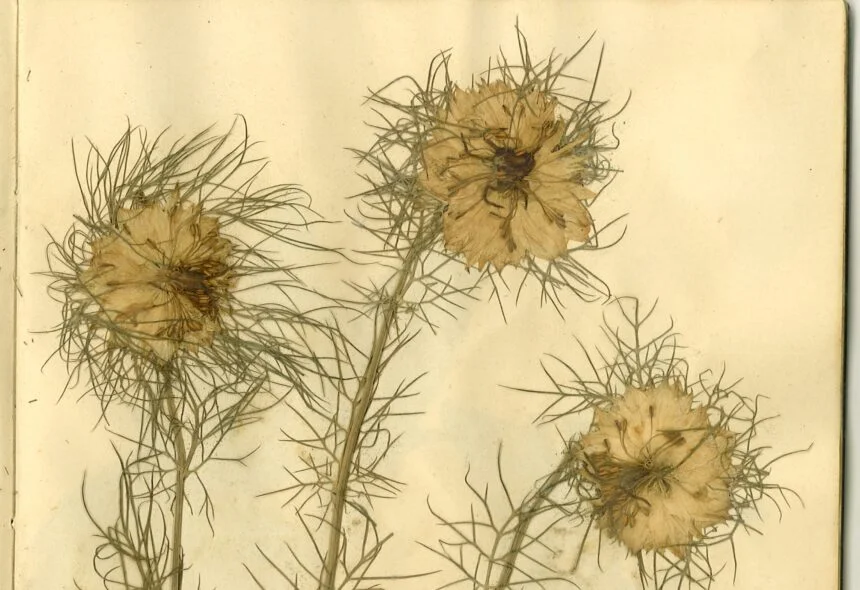
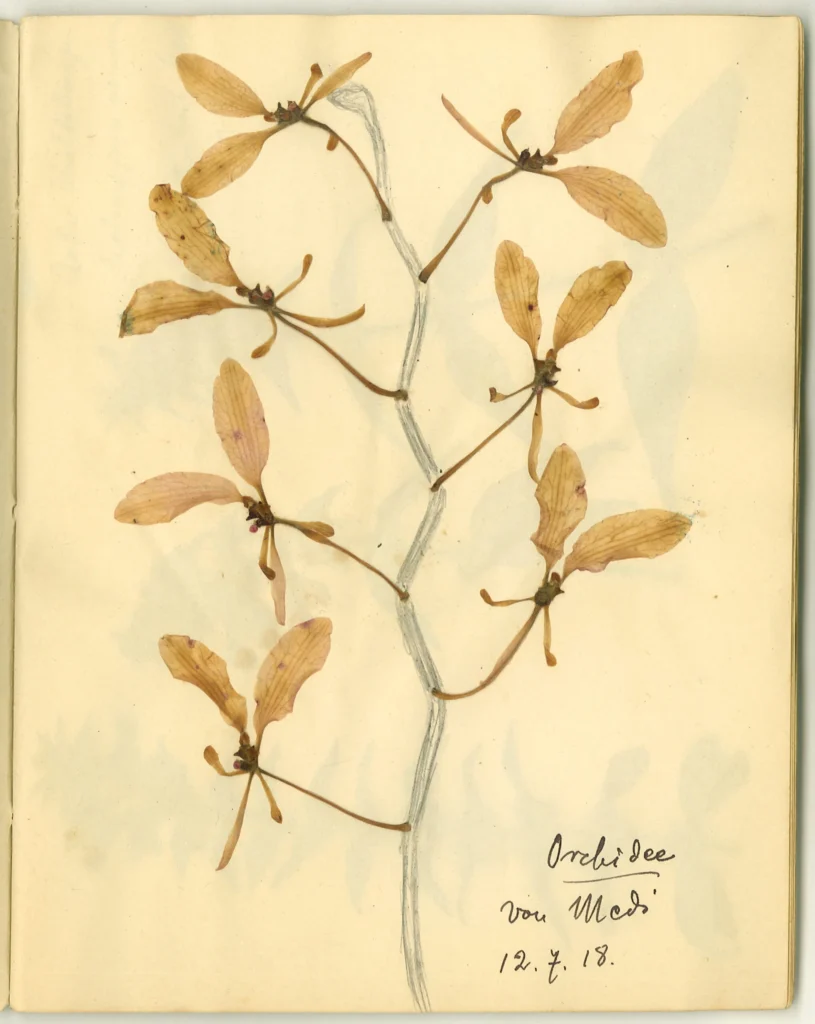
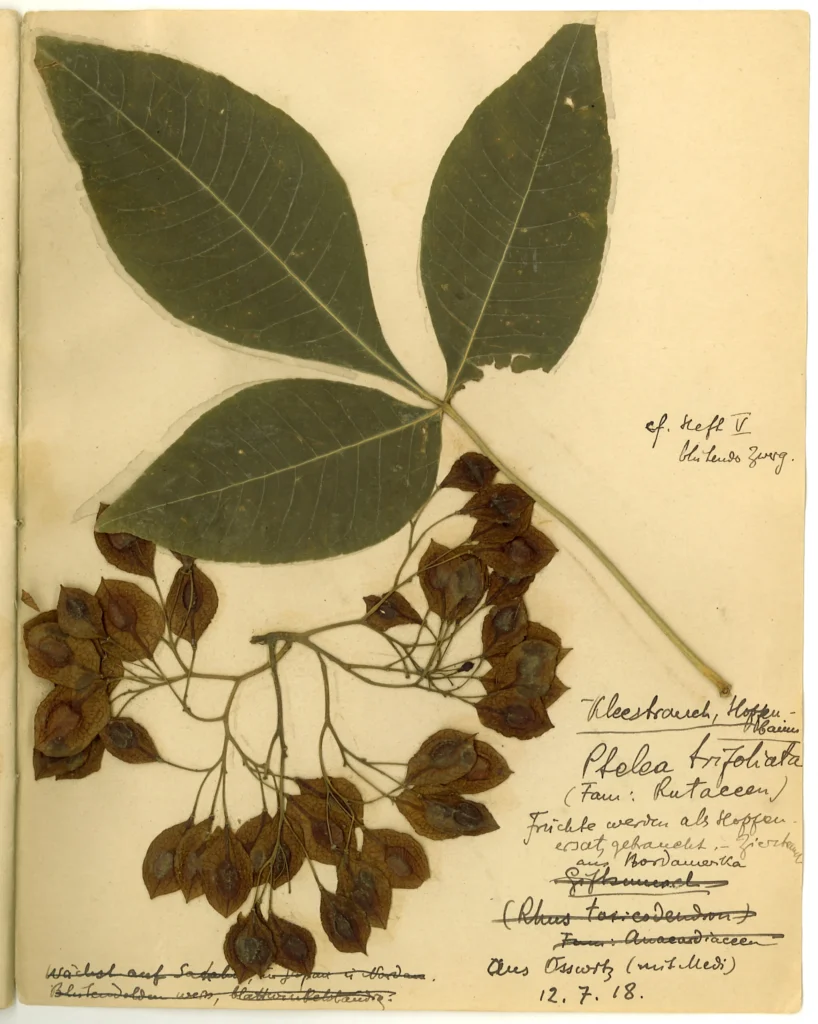
It is not known exactly when Rosa Luxemburg began compiling her herbarium. The collection currently preserved in the Archives of Modern Records in Warsaw, however, covers the period from May 1913 to October 1918. It consists of 18 notebooks: two contain botanical notes, while the remaining volumes include 377 dried plant specimens.
Researchers from the University of Warsaw Botanic Garden examined the herbarium, identified the plant species represented in the collection, and traced its history from the moment of Luxemburg’s assassination in Berlin in 1919.
Over the years, Luxemburg returned to her earlier entries, as evidenced by numerous corrections and deletions. Although her diligence in documenting the collection is clear, some of the preserved specimens are incomplete. In such cases – when only a few leaves or stems had been collected – Luxemburg carefully drew the missing parts of the plant. This attention to detail, together with precise notes on species identification and the location of collection, demonstrates her meticulous approach to botanical documentation.
Few people know that before Rosa Luxemburg became politically active, botany was one of her personal and intellectual passions. During her imprisonment in Wronki, Berlin, and Wrocław, this interest gave her a small measure of personal freedom. In letters from prison, she often described in detail the plants growing in the exercise yard.
Herbariums as research tools
Several factors determine whether a historical herbarium can serve as a valuable research resource. The most important are the condition and diversity of the preserved specimens, as well as the botanical knowledge of the person who created the collection.
The most valuable specimens are those accompanied by detailed documentation of the collected plant fragments or entire plants. This includes not only Polish or Latin names but also information such as the exact date and location of the collection. Such data allow modern botanists to determine when a particular species appeared in a given region or how widely it spread within a specific ecosystem. In turn, this helps reconstruct patterns of biodiversity from past centuries.
Today’s laboratory methods offer even greater possibilities for extracting information from historical herbariums.
“Dried plants can provide data on the morphological structure of plant organs as well as evidence of ongoing climate change. For example, changes in stomatal density can help estimate historical fluctuations in atmospheric CO₂ levels. The developmental stage of preserved floral organs allows researchers to infer shifts in phenological cycles – that is, stages in a plant’s life such as germination, budding, or flowering. DNA extracted from plant tissues can also be used in population and phylogenetic studies. Even accidental ‘contamination’ – such as insects dried together with the plant, or spores and pollen grains – can be valuable for reconstructing the historical ecological context,” explains Prof. Marcin Zych, director of the University of Warsaw Botanic Garden.
Rosa Luxemburg’s botanical love story
Contemporary botanists often refer to the phenomenon known as plant blindness – our tendency to overlook plants even when they are right in front of us. For example, when looking at an image containing various plant and animal species, people are usually able to identify the animals but not the plants.
As a counterpoint to this tendency, researchers have introduced the concept of a plant love story. Rather than focusing on the negative aspects of our limited awareness of plants, this concept highlights positive examples of meaningful relationships between people and the plant world.
Rosa Luxemburg’s herbarium is one such a plant love story. By revealing a little-known aspect of a famous historical figure, it shows not only her personal connection with nature but also her deep attentiveness to the living world.
“Looking at the herbarium – and reading Rosa Luxemburg’s letters – reveals a completely different side of this person. Known primarily for her revolutionary activity, she appears here as a remarkably attentive observer of the world and a lover of nature. I would even venture to say that today, when labor and social rights are – at least in our part of the world – widely recognized as the norm, Rosa Luxemburg might well have become a climate or nature activist. Discovering such unexpected traits in historical figures we tend to see as monumental is fascinating. It reminds us of their sensitivity and shows that nature and plants are an essential part of everyone’s life,” concludes Prof. Zych.

The text was originally published in Polish on the Serwis Naukowy UW website on February 27, 2025.