


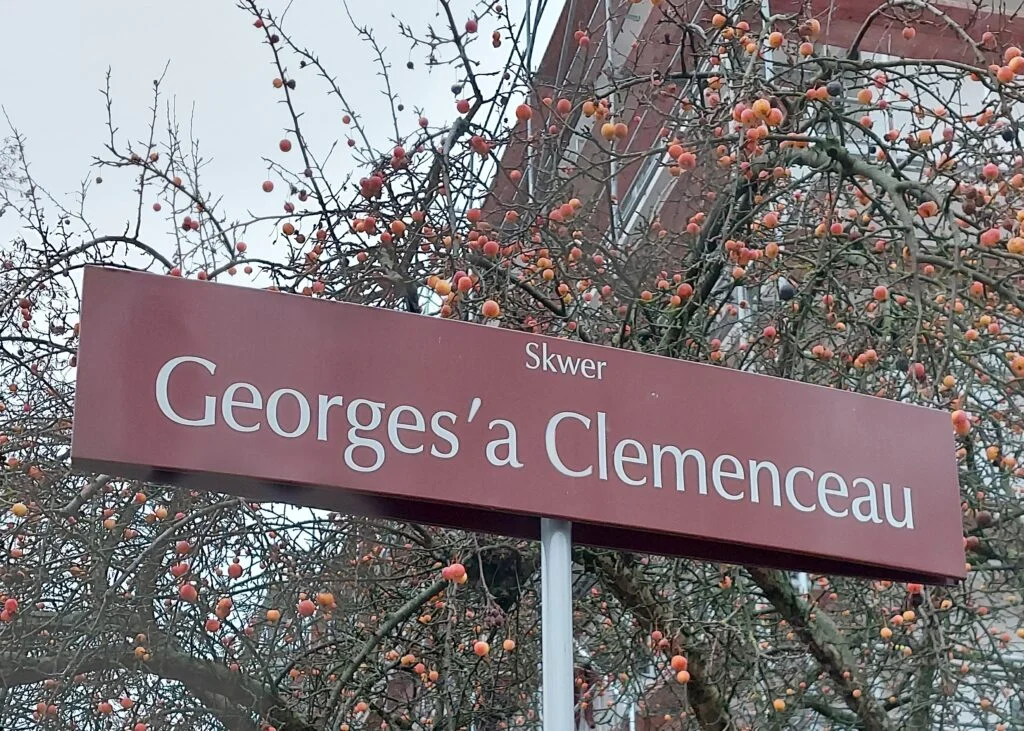
Names given to urban places and features – urbanonyms – serve a variety of functions. They help us navigate the city, but they also carry symbolic weight. When political change began in Poland in 1989, a heated debate erupted over the decommunization of street names. This was not the first such process. Decades earlier, street naming had been shaped by communist ideology. During the partitions, it was subject to Germanization and Russification; after independence was restored, it underwent re-Polonization.
Politicians and others responsible for shaping the linguistic landscape of cities are fully aware of the power embedded in naming decisions. In international geographical research, growing attention has been paid to the quantitative imbalance between streets commemorating men and those honoring women.
Under the spotlight: Warsaw, Kraków, Łódź
Dr. Krzysztof Górny and Dr. Ada Górna, researchers from the Faculty of Geography and Regional Studies at the University of Warsaw, set out to examine whether men dominate urbanonyms in three Polish cities and, if so, to what extent.
Their findings show that in all three cases, the linguistic landscape is overwhelmingly dominated by names commemorating men. In Warsaw, 1,202 streets honor men, compared with 128 honoring women. In Kraków, the numbers are 1,039 to 85. In Łódź, the imbalance is similarly stark: 514 streets commemorate men, and 69 commemorate women.
For every street or roundabout named after a woman, there are 12.2 named after men in Kraków, 9.4 in Warsaw, and 7.4 in Łódź. The masculinization of the linguistic landscape is not a perception – it is a measurable fact.
“We wanted to show that urbanonyms primarily commemorate men. That’s the case in Kraków, Łódź, and Warsaw – and, unfortunately, in every other Polish city as well. We also asked what it means to have a patriarchal naming system. How does it affect society? How do marginalized women experience it? Let’s not forget that women make up the majority of Poland’s population. Should urban naming be demasculinized? And if so, how?” says Dr. Krzysztof Górny.
Do these findings align with how we perceive these cities? Are they in any way connected to their historical identities? In Kraków – the “city of kings” – the gender gap in favor of men proved to be the widest. The smallest gap was observed in Łódź, historically associated with female textile workers.
Looking ahead
While the research documents the past and present, the scholars also point to the future.
“If we assume that the male-dominated naming landscape is the result of historical processes and entrenched patriarchy in Poland, then we have an explanation for the current state of affairs,” explains Dr. Krzysztof Górny. “But if we also assume that this landscape has the power to shape future generations, the issue becomes even more compelling.”
In other words, street names are not just a legacy; they are also tools that influence how residents understand their world. “If we raise future generations in a space where the linguistic landscape consistently signals that men are the primary figures commemorated in the naming of streets, parks, and schools, we reinforce patriarchy and leave a lasting imprint on those generations,” he adds.
“If the fundamental purpose of science is to explain the reality that surrounds us, then in this small but meaningful realm of names, that is precisely what we sought to do. We wanted to show not only where these names come from, but also how they affect ‘ordinary citizens,’” emphasizes Dr. Krzysztof Górny.
What is political geography?
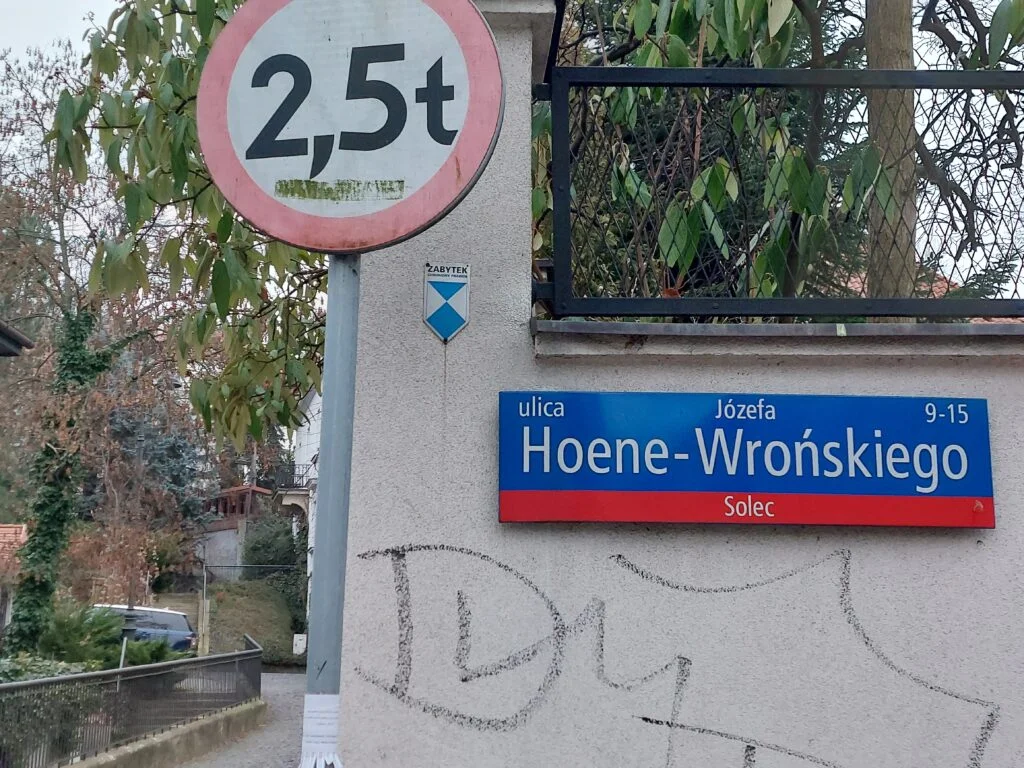
In Poland, onomastics – the study of names – is typically associated with linguistics. Yet geography has an equally important role to play. This is especially true in political geography, which examines the relationship between political processes and space. Dr. Krzysztof Górny and Dr. Ada Górna’s research on gender representation in the linguistic landscape of Polish cities is part of a broader global trend that has gained momentum in recent years. Similar analyses of male and female representation in place names have been conducted in Sub-Saharan Africa, Spain, and countries across Eastern Europe.
Studying naming practices provides valuable insight into the development of societies. Every name reflects decisions made by specific actors, shaped by political, ideological, and historical forces. Increasingly, researchers are focusing not only on those decisions but also on their consequences – among them, the linguistic landscapes that define our cities.
The text was originally published in Polish on the Serwis Naukowy UW website on February 3, 2025.