

The flood of information that greets us every time we pick up our phones can be overwhelming. Self-proclaimed experts – often after completing short weekend courses – emerge online, offering quick answers to complex questions about how to live. Can the average internet user really verify their expertise, or are we simply left to take their word for it? And what about far more serious issues such as wars, disasters, or political decisions? In such cases, journalism becomes central: journalists are bound by professional ethics to uphold accuracy, impartiality, and integrity.
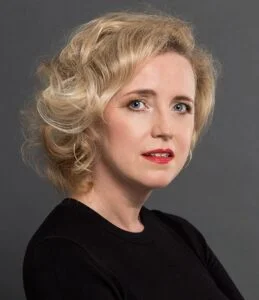
It is precisely this practice – the use of photography in the flagship news programs of Poland’s major broadcasters (TVP, Polsat, and TVN) – that Dr. Monika Kożdoń-Dębecka from the Faculty of Journalism, Information, and Book Studies at the University of Warsaw has examined. Her study highlights the role images play in shaping the credibility of television news.
No image, no story
The researcher analyzed nine news reports from 2021–2023 covering armed conflicts. These included coverage of the withdrawal of U.S. troops from Afghanistan (2021), the shelling of Mariupol (2022) (2022), a missile explosion in Przewodów in eastern Poland (2022), and the observance of the National Day of Remembrance for Poles Who Saved Jews Under German Occupation (2023).
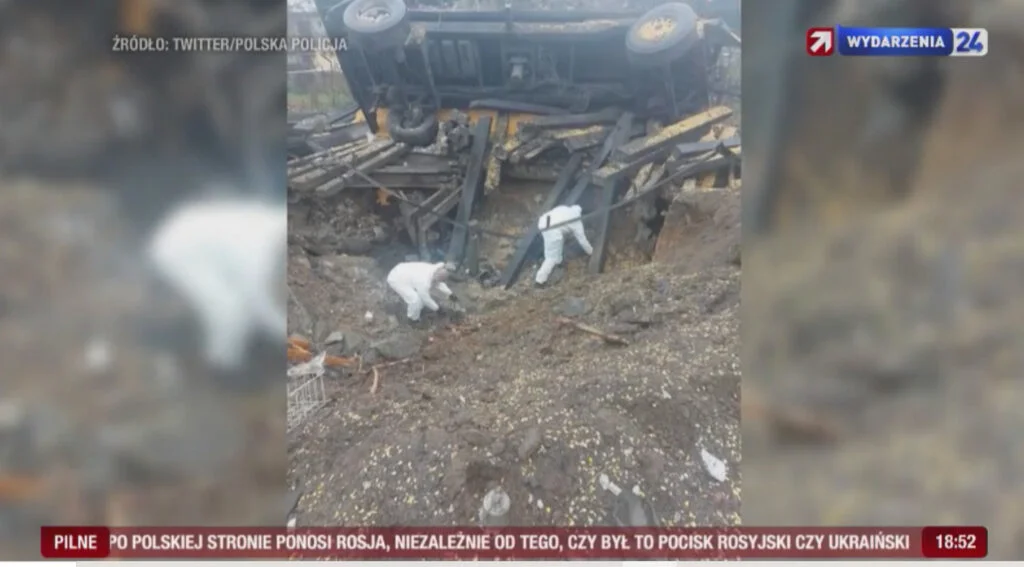
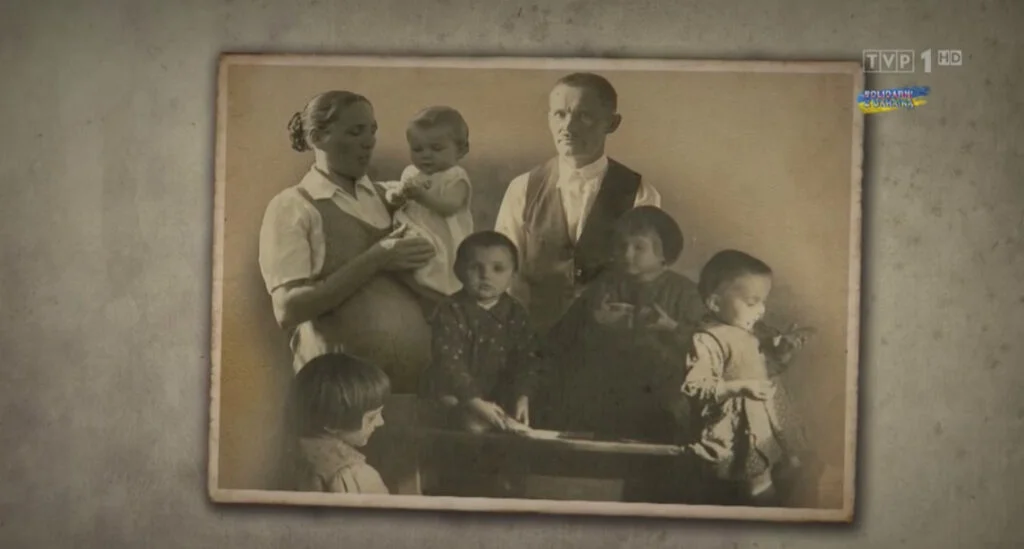
The material included a photograph of a pregnant woman from the besieged city of Mariupol taken by an Associated Press photojournalist, amateur images from the Przewodów missile impact site, and archival footage of the Ulma family from the Podkarpacie region in southeastern Poland. The study was qualitative in nature, meaning it focused on interpretation, meaning-making, and contextual analysis rather than statistical measurement.
The findings show that photographs in television news reports typically appear in a few recurring contexts. First, when a given image has already gained wide circulation outside television journalism, making its omission potentially confusing for viewers who recognize it from social media or online news platforms. Second, when no television crews were present at the scene, as in the case of the Przewodów missile explosion, where eyewitness photographs were used. Third, when reporting on historical events that predate widespread video recording, where photographs remain the only available visual documentation, such as archival images of the Ulma family.
Although photographs often complement video footage, the study found that journalists do not always use them in a fully reliable way. Of the 48 photographs analyzed, 23 – nearly half – were only loosely related to the events shown on screen. A clear correspondence between text and image was found in only 12 cases (about one in four). In 27% of cases, the images had no clear connection to the accompanying voice-over narration. Moreover, 64% of the photographs (31 in total) lacked proper attribution of authorship or source, which represents a significant editorial and legal shortcoming.
“Hello TV? Please come to Facebook”
As Dr. Monika Kożdoń-Dębecka notes, the sources of images used in television news are changing. Traditional photo agencies are being used less frequently, while content from social media platforms is becoming increasingly common – raising the need for greater editorial caution and verification.
“Today, agency photographs are used less often in news reports because television crews are now virtually everywhere. At the same time, more and more images come from social media, which can significantly shape how information is framed and presented,” Dr. Kożdoń-Dębecka explains.
This is particularly evident in situations where journalists have not yet arrived at the scene, while social media users have already posted images online. “That was the case, for example, in Przewodów,” she adds. Relying on social media content always carries risk, as there is no reliable way to verify when, where, or under what circumstances a given image was taken. It is therefore the journalist’s responsibility to verify the source, determine the time and context of its creation, and assess whether its use could contribute to disinformation.
“This creates a constant obligation for journalists to verify sources and determine whether an image is authentic or AI-generated,” the researcher emphasizes. “For instance, an image may appear broadly realistic while still containing digitally altered elements. It is the journalist’s role to detect and verify such manipulations.”
Who can guarantee that a “chałkoń” really exists?
“Chałkoń” is a humorous Polish internet term used to describe AI-generated images that mislead internet users into perceiving them as real. Originally, it referred to a large, horse-shaped bread roll. Online comments often suggest that not all users recognize such images as fabricated.
What risks does the use of artificial intelligence tools pose for journalism? According to Dr. Kożdoń-Dębecka’s research, editorial managers in television news services remain highly cautious about incorporating AI-generated content into news production. The main reason is a lack of trust in data circulating on the internet.
The study does not support the hypothesis that television journalists, when using agency or social media photographs, consistently align visual material with the accompanying voice-over narration. Nevertheless, the researcher suggests that audiences may, over time, increasingly value information delivered by journalists on television. Social media users, she argues, are often overwhelmed by what is called “information smog” – a dense and chaotic information environment. Television news, by contrast, can partially relieve audiences of the burden of verification, effectively taking over part of the process on their behalf.
The text was originally published in Polish on the Serwis Naukowy UW website on June 11, 2025.