
Nothing comes without a cost. Our lifestyles, prosperity, and even our health – the hallmarks of modern civilization – have all been built at nature’s expense. Industries such as agriculture, food production, and construction rank among the largest sectors of the global economy, together generating roughly $7.3 trillion. All of them depend heavily on natural resources. According to the World Economic Forum, nearly half of the world’s GDP – around $40 trillion – is directly tied to nature and the services it provides.
Biodiversity is far more than scenic landscapes. It underpins ecosystem functions that supply clean air, fresh water, and food. When biodiversity declines, the consequences can ripple outward, leading to both local and global crises – from falling crop yields to growing water shortages.
In October 2024, the European Union reaffirmed its commitment to the UN Convention on Biological Diversity, which calls for conserving one-third of the Earth’s land and seas by 2030. But will that be enough? Is human’s impact on the environment really that large?
One concept helping scientists answer these questions is “dark diversity.” Despite its somewhat mysterious name, the idea offers a powerful way to measure the effects of human activity on ecosystems.
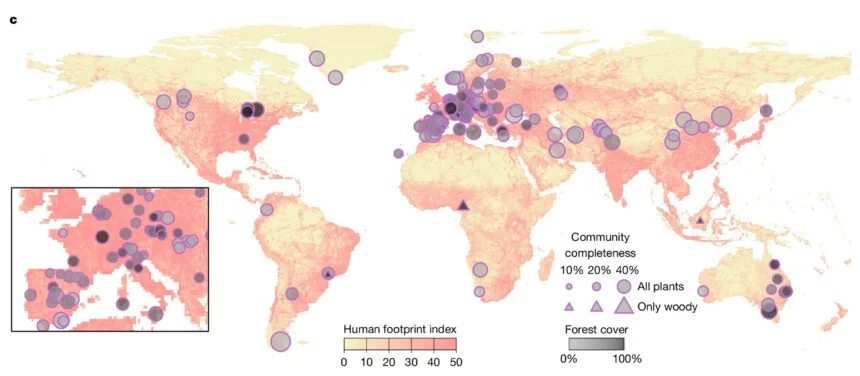
Dark diversity refers to species that should exist in a particular environment – the conditions are suitable, and the species are capable of reaching the area – but are nevertheless missing. By comparing the species that could potentially occur in a habitat with those actually present, researchers can calculate what is known as “community completeness.” It is a relative measure that shows how much the diversity of an ecosystem deviates (negatively) from its potential maximum diversity.
The dark diversity of plants – what is it, exactly?
The detrimental effects of human activity on the natural environment are well documented. Deforestation, urban and agricultural expansion all damage ecosystems and contribute directly to biodiversity loss. What remains far less understood, however, are the more subtle, indirect ways humans affect biodiversity. In recent years, for instance, researchers have observed declines in insect diversity even inside protected areas.
To measure this using the community completeness index, scientists calculate the ratio between all species that could potentially occur in a given area – that is, the maximum potential biodiversity – and the number of species actually present at that location.
The term reflects the idea that biodiversity is shaped not only by the species we can observe, but also by those that are unexpectedly absent. By accounting for these “missing” species, scientists can detect ecological changes that might otherwise remain invisible using traditional approaches.
Researchers compare the concept to dark matter in physics.
“The term ‘dark diversity’ was inspired by the concept of ‘dark matter.’ In physics, dark matter complements visible matter – it affects how the universe functions even though we cannot observe it. Referring to a concept from physics: just as dark matter helps predict the distribution and dynamics of galaxies, ‘dark diversity’ allows us to predict plant species composition – that is, the spatial distribution of species – as well as the dynamics of species assemblages over time and their changes across space,” explain Dr. Iwona Dembicz and Dr. Łukasz Kozub from the Department of Ecology and Environmental Conservation at the Faculty of Biology, University of Warsaw.
From theory to the field: How the research was conducted
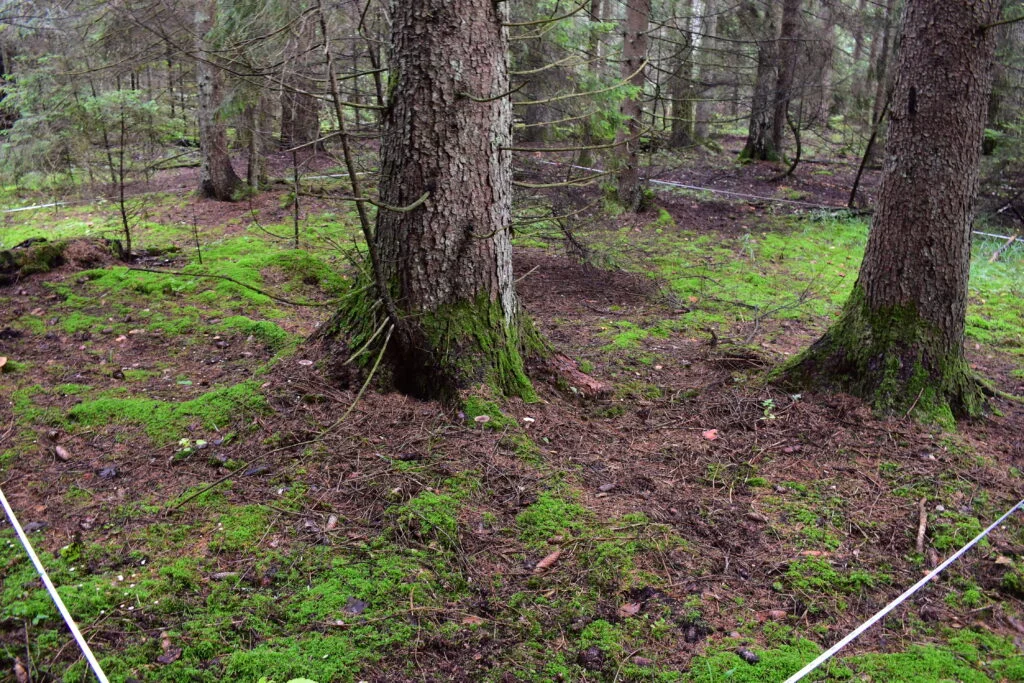
The study brought together scientists from around the world, including researchers from Poland. In total, the team analyzed 5,415 study sites, each measuring 100 square meters, across 119 regions worldwide. The sites included forests, wetlands, meadows, and pastures. In Poland, one of the regions examined was the Augustów Forest. Each study region covered roughly 300 square kilometers and included around 30 study sites.
Rather than focusing on a handful of selected plants, the researchers examined the full composition of vascular plant species at each site, including angiosperms, gymnosperms, and pteridophytes
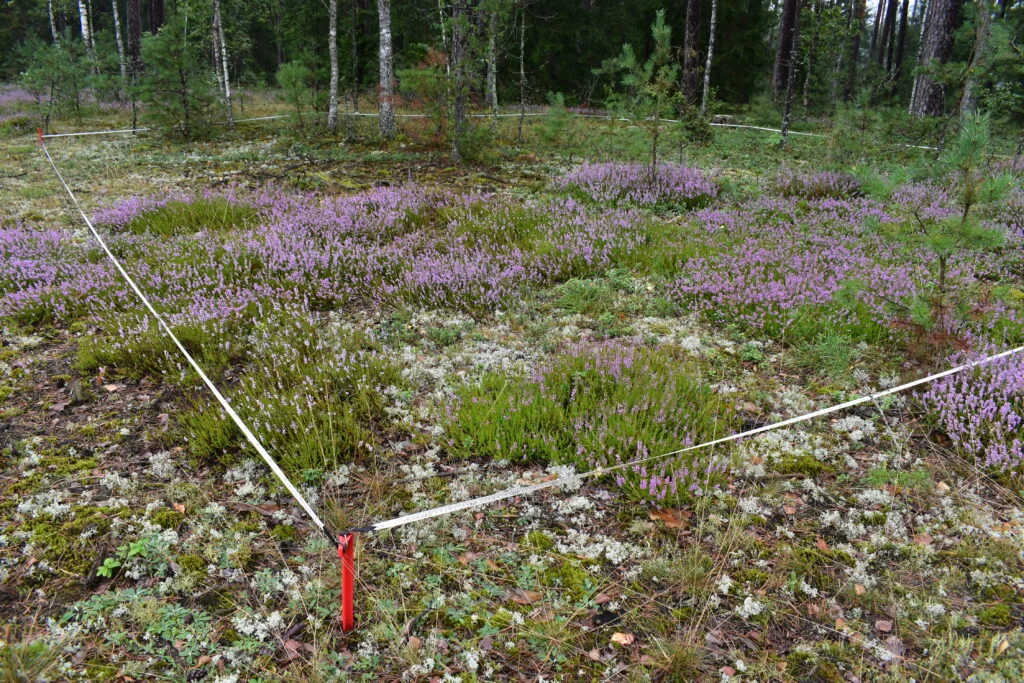
Using the dark diversity methodology, the team then calculated the community completeness index for every study site.
To assess the effects of human activity on community completeness, the scientists analyzed eight components from the human footprint index. These included human population density, the extent of electrical, road, and rail infrastructure, as well as the proportion of land occupied by croplands, built environments, pastures, and waterways.
Until now, it has been difficult to clearly demonstrate the impact of human activity on plant species diversity because it is naturally highly variable and, apart from human influence, depends on many natural factors.
“Species richness and species distribution within ecosystems are controlled by so many different factors that, until now, isolating the impact of human activity has been nearly impossible. Ecosystems naturally exhibit enormous variation for purely environmental reasons. The determining factors can vary greatly regardless of the extent of human impact. Earlier studies have identified specific impacts – for example, the effects of atmospheric nitrogen deposition on the species richness of European ecosystems – but those focused on regional patterns. On a global scale, many more variables come into play. And it was precisely at the global scale that indicators of dark diversity, combined with community completeness – that is, the degree of species occupancy within a community – made it possible to determine what truly has a negative impact on biodiversity. One way to think about it is this: in one case, having 5 out of 10 possible species may seem like very little, while in another, 50 out of 100 possible species may still seem like a lot. Yet in both cases, the level of community completeness is the same – one-half. In other words, it is a relative measure that allowed us to filter out the influence of other factors,” the researchers explain.
Protected areas aren’t enough – what the study shows
The study primarily confirmed what researchers had expected to find: the more heavily humans transform a landscape, the less complete its ecosystems become – and the greater the loss of biodiversity. In sites where environmental transformation in the surrounding area was minimal, the community completeness index was around 35%, whereas in areas with the highest levels of transformation, it dropped below 20%.
The researchers also identified a critical threshold. Once over 30 percent of the landscape surrounding a site had been transformed by human activity, declines in species richness became most pronounced. Interestingly, this closely mirrors current UN biodiversity targets calling for the conservation of about one-third of Earth’s land and seas, even though those targets were developed independently of this study.
What surprised the researchers most, however, was the extent of human impact. Community completeness was most strongly limited by the degree of landscape transformation within a radius of up to 400 km around the site.
“We did not expect human impact to be so profound and so widespread, nor to operate at such a large scale. Especially since this is not about isolated factors or local phenomena, but rather a broad influence at a very large, global scale,” say the ecologists from the University of Warsaw.
At the same time, the study also offered some encouraging insights. Not all human activity necessarily harms biodiversity. A good example are semi-natural ecosystems. The presence of pastures in the landscape surrounding the study sites did not reduce community completeness – in fact, it had a positive effect. This may suggest that strict protection is not the only effective strategy, and that biodiversity conservation can also be supported through more sustainable forms of land use, such as traditional or extensive agriculture. This suggests that strict conservation alone may not be the only path forward. Biodiversity can also be supported through more sustainable forms of land use, including traditional and low-intensity agriculture.
“These findings could support more ambitious biodiversity restoration efforts, even when they are locally controversial. For instance, should species be reintroduced into areas where they are currently absent? However, with this knowledge – recognizing that the absence of species in a given area may be a consequence of past human-driven ecosystem degradation – it can be argued that reintroduction may, in some cases, be justified. Another key issue is conservation planning, which here operates on a global scale, as it involves large-scale efforts. This understanding provides stronger support for policies aimed at protecting as much natural habitat as possible and limiting the expansion of infrastructure – such as roads – into natural areas. Conserving landscapes untouched by human activity is crucial, given how far-reaching human impact can be across space. For this reason, safeguarding large, still-intact tracts of nature is especially important, the researchers conclude.
Discussions about ecology can divide not only people from different generations or professions, but even ecologists themselves. Yet the environmental challenges at the heart of these debates are only becoming more urgent. That is why research like this matters: it gives scientists, conservationists, and policymakers the knowledge needed both to protect what still survives and to restore what has already been lost.
The text was originally published in Polish on the Serwis Naukowy UW website on June 24, 2025.