


Gentrification can be defined as a change in the social character of a neighborhood, in which people of higher socioeconomic status replace those of lower status. This process is accompanied by changes in the urban landscape resulting from investment. In short, it means that the affluent are displacing lower-income tenants from attractive locations. The phenomenon was first observed by sociologists in Western Europe and the U.S. as early as the 1960s. In the following decade, it became widespread and drew the attention of policymakers.
Most researchers agree that displacement is an inherent part of gentrification. On the one hand, it may result from direct economic or legal pressure – for instance, lease terminations or steep increases in rent. On the other, more subtle forms of pressure can emerge: residents begin to feel out of place as familiar neighbors move away, local shops disappear, and everyday services change. Over time, this sense of alienation can lead them to leave voluntarily.
In Poland, large-scale urban revitalization programs began much later than in the U.S. and Western Europe. This delay gave policymakers an opportunity to learn from Western experience and to address the social consequences of renewal. One outcome was the adoption of the “right to stay put” principle, incorporated into the Revitalization Act of 2015. In practice, this meant tenants were supposed to retain their leases after renovations were completed. But does this work in reality? This question was examined by Dr. Barbara Audycka of the Department of Social Urban Studies and Conflict Studies at the Institute of Applied Social Sciences, University of Warsaw.
Interviews with Residents
The study was conducted in three cities – Warsaw, Łódź, and Wałbrzych – major urban centers where large-scale renovations of municipal, rent-regulated housing have taken place. Because of the scope of the work, tenants had to move out during construction. At the same time, local authorities generally showed awareness of the legal framework and sensitivity to residents’ needs, partly due to earlier pilot revitalization programs.
Dr. Audycka’s team conducted 78 interviews with tenants of municipally owned housing (public housing managed by city governments). Participants were asked about their attitudes toward relocation, uncertainty about their housing situation, the inconvenience of moving, their old and new neighborhoods, and whether they intended to return after renovations were completed.
Relocation, in Plain Terms
Much of Poland’s municipal housing stock is in very poor condition. Many buildings were taken over by the state after 1945 (following World War II and the nationalization of property) and have seen little or no renovation since. Revitalization, at least in theory, was meant to improve residents’ quality of life.
Given the extent of disrepair, municipalities often decided to relocate tenants temporarily, providing alternative housing during renovations. How did residents respond?
Some interviewees – frustrated by poor living conditions or difficult neighbors – were eager to leave. This group welcomed the move. As one participant recalled:
“I don’t even go back to that neighborhood. I don’t want to remember it. When my daughter was younger, she used to ask, ‘Mom, aren’t we going to the ugly house?’” Now, when they come back from preschool, the woman hears her daughter say, ‘Our nice little blue house.’”
The second group, however, felt deeply attached to their homes, neighborhoods, and neighbors. These respondents were primarily from Warsaw’s Praga district.
“Last call, or I’m going home!”
Residents also described feelings of anxiety and uncertainty. Notice periods varied widely – from as little as two or three months to several years. In some cases, relocation notices arrived shortly after tenants had invested their own money in renovating their apartments.
The process of selecting a replacement apartment could also be stressful. Some residents reported being offered up to three options – but not all at once. Instead, offers were made sequentially. Rejecting one option meant risking a worse one next. After several refusals, the city could even initiate legal proceedings on the grounds that the tenant was obstructing the renovation process.
Back to the old place?
Dr. Audycka’s research shows that, after renovations were completed, the vast majority of tenants did not return to their original apartments and instead remained in their temporary housing.
Why?
Many interviewees expressed dissatisfaction with the quality of the renovated apartments. Some even felt their apartments had been better before – pointing to, for example, the replacement of traditional wooden floorboards with cheaper laminate. Others, however, embraced their new circumstances and described their temporary housing as a “fresh start.”
A key factor was the lack of clear communication from authorities about whether returning would be possible and what the renovated apartments would actually be like. Residents were often not told what standard to expect after the work was completed. Combined with limited trust in construction quality, this uncertainty led many to stay where they were – preferring a familiar situation to an unpredictable one.
Lengthy renovation timelines only added to the problem. Tenants often had no idea when – or if – they could return. Moreover, returning would require moving yet again, which discouraged many. As a result, only a small percentage ultimately went back to their original homes.
Who is this revitalization for?
As Dr. Audycka points out, one major barrier preventing former tenants from returning is that the 2015 law does not guarantee that rents will remain at pre-renovation levels.
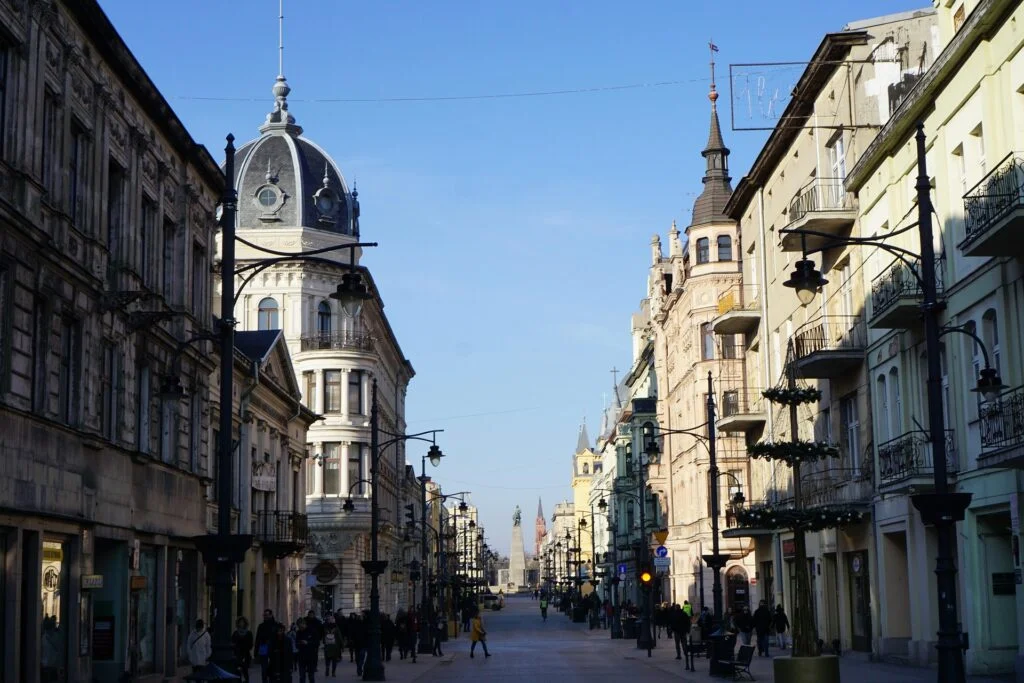
In Łódź, for example, rents in renovated tenement buildings have reportedly more than doubled (though they still remained much lower than on the private market). At the same time, no provision was made for social tenure for vulnerable households within revitalized areas.
“Revitalization policies place tenants in a situation where tenants that are better-off have more options than those with lower incomes,” Dr. Audycka notes.
On-demand gentrification
So, are we dealing with genuine urban renewal – or with gentrification driven by city policy?
According to Dr. Audycka, some measures – such as those implemented in Wałbrzych – bear clear signs of the latter. The city has faced significant population decline, as residents move to larger urban centers like Wrocław. Revitalization efforts are therefore partly aimed at attracting professionals and higher-income tenants to newly upgraded neighborhoods.
These policies, combined with the constraints described above – which disproportionately affect less affluent tenants – are reshaping the social fabric of revitalized areas. Newcomers tend to be wealthier and possess greater cultural capital.
This raises a fundamental question: who ultimately benefits from urban revitalization, if not the original residents? In many cases, they simply cannot afford to return.
The text was originally published in Polish on the Serwis Naukowy UW website on March 17, 2025