


It was Voltaire (1694–1778) – now widely regarded as a symbol of the struggle for free speech and often associated with the famous line, “I disapprove of what you say, but I will defend to the death your right to say it” – who wrote texts that legitimized Russian diplomatic and military actions. Yet Voltaire never actually said those words. The phrase was coined by the English writer Evelyn Beatrice Hall, who used it to summarize his views.
How did one of the Enlightenment’s greatest philosophers come to align himself with imperial propaganda? To understand this, we need to look at how the relationship between political power and public opinion took shape in the 18th century.
“In the 18th century, public opinion had very little influence on politics, yet political actors were already actively trying to shape it,” notes Dr. Jacek Kordel of the Faculty of History at the University of Warsaw, who has closely studied both Voltaire’s correspondence and Russian diplomatic correspondence of the period.
Early modern European rulers were already beginning to recognize the immense power of image-making. By the turn of the 18th century, Peter the Great (1672–1725) deliberately used it to construct a favorable image of Russia abroad. At the beginning of his reign, the Russian tsar embarked on the Grand Embassy through Western Europe. Reports of his travels were carefully curated and circulated in the English, Dutch, and German press.
“It was meant to present Peter the Great as a ruler who sought to free his people from the darkness of ignorance and bring them into the civilized world,” Dr. Kordel adds.
The Enlightenment, Russian style
Even before Catherine II (1729–1796) turned to Voltaire, the Russian court had already made efforts to attract influential European thinkers. One of them was Gottfried Wilhelm Leibniz (1646–1716), who hoped to become a mentor to Peter the Great and help him reform the Russian state. As late as the 1660s, the German philosopher still viewed Russia as a barbaric state that threatened European civilization.
“For many years, Leibniz saw Poland as a stronghold at the edge of the Latin world, while Moscow, in his view, still belonged to Asia. But when Augustus II (1670–1733), King of Poland and Elector of Saxony, did not appoint him president of the Saxon Academy of Sciences, his outlook shifted. He turned instead to Peter the Great, who promised him an important position at the Moscow court – later the St. Petersburg court – and an annual salary,” the historian explains.
Leibniz came to view Russia as a blank slate – a tabula rasa – ready to be shaped by ideas of progress. He imagined himself as the spiritual father of a new Russia. His case illustrates how strong the temptation was to shape the destiny of a great power – and how easily intellectuals could turn a blind eye to harsh realities in exchange for influence and prestige.
Poland as a negative example
Recasting Russia as a civilized power required the creation of a contrasting “barbarian.” That role gradually came to be assigned to Poland. The Polish-Lithuanian Commonwealth, long seen as a bulwark of Western Christendom, was increasingly pushed to the margins. Its former image as the “stronghold of Latin civilization” was steadily displaced by a new narrative centered on Russia.
“Every ‘good’ model needs a counterexample. If Russia was to be seen as a civilized state, another country had to be cast in the role of the barbarian,” says Dr. Kordel.
This reversal did not happen overnight. By the early 18th century, Russia was increasingly described in Europe as a country capable of becoming civilized – provided it had the right mentors. It was precisely such advisers, including Leibniz and later Voltaire, that Russian rulers actively sought out. This shift in perceptions of Russia and Poland – what historians today call the “Russian mirage” – proved crucial for the future of Eastern Europe. Parallel to this propaganda push, there was a systematic focus on the weaknesses of the Commonwealth.
“Since the time of Peter the Great, the Polish-Lithuanian Commonwealth had effectively functioned as a Russian protectorate. Russian rulers decided who would sit on the Polish throne, first elevating Augustus III and later Stanisław August (1732–1798). They blocked political, military, and fiscal reforms. Moreover, whenever an opportunity arose to destabilize the Commonwealth, they readily took it,” the researcher emphasizes.
Prussia pursued similar aims. Poland’s weakness was seen as a precondition for the strength of its neighbors.
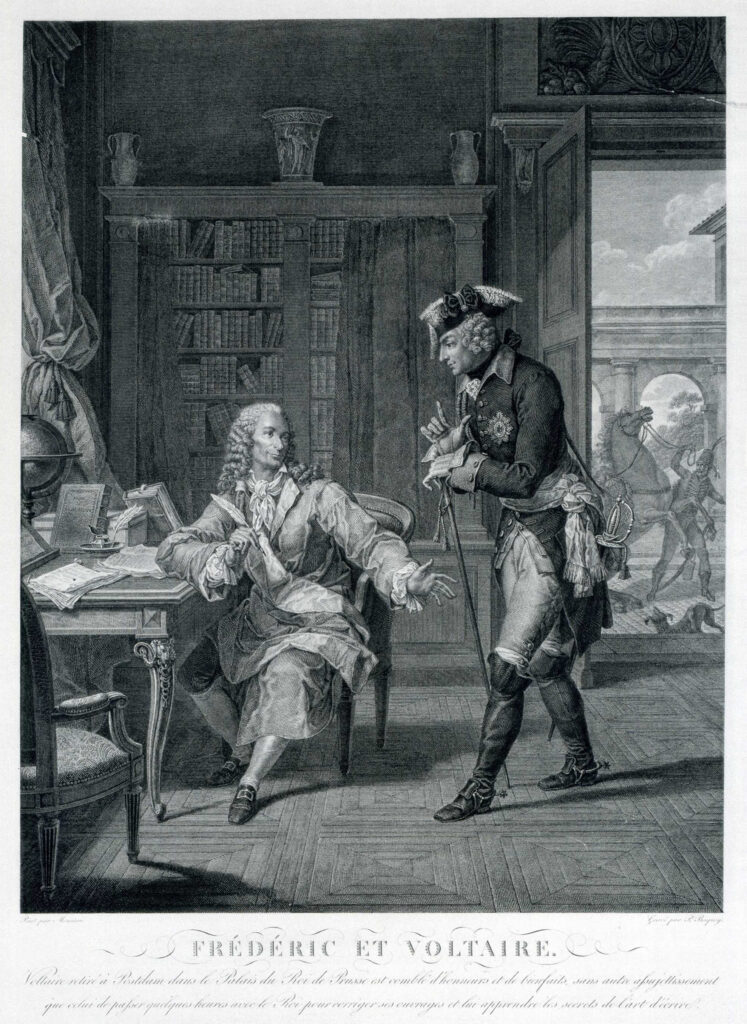
The role of dissidents
One issue that both Prussia and Russia could exploit to interfere in the internal politics of the Polish-Lithuanian Commonwealth concerned so-called dissidents – Protestants and Eastern Orthodox Christians. In the 16th century and the early decades of the 17th, members of all Christian confessions, especially among the nobility enjoyed full religious tolerance and political equality. In later decades, however, the political rights of non-Catholics were gradually restricted, although their position remained relatively favorable compared with conditions in England or the Netherlands. They were free to practice their religion and, until the 1730s, could still serve in the Sejm and in the tribunals.
“At the beginning of Stanisław August’s reign, when the king, together with the Czartoryski faction, sought to introduce major constitutional reforms – including the abolition of the liberum veto – and thereby strengthen the state, both Russia and Prussia objected. The dissident question offered a convenient pretext for intervention. They demanded that the Warsaw court grant full political equality to Protestants and Orthodox Christians. In Western Europe, such a solution would have been unthinkable; no comparable system existed at the time. For the sake of public opinion, the issue was therefore framed as one of religious tolerance – that is, the freedom to practice one’s own rite – which was already formally guaranteed in Poland,” explains Dr. Kordel.
Religious tolerance had been one of the central themes of Enlightenment debate since the late 1750s and early 1760s.
How many libraries does it take to buy Voltaire?
Catherine II capitalized on Enlightenment debates about tolerance. Although she presented herself within Russia as a defender of Orthodoxy, in Western Europe she sought to appear as an enlightened ruler who, having absorbed the leading philosophical works of the time, intended to apply their principles in practice.
To secure Voltaire’s favor – the era’s most prominent celebrity intellectual – the empress decided to purchase his library. By spending the considerable sum of 30,000 rubles, she reinforced her image as a patron of learning, science, and culture.
“He was able to use this library until his death, after which the collection was sent to St. Petersburg, where part of it remains to this day,” says Dr. Kordel.
Between 1767 and 1771, Russian diplomats supplied Voltaire with briefing materials and notes that he used to craft texts justifying Russian intervention in Poland ostensibly in defense of the dissidents—portrayed as a mission of salvation.
“Russian soldiers brought peace. As Voltaire argued, their arrival in Poland meant that every province they entered flourished – order was restored and agricultural yields increased. This humanitarian mission, which he claimed was carried out without a single drop of blood being shed, was meant to demonstrate Catherine II’s benevolent intentions. In reality, however, it was a military intervention justified through the rhetoric of ’peaceful order,’ the researcher explains.
Voltaire not only failed to protest Russian violence – he actively endorsed it and expressed gratitude to Catherine II:
“Your generous concern for establishing freedom of conscience in Poland is a blessing that cannot go uncelebrated. On behalf of all humanity, I dare to speak out on this matter,” Voltaire wrote to the empress.
“This is a perfect example of how the philosopher became embedded in the machinery of imperial propaganda,” comments Dr. Kordel.
Politically, the aim was to block planned political, fiscal, and military reforms in the Polish-Lithuanian Commonwealth. Voltaire produced several pamphlets that circulated widely across Western Europe. Some were commissioned, while others were written on his own initiative in an effort to further ingratiate himself with Catherine II.
“The Russians took great care to ensure that the version of events presented in his pamphlets aligned with their expectations. When he made an error, as in one case in 1767, he was required to correct it, and the entire print run was sent to the paper mill,” notes the historian.
Voltaire, freedom, and rubles
The philosopher widely celebrated as a symbol of Enlightenment ideals and freedom of thought had no qualms about producing and promoting Russian propaganda. Voltaire’s case serves as a reminder to approach the opinions of supposedly “independent experts” with caution – especially when they address political and social issues in the language of concern and compassion.

The text was originally published in Polish on the Serwis Naukowy UW website on August 5, 2025.