
Language is the foundation of every culture, including local ones. A shared language helps distinguish different ethnic groups united by history, tradition, territory, and customs. Language thus shapes our sense of identity and strengthens bonds within communities on many different levels.
Specialists most often distinguish between several types of language varieties: native languages (general, nationwide languages – for example Polish), regional languages (e.g., Kashubian, recognized as a regional language in Poland), dialects (variants of a nationwide language – for example the Silesian dialect – and vernaculars (language varieties used in relatively small areas – for example the Podhale dialect).
Preserving one’s own language is particularly important – and difficult – for minority communities. However, few would assume that the problem of preserving an authentic linguistic identity could affect the Gorals, the inhabitants of the Podhale region in southern Poland.
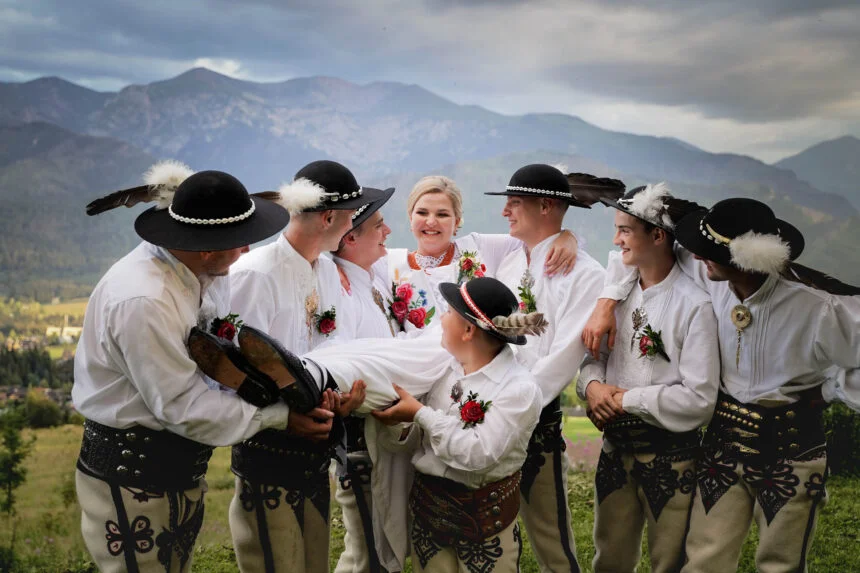
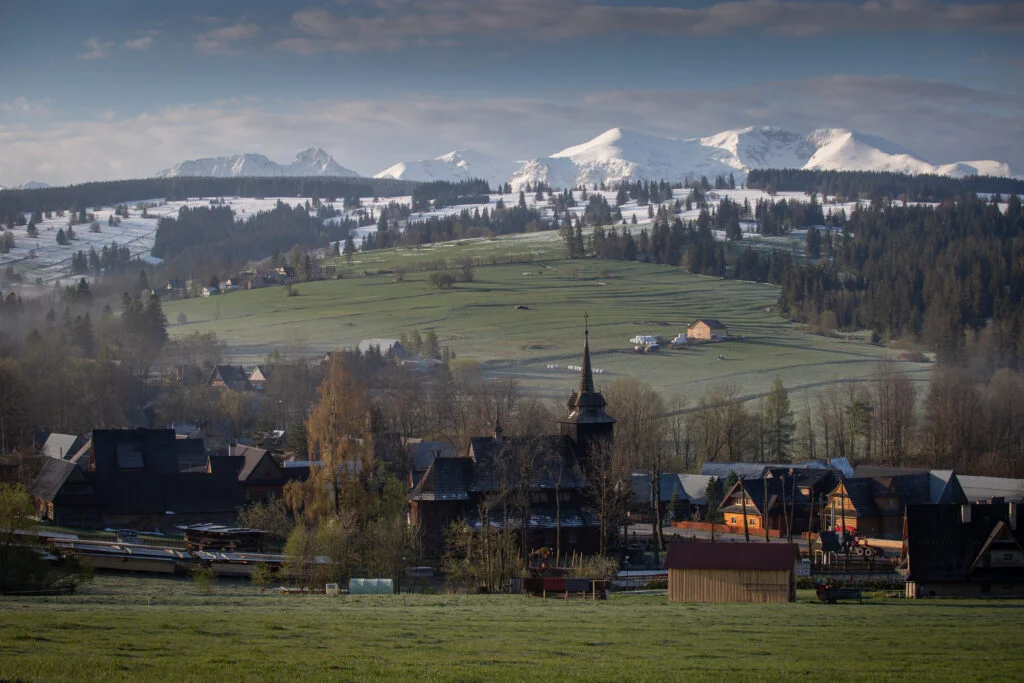
Podhale stands out from other cultural regions of Poland thanks to its distinctive and colorful character. From the days of “Tatra modernism” and the decadent expeditions of Polish writer Witkacy (Stanisław Ignacy Witkiewicz) and poet Kazimierz Przerwa-Tetmajer to the present day, the area has enjoyed enduring popularity as a destination for active recreation. In 2024, a record number of more than 5 million tourists visited the Polish part of the Tatra Mountains.
This, of course, benefits the tourism industry. Oscypek cheese (a traditional smoked sheep’s milk cheese), hats decorated with shells, and gadgets featuring the ciupaga (a traditional Goral shepherd’s axe) sell like hotcakes. How is it possible that at the same time the Podhale dialect is considered an endangered language? This issue is being studied by Dr. Tomasz Łuszczek and Prof. Jerzy Rubach, linguists from the University of Warsaw.
Where is the dialect taught?
Knowledge of the dialect among the youngest generations of Podhale Gorals continues to decline. Why is this happening?
As it turns out, the reasons go beyond processes typically responsible for the disappearance of dialects, such as migration from rural areas to cities. The problem begins at home – where local culture traditionally had its strongest influence. Today, the first language learned by the youngest inhabitants of Podhale is no longer the Podhale dialect but standard Polish.
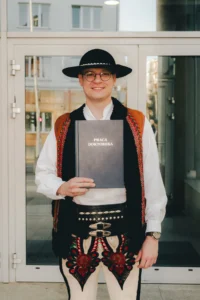
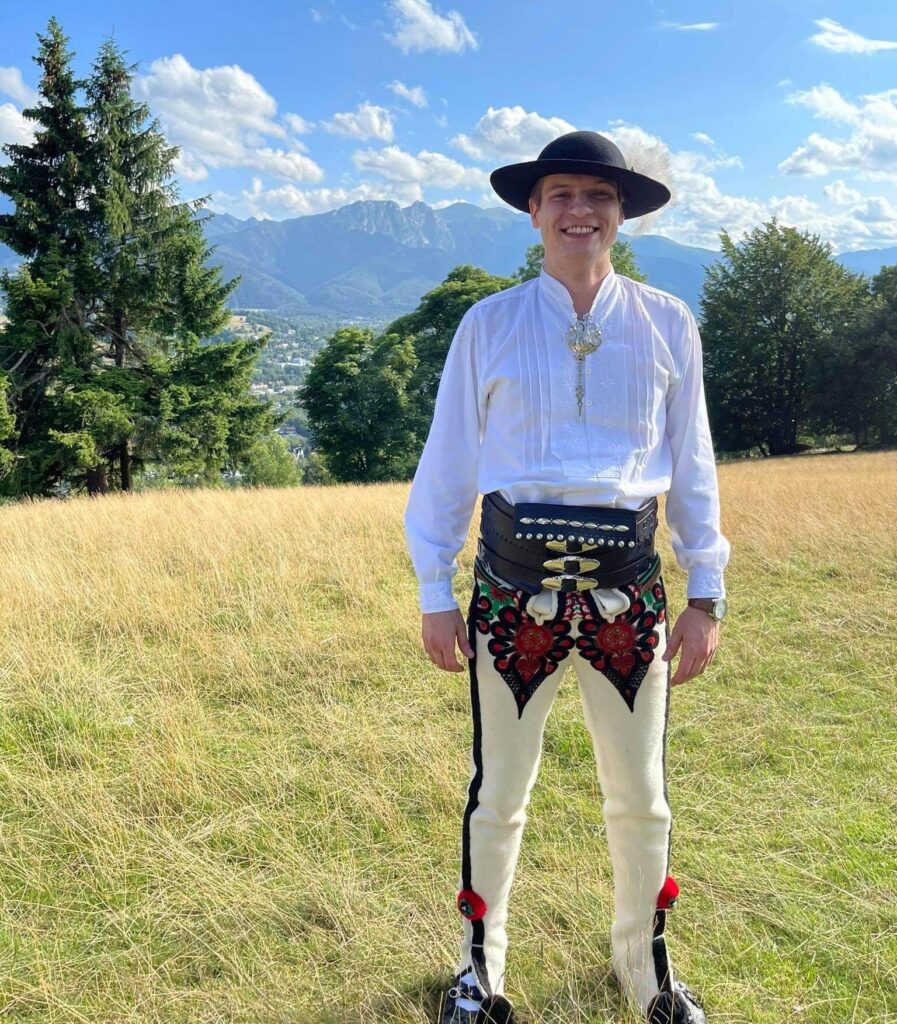
Dr. Tomasz Łuszczek – a linguist, English philologist, and co-author of the standardized spelling system for the Podhale Goralian dialect – knows the situation inside and out because he himself comes from Podhale.
“I was born in 1995, and my entire generation spoke the Podhale Goralian dialect natively; it was our first language. Today, in the same elementary school I graduated from, the situation is completely different. The teachers who work there say that 70–80% of children speak standard Polish. They learn it already in kindergarten. Back in my day, we spoke the dialect at home, and access to media was limited. There was television, but there was no Netflix, no internet, no tablets. Children grew up in an environment that was almost 100% dialectal,” says Dr. Tomasz Łuszczek.
How to save the Podhale dialect?
Dr. Tomasz Łuszczek and Prof. Jerzy Rubach have made it their mission to save the Podhale Goralian dialect from oblivion.
One way to achieve this is to restore its prestige. The linguists travel to Podhale and give lectures promoting, for example, the idea that speaking the dialect can be a source of pride rather than embarrassment.
Another approach is to codify the Podhale dialect—that is, to develop a unified writing system and describe its grammar. In this field, they are pioneers.
Early attempts to create a Podhale Goralian writing system date back to the 19th century, when the Polish intelligentsia became fascinated with Podhale culture. However, those attempts ultimately proved unsuccessful, and today very few people are familiar with written Podhale Goralian.
For this reason, when linguists from the University of Warsaw develop the phonology of the Podhale Goralian dialect – that is, when they study how the sound system of the dialect functions – they do not rely solely on purely linguistic criteria. Their goal is to create a writing system that will both accurately reflect the spoken language and remain simple and practical.
In other words, it must be simple enough to serve ordinary Gorals in their everyday lives. This is also why gaining broad public support among the inhabitants of Podhale is an essential part of creating a writing system for the dialect.
“The first public presentation of ideas for the writing system took place in the spring of 2022. It began with a lengthy lecture delivered by Prof. Rubach and myself. Later, I organized workshops where I presented the theory along with a series of exercises. Those were the official activities; there were many more unofficial meetings as well. We try to gauge the reaction of the local community on an ongoing basis. I talk to many people and test the waters. We check whether people like what we are doing. So far, the response has been positive. The long-term goal is to introduce the Podhale Goralian script into schools. For teaching purposes, standardizing the spelling of the Podhale Goralian dialect is crucial,” explains Dr. Łuszczek.
Goral, don’t you regret?*
Linguists are working to save local languages from extinction all over the world. According to a UNESCO report, around 3,000 local languages are currently endangered—almost half of the approximately 7,000 languages spoken worldwide.
Dr. Tomasz Łuszczek’s research is part of a rapidly growing field known as language revitalization. Its goal is to bring dying dialects and languages back to life.
Activities of this kind have also been undertaken in Poland for about two decades. Years ago, Prof. Jerzy Rubach developed a writing system for the regional language of Kurpie (a cultural region in northeastern Poland).
“The Kurpie script and grammar I introduced are now taught in schools in the municipalities of Kadzidło and Lelis. More than 2,000 pages of printed publications by the Kurpie people themselves have been produced using the spelling and grammar system I created,” says Prof. Jerzy Rubach.
Currently, the scientist is also conducting research on Silesian phonetics.
“We shape our identity through a common language. When a language disappears, identity disappears with it. Every language or dialect is also a different way of thinking, perceiving the world, and expressing emotions. The loss of a language or dialect therefore means the irreversible loss of a way to better understand human nature and the human mind. For these reasons, the Podhale Goralian dialect is such a precious treasure that must be protected,” emphasizes Dr. Łuszczek.
Apart from his research, he is also a practitioner. He writes stories and poetry in the Podhale dialect.
In one of his poems, Do gwary (To the Dialect), he asks:
“gwaró | jakoz ta zyjys | czymos śy jakó | cy gińys?”
(Dialect, | how are you these days? | Are you holding up, | or are you dying?)
He assures us that he will do everything in his power to ensure that the Podhale Goralian dialect – and the Podhale identity – do not disappear so easily.

The text was originally published in Polish on the Serwis Naukowy UW website on February 18, 2025.
* The title and opening line of a famous song based on a poem by the Kraków poet Michał Bałucki