


The Horn of Africa – an area that includes, among others, present-day Ethiopia – is where some of the earliest encounters between Christianity and Islam took place centuries ago. In the northern part of the region lay the ancient Kingdom of Aksum, where Christianity was adopted as early as the 4th century CE. As a result, Ethiopia is considered one of the first countries in the world where Christianity officially took root.
After the kingdom’s golden age, its later rulers and clergy faced challenges related to the expansion of Islam –both within Ethiopia itself and across the Red Sea. This is reflected in various texts preserved to this day and written in the ancient language known as Gəʿəz or Classical Ethiopic. For example, the medieval Ethiopian homilies reveal how Christians perceived the first followers of Muhammad. These texts therefore constitute a unique testimony to previously undiscovered chapters of history.
Research into the use of Christian sources to reconstruct the history of Islam – and the influence of Islam on Christian theology and literature – is now a major focus in modern studies on non-European Christianity. By analyzing texts left behind by Middle Eastern Christians – eyewitnesses to the birth and expansion of Islam – scholars can reconstruct previously unknown aspects of the early Middle Ages in Africa. Ethiopian Christian literature in the Gəʿəz language, however, has so far been largely overlooked in this research.
Dr. Marcin Krawczuk, from the Faculty of Asian and African Cultures at the University of Warsaw, has undertaken the translation and analysis of Ethiopian homilies. He is also participating in the international Beta Maṣāḥǝft project, which aims to create a comprehensive database of literature written in Gəʿəz within the Orthodox Christian communities of Ethiopia and Eritrea.
The ancient Gəʿəz language
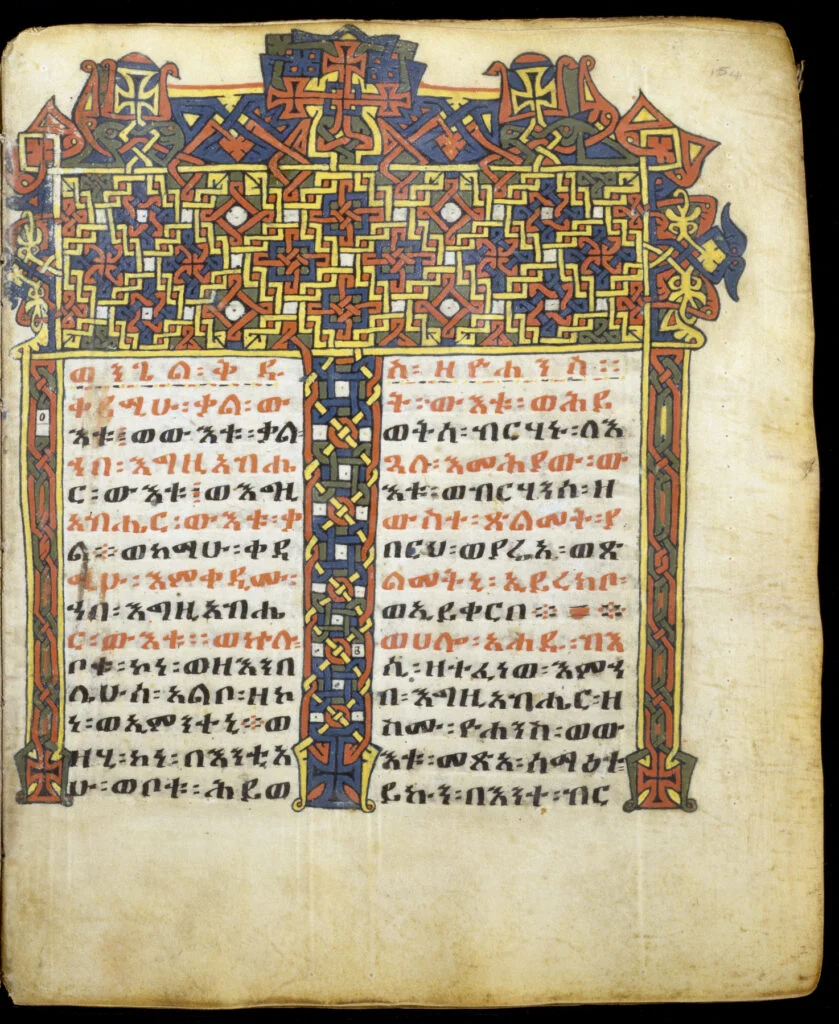
Gəʿəz was widely spoken in the Kingdom of Aksum. Until the 19th century, it served as the primary literary language of the Ethiopian Empire. Although it is now extinct as a spoken language, texts written in Gəʿəz are considered among the greatest works of literature in the Christian East.
“Despite this, Gəʿəz has not attracted as much attention as its related languages, such as Hebrew and Arabic, so relatively few tools have been developed for translation work. In practice, all researchers working on Gəʿəz texts rely on a single dictionary, published in 1865 – a Gəʿəz–Latin dictionary,” says Dr. Marcin Krawczuk.
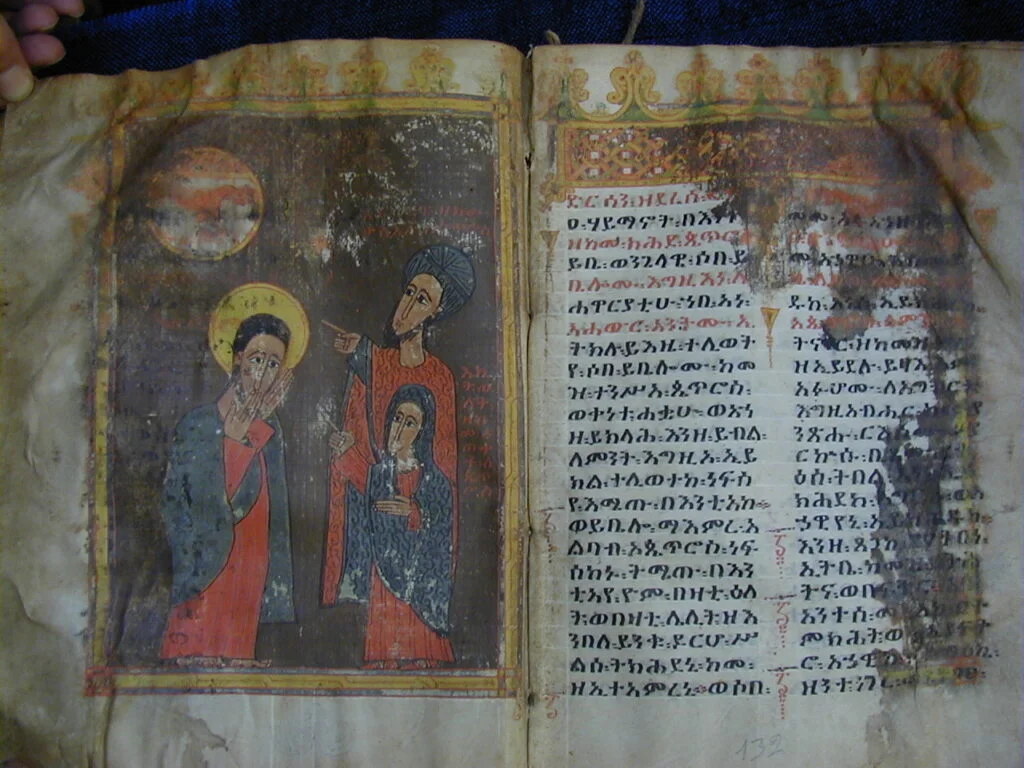
The Warsaw-based researcher belongs to a small circle of scholars fluent in the dead language of medieval Ethiopia. Drawing on the limited body of work by both past and present scholars, he is making Gəʿəz literature accessible to a wider audience – first by deciphering manuscript content and then translating it into modern languages: English and Polish.
Tracing history through allusions
Ethiopian homilies resemble European ones from the same period in many respects. What sets them apart, however, is the anonymity of their authors. One example is the homily “On fasting,” published and translated from the manuscript for the first time by Dr. Krawczuk. Its Ethiopian author is known only as Rǝtuʿa Haymanot. The problem is that this is a pseudonym used by at least several anonymous Ethiopian authors from the first half of the 14th century.
“Rǝtuʿa Haymanot is a literal translation of the Greek word orthodoxos – meaning ‘orthodox’ – which many Ethiopian authors who chose to remain anonymous used as a pseudonym. All that is really known about the author of the homily “On fasting” is that he was an important figure in the Ethiopian Church of the time and that the work is an original composition written in Gəʿəz, not a translation. As for why he chose to remain anonymous, we can only speculate,” explains Dr. Krawczuk.
The authors’ need to conceal their identities can be interpreted as an expression of the virtue of modesty. In one homily, we read that its author “did not reveal his name due to the imperfection of his knowledge.” It is equally possible, however, that Ethiopian authors preferred to remain anonymous to avoid persecution by both spiritual and secular authorities.
“This is also linked to another phenomenon: Ethiopian homilies very rarely refer directly to specific historical realities from the time of their composition. Instead, they allude to them or omit them altogether. Deciphering such allusions is no easy task; it requires an understanding of the specific context and environment in which the homilies were composed,” says the researcher.
Beta Maṣāḥǝft: The writings of Ethiopia and Eritrea
These and many other complexities ultimately shape what emerges from Ethiopian homilies: how Christians perceived Islam in medieval Africa. In another homily – “On the Baptism of Christ” – the anonymous author, while portraying Muslims negatively in the exaggerated style typical of homily rhetoric, also reveals knowledge of certain aspects of their religion:
“For after Leo, the prophet of the Muslims was born, and after them and through them, wickedness spread; he says that after the resurrection of the dead, every man will marry ten thousand women, and other countless abominations, just as his father, the accursed devil, put into his mouth.”
Dr. Marcin Krawczuk has translated the entire collection of homilies by Rǝtuʿa Haymanot into English based on manuscript sources. However, this type of research represents only a fraction of the vast international effort undertaken by scholars of Ethiopian tradition.
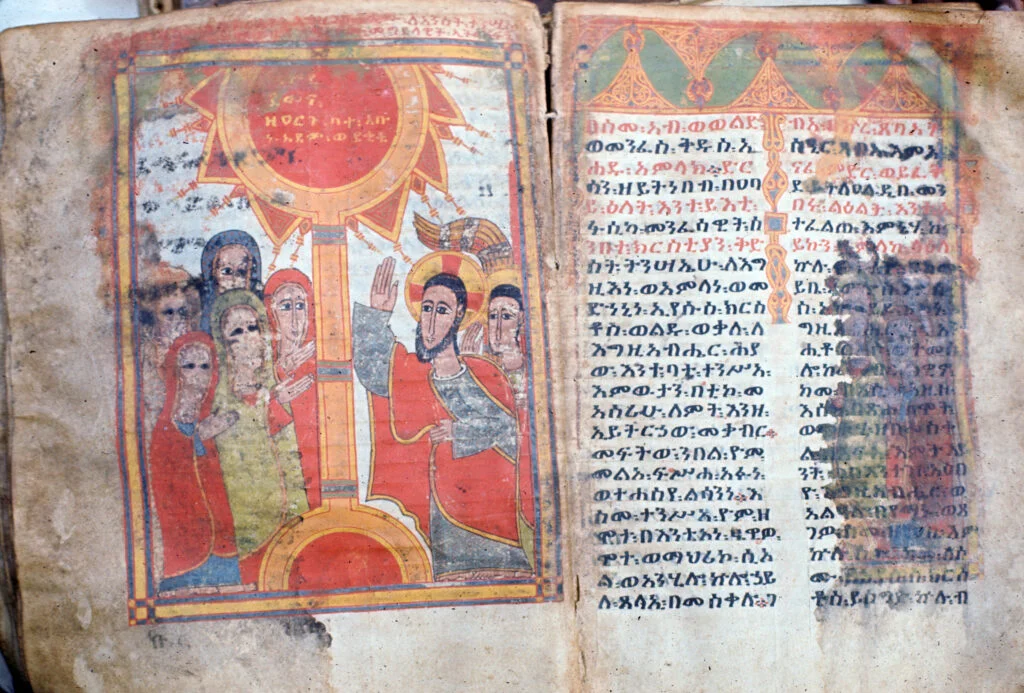
The University of Warsaw researcher is also participating in the expansion of the Beta Maṣāḥǝft project. This international initiative, running from 2016 to 2040 and based at the University of Hamburg, aims to create a comprehensive database of literature written in the Gəʿəz language within the Orthodox Christian communities of Ethiopia and Eritrea.
This is not just an ordinary database – it is also a research platform designed as a digital environment where scholars can create critical editions of Ethiopian texts. Beta Maṣāḥǝft also provides access to manuscripts online, allowing anyone to explore content that has survived for centuries.
The text was originally published in Polish on the Serwis Naukowy UW website on March 25, 2025. It was updated in March 2026.