


Year after year, temperatures in Poland keep rising. In March 2024, we recorded a monthly high exceeding 26°C. Still, it is the summer heat that affects us most. Older adults, children, people with chronic illnesses, and manual laborers are particularly vulnerable. Heat stress occurs when the body begins to lose its ability to regulate temperature – when it can no longer cool itself effectively. The health consequences can be severe, even life-threatening. According to WHO data, nearly half a million people worldwide die each year due to heat.
The heat of the stadiums…
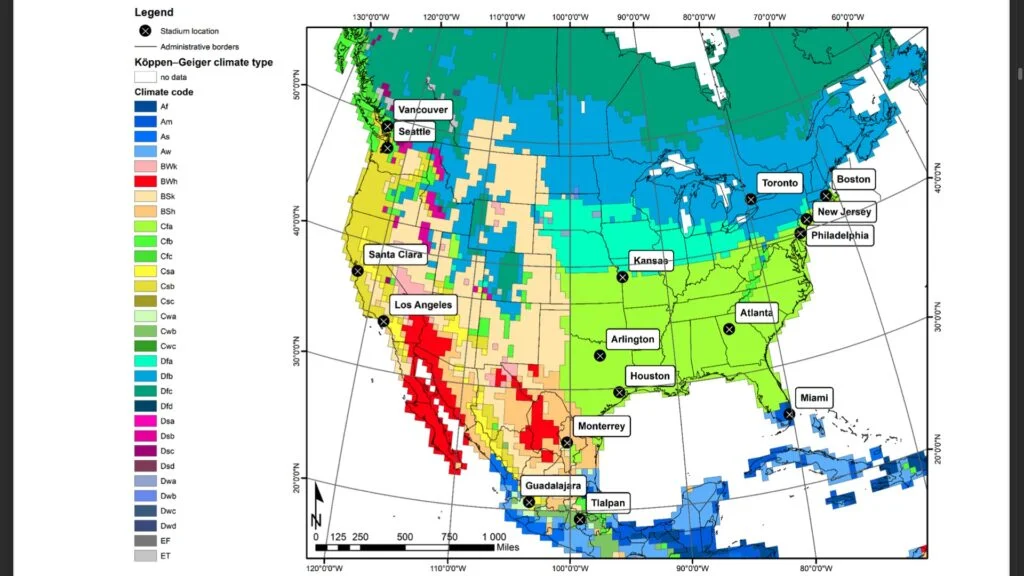
The 2026 FIFA World Cup will be played in 16 stadiums across Mexico, the United States, and Canada, spanning nine distinct climate zones. An international team of researchers – from institutions including the Faculty of Geography and Regional Studies at the University of Warsaw* – analyzed weather conditions at each venue between June 11 and July 19, the period during which the tournament is scheduled.
Using a specialized computer model, the researchers assessed potential heat stress levels in stadium environments. Their findings are striking: 10 of the 16 stadiums are expected to experience very high heat stress risk during afternoon hours. This means that not only athletes – already vulnerable due to intense physical exertion – but also fans and stadium staff will be exposed to extreme thermal conditions.
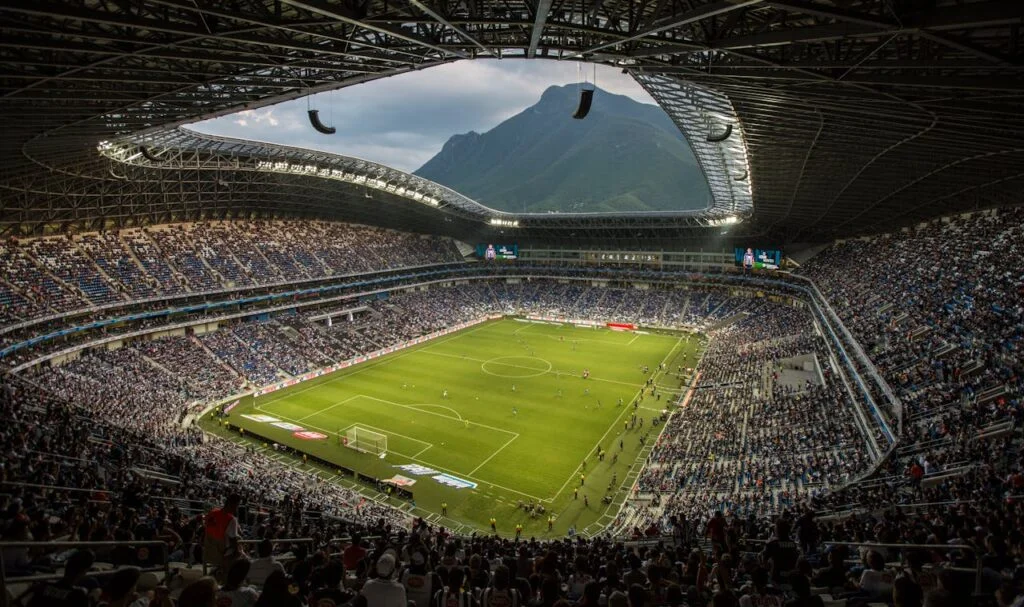
The most concerning locations are stadiums in Texas – specifically Arlington and Houston – where the risk of heat stress by 6 p.m. reaches as high as 70 percent. Monterrey, Mexico, also ranks high, with a slightly lower but still significant risk of 50 percent. While detailed and event-specific, the study has broader implications.
“Not everyone is an athlete. But many of us may be exposed to heat stress in other situations, including in Poland. This risk is especially high for people who must spend long periods outdoors during heat waves, such as construction workers. We should also remember that older adults, children, and people with chronic conditions – such as coronary artery disease – are particularly vulnerable to heat-related strain. That is why it is essential to conduct research identifying who is at risk and under what conditions,” says Dr. Kamil Leziak of the Faculty of Geography and Regional Studies at the University of Warsaw.
…threats from all sides
In their analysis, researchers used tools such as the Universal Thermal Climate Index (UTCI), which defines the boundaries of human thermal comfort. Understanding the conditions in which athletes compete reveals the complex, multifactorial nature of heat stress.
It is not just about air temperature. Thermal stress results from a combination of temperature, physical exertion, and local environmental conditions such as wind speed and humidity. For instance, stadiums in Guadalajara (1,566 meters above sea level) and Tlalpan (2,240 meters above sea level) may not experience extreme temperatures, but reduced oxygen levels at higher altitudes pose an additional physiological challenge.
The accumulation of these stressors can lead to overheating, dehydration, reduced performance, and even heatstroke. Research conducted by geographers – including those from the University of Warsaw – helps identify high-risk areas and informs solutions, both for major sporting events and for broader urban planning and architectural strategies.
“The time of day when matches are played is critical. The simplest and most cost-effective solution is better scheduling – ensuring that physically demanding activities take place in the early morning or late evening. This approach is already common in many Mediterranean and tropical cultures.
When it comes to urban planning, we should aim to make cities as green as possible. Urban greenery is essential for improving local climate conditions. The more green spaces – parks, gardens, lawns, and water features – and the less concrete and asphalt, the better for both the environment and public health. On a smaller scale, buildings can incorporate green walls or roofs. A good example is the rooftop garden of the University Library in Warsaw,” adds Dr. Leziak.
The extreme consequences of extreme conditions
Research into the effects of extreme environmental conditions has been ongoing for years, and its conclusions are increasingly alarming. A recent study conducted for the European Commission found that between 1991 and 2020, Europe experienced over 43,000 heat-related deaths annually. By 2100, that number could rise to as many as 235,000 per year.
Heat stress is also linked to economic losses and decreased labor productivity. Moreover, extreme weather threatens agriculture, contributing to rising food prices. Worsening environmental conditions are also associated with more frequent natural disasters – such as hurricanes and tornadoes – as well as the spread of diseases previously confined to warmer regions.
*As well as from the Institute of Geography and Spatial Organization of the Polish Academy of Sciences, the Leibniz Research Centre for Working Environment and Human Factors at the University of Dortmund, ErgonSim–Human Thermal Modelling in Messstetten, and the Department of Human Motor Skills at the
Wroclaw University of Health and Sport Sciences.
The text was originally published in Polish on the Serwis Naukowy UW website on March 26, 2025. It was updated in March 2026.