
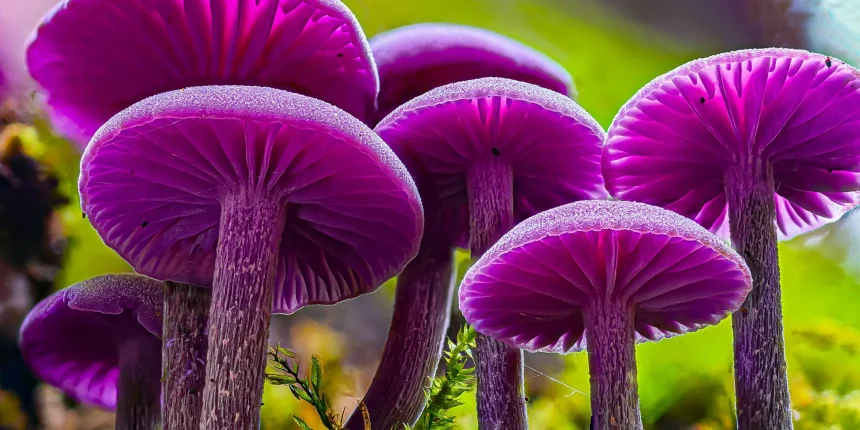
Fungi are neither plants nor animals, yet they are among the foundations of life on Earth – and despite their importance, we still know remarkably little about them. They belong to their own kingdom of life and play by an entirely different set of biological rules. Fungi made it possible for plants to colonize land, help trees absorb nutrients, and protect them from diseases. Without fungi, the atmosphere we breathe today simply wouldn’t contain oxygen at its current levels.
What sets fungi apart most is the way they feed. Unlike plants, they do not photosynthesize, and unlike animals, they do not digest food internally. Instead, they effectively live inside their food: they secrete enzymes into their surroundings to break down organic matter, then absorb the released nutrients directly through their cell walls.
Fungi are master chemists. Many antibiotics, including penicillin, were originally derived from fungi. Scientists now assume that, at low concentrations, some of these compounds may also act as chemical signals, allowing fungi to communicate with other microorganisms. A single fungal mycelium can spread across an area larger than a soccer field, transmitting chemical signals to the organisms around it.
One of the largest understudied groups of Eukaryots
Although fungi are the second most diverse group of eukaryotic organisms – surpassed only by insects – science has formally described only about 150,000 species. Scientists estimate that the true number could be as high as 2.5 million. This vast, largely unexplored diversity has profound implications for the future of Earth’s ecosystems.
Fungi form mycorrhizal networks with tree roots – symbiotic partnerships that help plants absorb water and nutrients while also allowing them to exchange chemical warning signals. These underground networks can even help some tree species expand into new habitats, for example by shifting their ranges northward in response to climate change. Without fungi, this kind of plant migration would be far slower – or, in some cases, impossible.
Our limited knowledge of fungal diversity is more than just a scientific gap; it is a conservation challenge. Without reliable data on where fungi occur and the threats they face, protecting them effectively is impossible. That is the challenge the international FunDive project aims to address. Led in part by Prof. Julia Pawłowska and her team at the Faculty of Biology, University of Warsaw, the project brings together scientists and mushroom enthusiasts from across Europe.
White spots on the map of fungal diversity
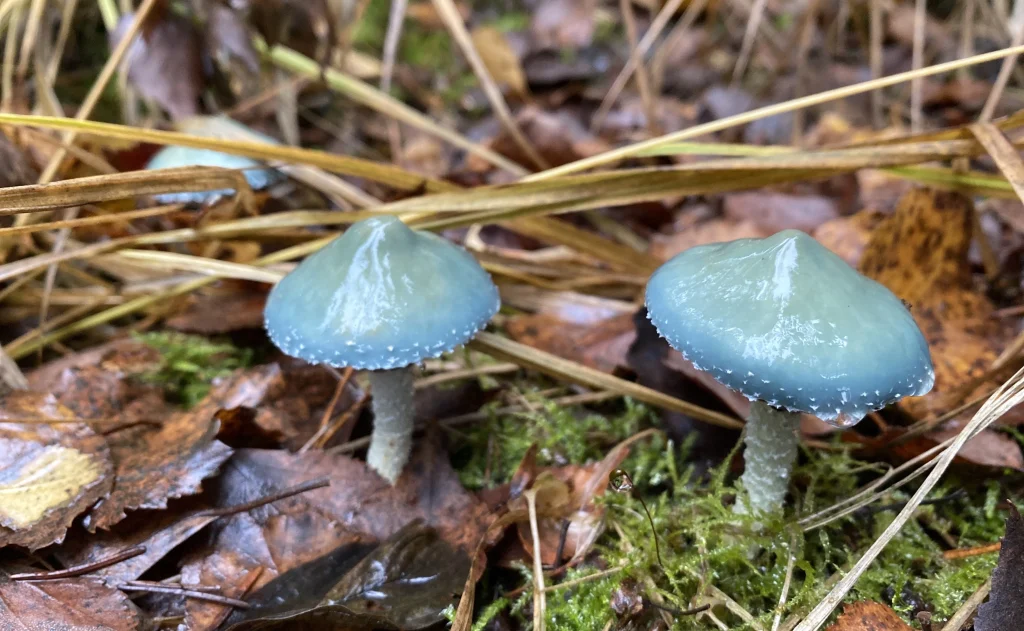
The FunDive project responds to an urgent need to collect data on the distribution of fungi across Europe. To do so, researchers combine complementary approaches – cutting-edge molecular biology tools with the expertise of passionate mycologists. A single soil sample can contain the DNA of thousands of fungal species, both common and extremely rare.
“We collect samples of soil, wood, and air from different locations following a sampling grid that covers all of Europe. We then extract total DNA and analyze the sequences of all fungi present there,” explains Prof. Julia Pawłowska.
An equally important component of the project is broad public engagement. Anyone with a mushroom enthusiast in the family knows that the best spots for porcini or saffron milk caps are closely guarded secrets, passed down through generations. This kind of field knowledge can be just as valuable as scientific data. FunDive involves many mushroom foragers whose often orally transmitted expertise has so far remained outside the reach of researchers.
The idea of involving citizens emerged as a response to a specific problem: fungi have been largely overlooked in European conservation legislation because of a lack of data on their distribution and the threats they face. FunDive aims to change that by building a knowledge base that can underpin real-world fungal conservation.
A key part of the citizen science component is coordinated by the University of Warsaw. It includes Europe-wide campaigns to collect data on selected “most wanted” fungal species for which information on conservation status is still missing. These campaigns are announced online and on social media, and then coordinated at the national level.
Special mushroom expeditions
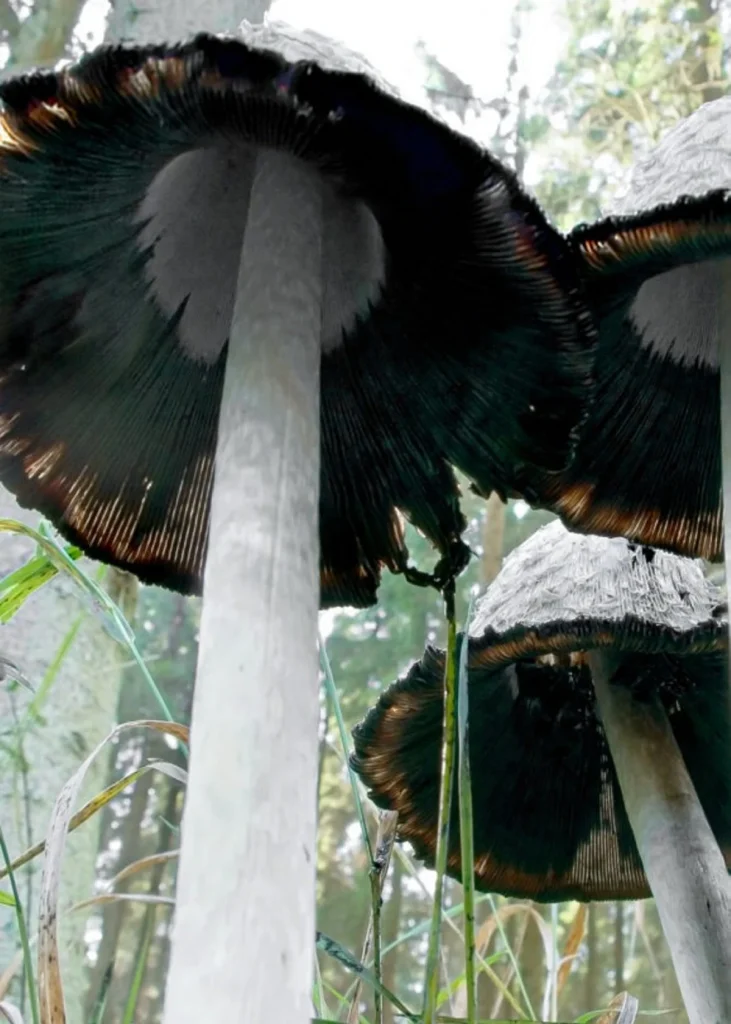
In addition to its regular sampling campaigns, the FunDive project also runs so-called search missions – field expeditions organized jointly by scientists and mycology enthusiasts that focus on specific rare or poorly known species. These include Battarrea phalloides, an impressive fungus with a tall, stalk-like fruiting body; Geastrum pseudostriatum, a rare earthstar known from only a handful of locations in Europe; and Lycoperdon caudatum, a puffball species for which a reliable reference DNA sequence is still lacking.
Some of these missions take place in areas where environmental DNA (eDNA) samples are also collected. This allows researchers to compare the effectiveness of different methods and assess how well the knowledge of mushroom foragers complements results obtained through molecular biology tools. In this way, FunDive tests how best to combine field expertise with modern technology – and how this integration can translate into more effective biodiversity conservation.
Europe’s mushroom hunters – but unevenly distributed
What may come as a surprise is just how much people engagement varies across Europe. In the Nordic countries – particularly Finland and Sweden – people actively seek out campaigns on their own and regularly submit data. In fact, Finland has so far produced the highest number of fungal records within the FunDive project.
In Poland, participation is somewhat lower, but local mycological societies and dedicated enthusiasts play a key role in mobilizing others. In contrast, in Southern European countries such as Spain and Italy, building engagement tends to be more challenging and often requires direct, personal outreach – conversations, workshops, and shared field trips.
This diverse social landscape shows that citizen science does not follow a single model. That is precisely why FunDive adapts its approach to local conditions and cultural contexts.
Can you name a fungus after your favorite spot?
For more dedicated amateur mushroom foragers, taking part in the FunDive project comes with a unique reward. In exchange for submitting a properly prepared specimen, researchers generate its genetic “fingerprint” (called barcode) – a DNA sequence that allows for unambiguous species identification.
“As the biggest challenge is accurate species identification, and we have access to DNA sequencing methods, we can help amateurs determine exactly what they’ve found,” explains Prof. Pawłowska.
This is more than just a curiosity. Project coordinators note that data collected through the campaign may soon lead to the description of entirely new species previously unknown to science. One such case has already emerged in Portugal. In principle, participants who collected a specimen may even be allowed to propose a name for it – provided it is confirmed through DNA sequencing as a distinct species. Any proposed name must, however, comply with the rules of international code of fungal nomenclature.
Thanks to DNA analysis, data submitted by amateurs can be just as valuable as those collected by professional mycologists. While non-experts often describe their finds in general terms (“a star-shaped fungus”), and scientists tend to use precise terminology, the rate of errors is similar in both groups. In the end, definitive identification still relies heavily on genetic analysis.
How AI and mushroom foragers are redrawing the map of nature
The FunDive project achieved remarkable success in its very first year. Between August 2024 and May 2025, nearly 2,000 specimens were collected – already two-thirds of the planned 3,000 for the entire three-year project. This unexpectedly high volume prompted the University of Warsaw team to develop new protocols enabling high-throughput, simultaneous DNA sequencing of thousands of specimens. The method proved so effective that researchers have begun running workshops for partner institutions at other universities.
In collaboration with the Copernicus Science Centre, they’re also running public workshops. Participants can not only observe how DNA is extracted from submitted fungal samples but also perform parts of the process themselves.
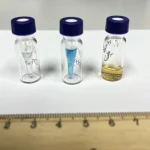
“Fungal DNA extraction is shown step by step – from unpacking the sample, through adding reagents and heating, to centrifugation,” explains Prof. Pawłowska.
This is not only an engaging form of science outreach but also practical support in processing large volumes of samples.
Artificial intelligence is playing an increasingly important role in analyzing the collected data. Algorithms help sort and classify DNA sequences, detect rare variants, and compare results against global reference databases.
“As part of FunDive, we also provide the PlutofGO app, which includes an AI-based tool for identifying fungi from photographs. Without these genetic methods and algorithms, it would be extremely difficult to process such large datasets and draw reliable conclusions,” the scientist notes.
Each participant can also track the status of their specimens online – from submission to the final DNA sequence. It is science in action: open, hands-on, and accessible to everyone.
How to join a mushroom mission?
If you are passionate about fungi and want to help researchers, the FunDive project is open to your support – but this is not about logging random mushroom finds (for that, tools like iNaturalist already exist, and scientists use them too). To be included in DNA analysis, a specimen must come from one of the ongoing research campaigns. The list of target species is available at fun-dive.eu, where 17 active projects currently highlight fungi in need of data.
Once you have found a target species, you submit it through the app, collect it according to the guidelines, dry it properly, and send it to the National Contact Point.
“As part of the website, we have published instructions on how to take good, informative photos of fungi, how to dry a specimen so it can be used for further research, and how everything should be done so that the fungus can be uploaded, sequenced, and used in scientific work,” says Prof. Pawłowska.
This is not an app for guessing mushroom names – it is a collaboration with scientists who need precise information about where specific species occur. That is why accurate data and careful adherence to instructions are essential. The payoff? Your specimen could end up in the Global Biodiversity Information Facility database (gbif.org), contribute to the protection of threatened species – and possibly even receive a name you helped propose.
Fungi of the future
Although FunDive is still ongoing, its early results already show how powerful the combination of science, technology, and public engagement can be. With mushroom foragers across Europe, AI-driven algorithms, and research laboratories working together, we are uncovering a world that has long escaped traditional methods of describing nature.
“In the future, we plan to expand the list of species included in the campaigns and introduce tools that will make it easier to submit data and stay in touch with participants,” the scientist notes.
Researchers also hope the collected data will help develop a more sustainable, Europe-wide strategy for fungal conservation.
So if you know a reliable spot for chanterelles, saffron milk caps, or other lesser-known species, this might be a good time to share it. Who knows – your mushroom could be the one that makes history.
The text was originally published in Polish on the Serwis Naukowy UW website on August 11, 2025.