

What characterizes our common understanding of a map – namely the borders drawn on it, whether between countries, regions, habitats of plants and animals, or geographical zones – is essentially a convention agreed upon by people. For bacteria and viruses, however, as well as for the effects of climate change or many social processes, such boundaries simply do not exist.
Just as we can board a plane at Warsaw’s Chopin Airport and wake up on the other side of the globe the next morning, pathogens and ideas move with equal ease. Both can spread in the blink of an eye.
In a world full of instant connections and rapid flows of information, processes occurring every fraction of a second create what seems like a chaotic mosaic. Can anything meaningful be extracted from all this noise? Yes – if it can be assembled into vast databases and analyzed using advanced mathematical tools. Scientists from the Interdisciplinary Centre for Mathematical and Computational Modelling at the University of Warsaw (ICM UW) are piecing together the fragments of this informational puzzle. Through collaboration, they believe it is possible to better prepare the world for the unknown.
What do the data reveal?
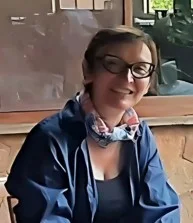
When Dr. Aneta Afelt of ICM UW looks at a map, boundary lines – even the seemingly obvious ones separating land and water – are simply cartographic symbols. In nature, she argues, such rigid divisions do not truly exist.
“We have grown used to thinking in terms of clearly defined borders between countries, cities, or regions. But in nature there are always transition zones and overlapping habitats. By studying them, we can understand the structure of ecosystems and predict the direction in which they may evolve. The dynamics of evolution – and sometimes revolution – are especially important when assessing epidemiological threats,” she explains.
The scientist works within the One Health/Planetary Health framework, which promotes a holistic understanding of health – encompassing humans, animals, and the broader socio-ecosystem. Global environmental problems influence both human well-being and the condition of the ecosystem balance.
Interdisciplinary teams operating within this framework examine the interactions between social and natural environments, recognizing their deep interconnections and mutual dependencies. Infectious diseases – such as those caused by coronaviruses (including COVID-19) or influenza viruses, including avian influenza – often spread between species. Controlling them therefore requires cooperation among physicians, veterinarians, ecologists, and many other specialists.
Researchers from ICM UW collaborate in international interdisciplinary projects with epidemiologists, veterinarians, biologists, mathematicians, geographers, and experts from many other fields around the world. Together they collect data that help them better understand and anticipate potential threats. Recommendations and reports based on extensive databases and advanced computational analyses have proven remarkably accurate.
For example, as early as 2017 – after analyzing coronaviruses found in bats in Laos and Cambodia, incorporating previously published data from across Southeast Asia, and examining the findings in the context of increasing anthropogenic pressure on the region’s environment – researchers concluded that there was a very high risk of a new zoonotic coronavirus emerging in humans. They sounded the alarm in the journal Frontiers in Microbiology in the article “Bats, Coronaviruses, and Deforestation: Toward the Emergence of Novel Infectious Diseases?”
During the COVID-19 pandemic, it later emerged that regional archives in Cambodia contained historical samples of bat coronaviruses closely related to the infamous virus identified in Wuhan. Unfortunately, the scenario outlined in the March 2018 publication became reality – much sooner than anyone had anticipated.
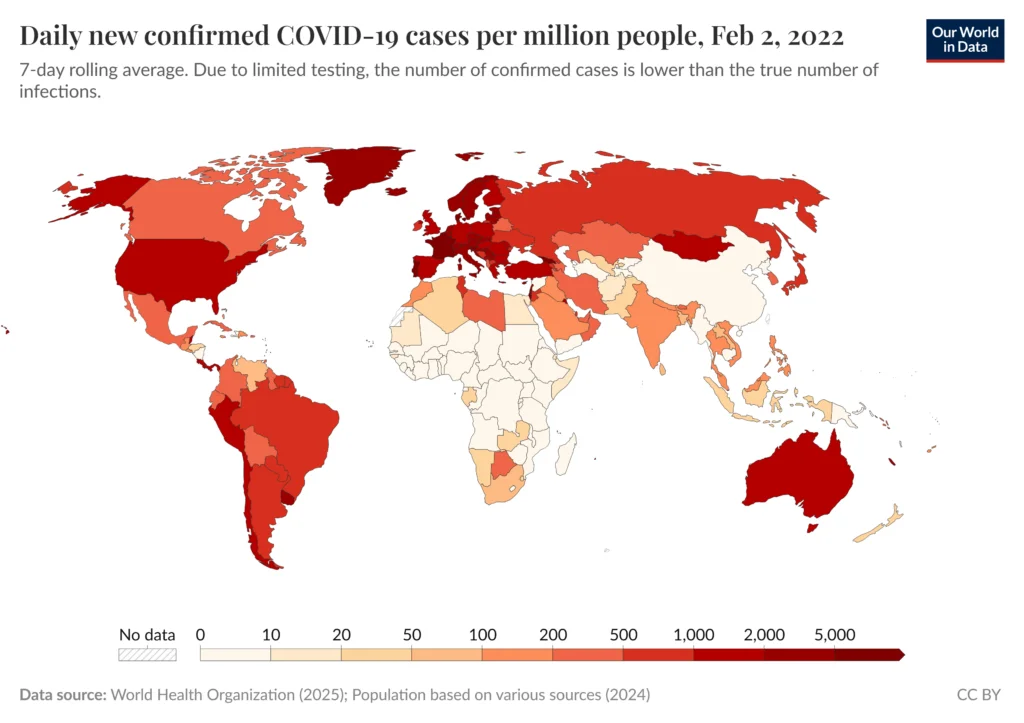
A message for the World
The One Health approach can be understood, in simplified terms, as the sum of interactions within a socio-ecosystem – an open system linking environmental and social conditions. From this perspective, our physical and mental well-being is directly associated to the quality of the environmental conditions around us.
In 2023, Dr. Aneta Afelt, together with colleagues from Brazil, the United States, and France, prepared a report examining disparities in access to green spaces in major Brazilian cities during the COVID-19 pandemic.
“Anyone who lived through the pandemic in Poland remembers that even a small garden or access to a private balcony could bring relief during periods of self-isolation,” the researcher notes.
Most residents of Brazil’s poorer metropolitan areas, however, did not have that luxury. The analysis shows that in slum districts – known as favelas – green spaces within the neighborhoods are virtually nonexistent. Every available patch of land is built up. Meanwhile, in districts inhabited by the middle class, urban conditions resemble the standards familiar from the streets of European capitals.
What does this mean – and what challenges does it pose for us and for future generations?
“A key takeaway from the study is that access to green spaces should be equal regardless of economic status. Developing green-blue infrastructure – which is already highly advanced in Europe, including many Polish cities – is one way of adapting to climate change. Vegetation and water alter the energy balance of urban areas, reducing thermal stress during heat waves. By lowering thermal pressure through these ‘soft’ methods, we also stabilize ecosystems for local plant and animal species for the next 50 to 100 years,” the researcher explains.
A real-life example of how green and blue infrastructure can be applied to improve thermal comfort in urban areas is presented in a 2026 publication: Navigating the Interplay of Ecosystem Restoration, Climate Change, and Human Health: Addressing Challenges with a Case Study in Central Europe [in:] Global Nexus Handbook. Modelling for central Poland proves the possibility to decrease the perceived temperature by even 4 degrees, in addition to the mental health benefits of green spaces.
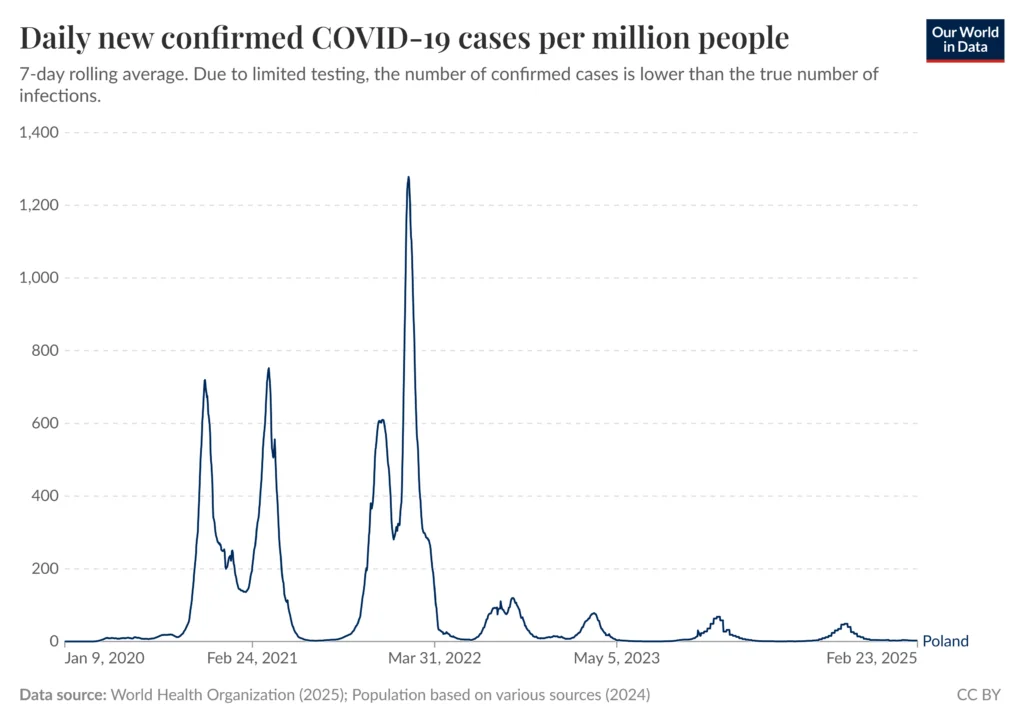
The butterfly effect
Dr. Afelt and her colleagues at ICM UW are currently involved in the international project MOSAIC (Multi-site Application of Open Science in the Creation of Healthy Environments Involving Local Communities).
The project aims to investigate the challenges and requirements of so-called cross-border communities – groups living far from administrative centers, often with complex ethnic identities and limited access to institutional support.
One example is the Maasai, who live along the Kenya–Tanzania border. They are currently undergoing a profound cultural transformation – shifting from a traditional nomadic lifestyle to permanent settlement. What took centuries to evolve in Europe is happening among the Maasai within just one or two generations.
This transformation brings both challenges and opportunities. On the one hand, fencing off the savanna disrupts animal migration routes, while intensive agriculture contributes to groundwater pollution. On the other hand, a settled lifestyle offers easier access to health care and access to educational opportunities, including for girls and women.
The challenges faced by the Maasai may seem distant. Yet in today’s hyper-globalized world, distance matters less and less. We are all experiencing change. From the perspective of Central Europe, these transformations may appear slower, but they are no less real – just consider the growing pressure of climate change.
Research conducted by scientists at ICM UW is not only about detailed analyses and recommendations. Above all, it is about knowledge. In an era of rapid change, understanding the dynamics of ongoing processes and their likely consequences can prove – quite literally – life-saving.
“We are living in a new geological epoch – the Anthropocene – an era defined by humanity’s influence on Earth’s ecosystems. Processes that begin locally do not remain local for long; they quickly become global. Take COVID-19 as an example. The first major outbreak was identified in Wuhan. Symptoms typically appear about five days after infection with SARS-CoV-2. A flight from Wuhan to Warsaw takes about 17 hours. Someone conducting business in Wuhan – unaware of the epidemiological situation and exposed to the virus – could return home to Warsaw and begin infecting family members, friends, and acquaintances. They would not even have had the chance to recognize the danger, because at that early stage the epidemic had not yet been officially identified. This is the latent phase of an epidemic, when infected individuals remain invisible to the health-care system,” the researcher explains.
Thanks to large international collaborations and interdisciplinary approaches, scientists can now produce forecasts with a high degree of accuracy. These forecasts form the basis for models and policy recommendations. Whether we choose to act on them, however, ultimately depends on the implementation of knowledge – by policymakers and by society as a whole.
The article was originally published in Polish on the Serwis Naukowy UW website on March 11, 2025. It was updated in April 2026.