

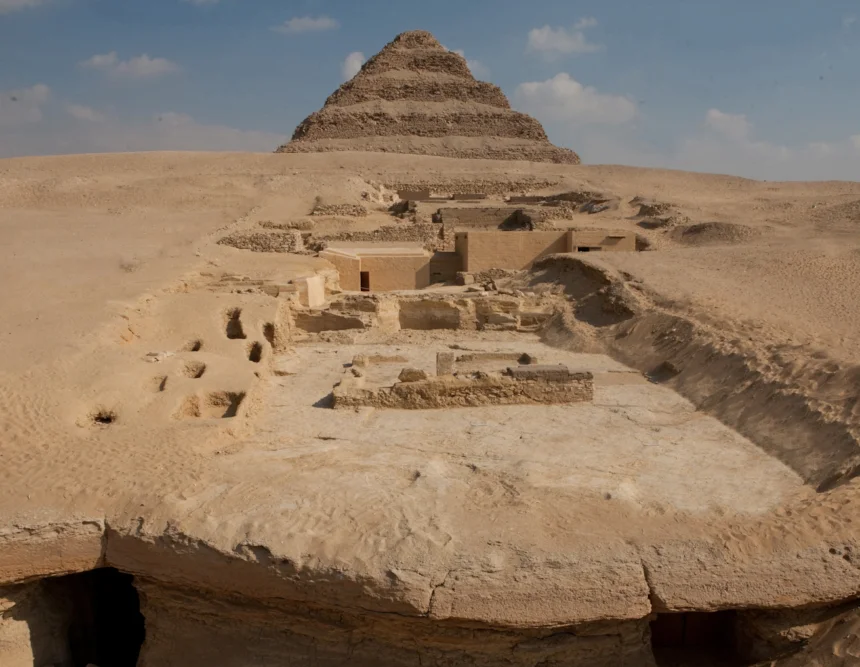
Saqqara lies right next to Egypt’s oldest pyramid – the Step Pyramid of Djoser. It is the pyramid’s shadow that shields the excavation site and the archaeologists working there from the scorching sun. This is the oldest and most significant part of the necropolis of Memphis, the former capital of Egypt. For three thousand years, Memphis served as an administrative center and one of the largest cities in the ancient world.
Memphis witnessed court intrigue and political machinations, but also the lives of ordinary citizens. Most of these stories are lost to us forever. Ancient Egyptians – those from the upper classes – had a tradition of recording their achievements on the walls of their tombs. Today, thanks to modern research techniques, even those who could not afford such a legacy are beginning to “speak” through the remains they left behind.
So what secrets does Saqqara still hold? What stories remain to be uncovered? And finally – were the everyday lives and civilizational challenges of the ancients really as distant from ours as they seem when we look at the towering pyramids and millennia-old mummies?
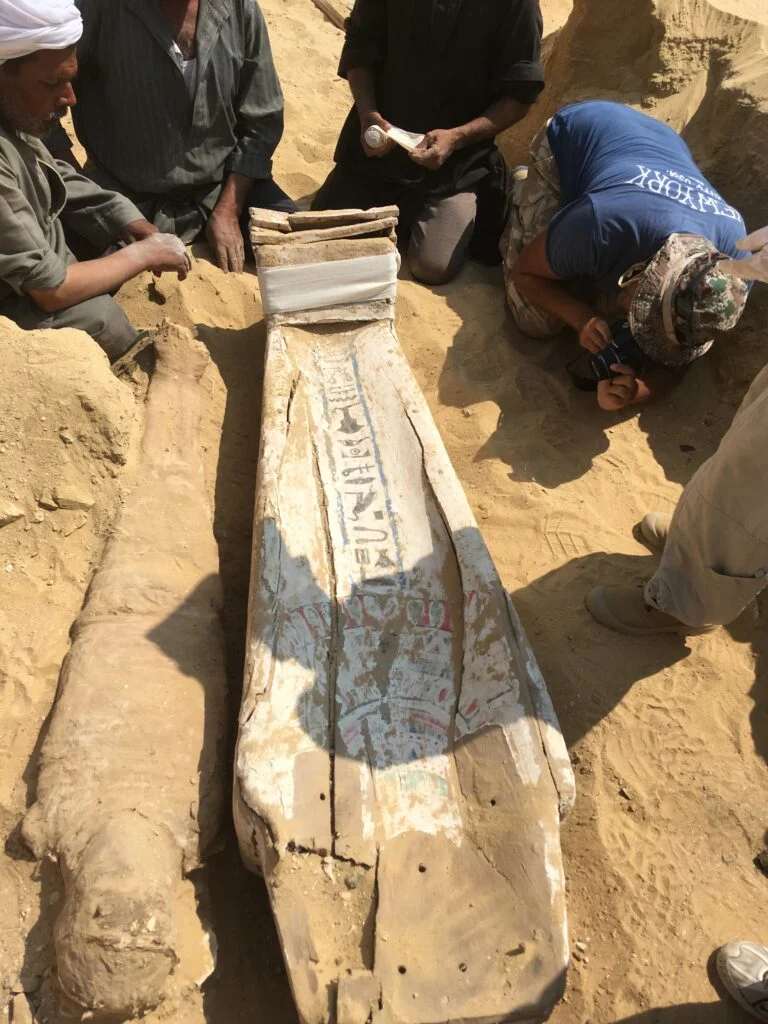
The Mysteries of the Dry Moat
To understand Saqqara, one has to grasp its scale. For comparison: Poland has existed for just over a thousand years, and its oldest cemeteries are only a few centuries old. Saqqara dates back to the very beginnings of Egyptian statehood, around 3000 BCE.
“Imagine Powązki Cemetery in Warsaw and Rakowicki Cemetery in Kraków merged into one site and in continuous use for three thousand years. That would be Saqqara,” says Prof. Kamil Kuraszkiewicz of the Faculty of Asian and African Cultures (formerly Faculty of Oriental Studies) at the University of Warsaw, head of the Saqqara West Expedition.
Polish researchers first surveyed Saqqara in the late 1980s, but excavations only began in the second half of the 1990s. Since then, the researchers have returned every season, steadily uncovering new pieces of the past. So far, their work has focused on two necropolises – situated in the same place but separated by nearly 2,000 years of history.
The first – the Lower Necropolis – dates to the 5th and 6th Dynasties (ca. 2494–2181 BCE) and served as a cemetery for high-ranking officials responsible for the functioning of the royal palace. To date, over 40 tombs have been excavated, including that of Merefnebef.
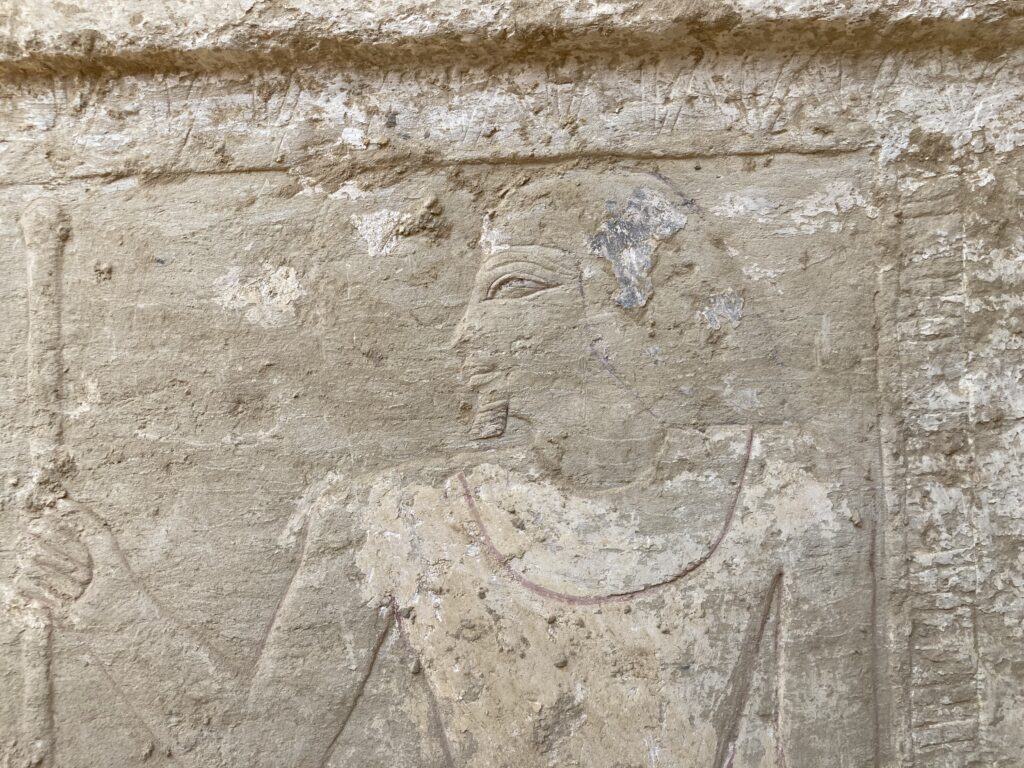
His career raises many questions: he rose from royal courtier to vizier, the highest office in the state. The tomb itself provides part of the answer – its richly decorated reliefs allow researchers to reconstruct his life story. At the same time, their condition suggests a sudden end of his career: some elements were removed, and the tomb remains unfinished, as if work had been deliberately halted. This may indicate that he fell out of favor or became a victim of political intrigue.
In this sense, Merefnebef’s story is not only one of success, but also a warning: even the highest position offered no guarantee of security. His tomb stands as a rare testimony to both personal ambition and the fragility of status in the highly hierarchical world of ancient Egypt.
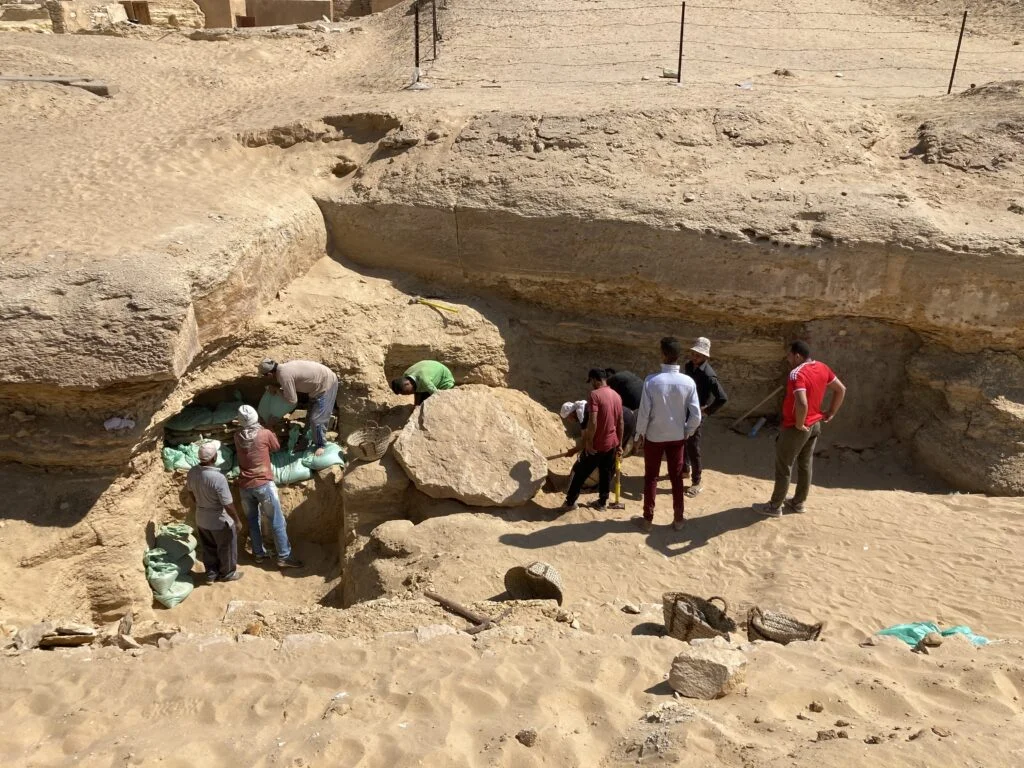
In recent seasons, the expedition has focused on the so-called Dry Moat. This rock-cut trench surrounds the Step Pyramid complex. It forms a rectangular enclosure measuring 750 by 620 meters and, in places, reaches up to 40 meters in width and 20 meters in depth.
Unlike the moats of medieval castles, the Dry Moat had no defensive function. Its purpose was symbolic – it emphasised the divinity of the ruler and marked his ritual path to the afterlife.
“Based on what we know, we can conclude that the so-called Dry Moat was an integral part of the royal funerary complex – a kind of highway to heaven for the king. It was the route along which the king’s soul was believed to travel after death to reach the realm of the gods and the stars. In later royal tombs – and not only royal ones – we find reliefs and paintings depicting the journey through the afterlife, with the deceased passing through gates and encountering deities and demons – some of which he must defeat, others appease. The Dry Moat may represent an early, three-dimensional version of this concept, dating back to the very beginning of the Third Dynasty – right at the start of the Old Kingdom, a period for which we have almost no written sources on Egyptian religion. If confirmed, it would be an absolutely groundbreaking discovery,” explains Prof. Kuraszkiewicz.
Priceless fragments of everyday life
After the fall of the Old Kingdom, the area studied by Polish researchers was abandoned. Climate change at the time – marked by prolonged drought punctuated by torrential rains – made the construction of new tombs impossible. The area west of the Step Pyramid lay unused for centuries. The Egyptians only returned in the mid-first millennium BCE, shortly before the Greco-Roman period. By then, their world – including burial practices – had changed beyond recognition.
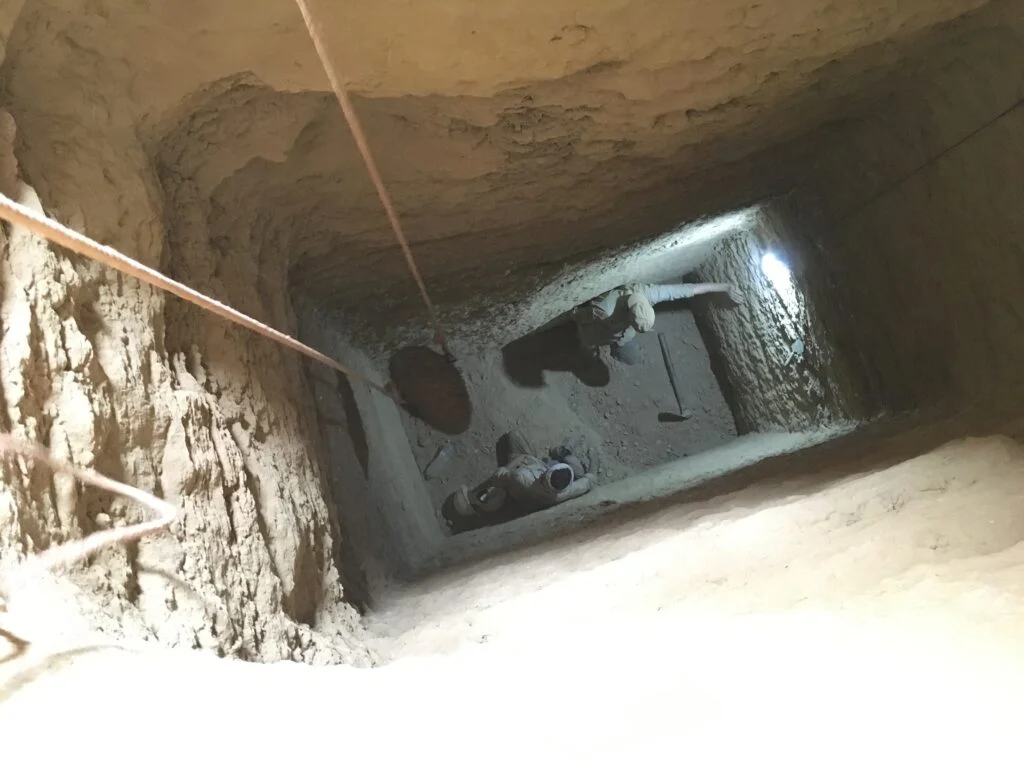
A new cemetery, the Upper Necropolis, was established atop the ruins of the Old Kingdom’s elite burial ground. It forms a completely different burial complex, separated from the Lower Necropolis by nearly two millennia and by radically different burial traditions. Lavish tomb complexes gave way to simple pits, sometimes little more than stone-lined graves. There are no inscriptions here – most of these individuals could not afford to leave written traces of their lives.
And yet, paradoxically, it is they who “speak” most clearly today. Through modern methods – DNA analysis and studies of disease markers, fractures, surgical interventions, and nutritional deficiencies – archaeologists can reconstruct the life histories of these anonymous individuals: who they were, what they ate, where they may have come from, what illnesses they suffered from, and how they worked.
This is a different kind of heritage – not a record of service to the pharaoh, but a record of lived human experience. The Upper Necropolis thus becomes a unique archive of everyday life.
“The Upper Necropolis is a vast burial complex – over 500 graves have been documented in the area we are studying. From an anthropological perspective, it is an invaluable dataset on the general population of the first millennium BCE. It allows us to reconstruct living conditions, diet, and disease patterns affecting the majority of society. As part of the Saqqara West Expedition, Saqqara Burials project led by Dr. Iwona Kozieradzka-Ogunmakin, focuses on human remains which allow us to determine what these individuals ate and what diseases they suffered from. Beyond disease patterns, we also look at trauma and bodily changes linked to occupational stress. In some cases, we can also identify geographic origins, which is interesting for another reason. In recent years, the role of individuals of non-Egyptian origin within Egyptian society has been of particular interest to us,” explains Prof. Kuraszkiewicz.
Archaeo-Orientalist journeys through time
Research in Saqqara has been conducted for over 30 years under the auspices of the University of Warsaw’s Polish Centre of Mediterranean Archaeology. In recent years, administrative oversight has shifted to the Faculty of Asian and African Cultures (formerly Faculty of Oriental Studies), reflecting a broader methodological shift in the research itself.
Egypt offers a unique perspective in this regard, where the relationship between past and present is especially visible. To explore these connections, the Archaeo-Oriental Studies project was launched.
“We are very keen to ensure that research on ancient Egypt does not remain confined to the past. As Egyptologists, we cannot ask an ancient Egyptian how something worked or what it was. But in some cases, we can speak with modern Egyptians, who often still use the same tools and techniques because they remain effective. The way ancient Egyptians built their homes – the construction techniques and materials – are virtually identical to those used in Egypt until just a few years ago, such as sun-dried mud bricks. In many ways, traces of Pharaonic civilization are still embedded in today’s Egyptian society, which continues to interact with these monuments daily. People not only encounter them, but are also shaped by them,” says the researcher.
Ancient Egypt is usually associated with grandeur, permanence, and spectacle – pyramids, gold, hieroglyphs. Yet its true strength lies not only in stone and monumentality, but in the continuity of human experience that – though expressed in a different script – often feels surprisingly familiar.
Research in Saqqara shows that Egypt is not only the land of pharaohs, but also of countless unnamed individuals who struggled with disease, climate change, and everyday life. Their stories, reconstructed today from fragments of bone, textiles, and burial structures, allow us to see the past not as a museum display, but as a mirror.
To understand the ancient world is not only to know its gods and kings – but also those who lived in their shadow.
The text was originally published in Polish on the Serwis Naukowy UW website on May 27, 2025. It was updated in May 2026.