

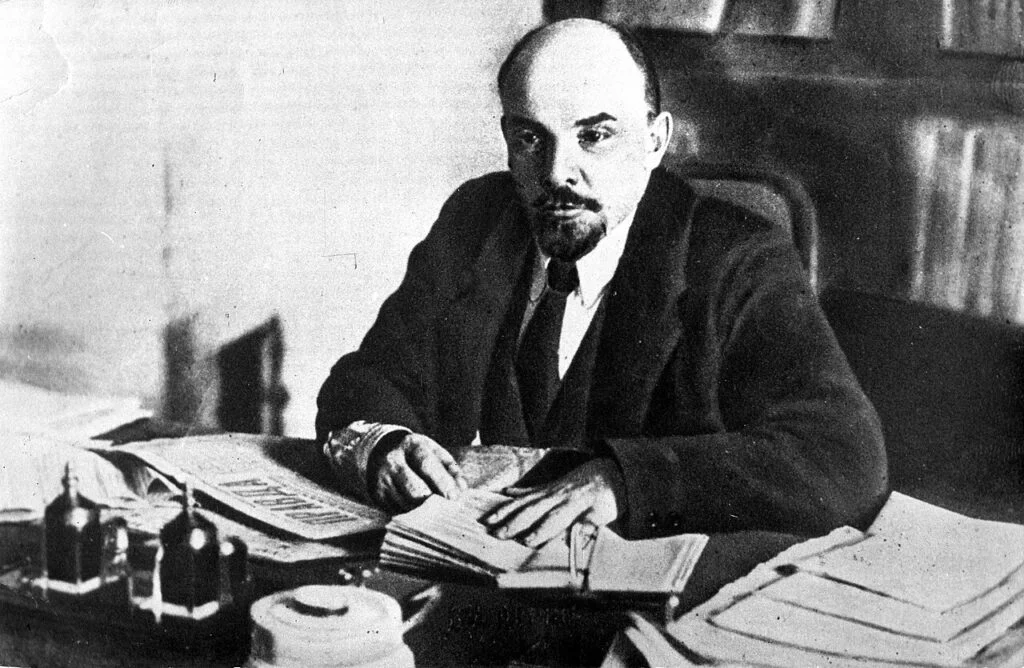
The October Revolution of 1917 marked a turning point not only in Russian history but also in the history of censorship. From the outset, Vladimir Lenin viewed freedom of the press as a “weapon of the bourgeoisie” that had to be neutralized immediately. In his eyes, the free flow of information threatened the stability of communist rule. That is why one of the new regime’s first moves was to target media outlets that dared to express views different from those of the revolutionaries.
One of the first steps in building a new press system under Bolshevik control was the decree establishing the Revolutionary Tribunal of the Press, issued on January 28, 1918, by Lenin’s Council of People’s Commissars. This three-member body was tasked with monitoring the press for the publication of “false or distorted information about social phenomena.”
A special investigative commission was responsible for prosecuting press offenses. Within 48 hours, it had to review each case and issue a verdict. Punishments ranged from fines and public confessions of guilt to suspension of publication, confiscation of printing press property, imprisonment, expulsion from the capital, and the loss of civil rights.
Lenin had no illusions: freedom of speech meant losing power. In a letter to Bolshevik activist Gavriil Miasnikov, he wrote bluntly: “We have no desire to commit suicide.” As a result, the regime dismantled any institutions capable of independent oversight. At the same time, information was tightly controlled, courts and prosecutors’ offices were abolished, the legal profession was eliminated, and law departments at universities were shut down. This marked the beginning of a new system of political control. Understanding how it was built helps us better understand both the past and the present.
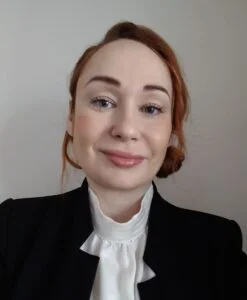
“The mechanisms and, above all, the goals of Soviet censorship are, to some extent – though with a different set of tools – being repeated by the modern Russian Federation, something especially visible during the war with Ukraine. That is why understanding how censorship worked in the USSR and its consequences remains an important warning today,” says Prof. Kamila Kamińska-Chełminiak.
A researcher at the University of Warsaw, she specializes in the history of censorship, focusing on how the censorship apparatus operated, was organized, and what methods it used.
Inside the Soviet control system
The censorship system in the Soviet Union was not only highly complex but also difficult to reconstruct. It operated without a clear legal framework or consistent rules for controlling the media. To make matters worse, a significant portion of the archives of Glavlit – the main agency responsible for censorship – was destroyed by the NKVD in 1937.
Despite these obstacles, researchers have reconstructed both the structure and methods of this institution, as well as the broader apparatus of ideological control. Its role was both preventive and repressive: suppressing ideas, limiting freedoms, and punishing those who violated the rules. Censorship extended beyond books and newspapers to posters, postcards, labels, telephone calls, and even private letters.
Censorship in theater, film, and even photography
After Joseph Stalin came to power, censorship became one of the central tools of his dictatorship. The Soviet state used it to eliminate political opponents, control the flow of information, and shape the image of the Great Leader. But censorship did not stop at politics – it reached deep into everyday life, affecting plays, concerts, and even the way newspaper program listings were arranged.
Stalin personally reviewed films before their release and often dictated their final form. After his intervention, for example, the character of Lev Trotsky was removed from Sergei Eisenstein’s film October. Even supposedly documentary photographs from the revolutionary period were often staged.

One of the clearest examples of Stalinist censorship was the retouching of photographs. When someone fell out of Stalin’s favor, they were erased not only from public life but also from the historical record. They disappeared from photographs, their books were burned, and schoolchildren were instructed to black out their names with ink.
One of the most famous altered photographs, taken in 1937, originally showed Stalin and Nikolai Yezhov walking along the Moscow-Volga Canal with Kliment Voroshilov and Vyacheslav Molotov. But when a commemorative volume was published three years later for Stalin’s sixtieth birthday, Yezhov had vanished from the image. After losing his post in 1938, the People’s Commissar for Internal Affairs was accused of espionage and executed –then erased from the photograph as well.

In the USSR, censors relied on a list of more than 300 prohibited topics. It was forbidden to report on earthquakes, fires, party members’ incomes, or rising food prices. Even photographs of cities and data on the number of tractors on collective farms were considered off limits. Censors were expected to detect even the faintest anti-state allusions and remove them from circulation.
The enemy of the state: Truth
Research by Prof. Kamilia Kamińska-Chełminiak shows that censorship in the Soviet Union was not merely a tool of propaganda and the suppression of dissent. It also functioned as an instrument of fear that permeated everyday life. Alongside official institutions and state representatives, ordinary citizens – driven by fear for their own safety – also became part of the censorship apparatus.
“As terror and fear became so widespread, people began destroying banned literature in their own homes, including works by executed Bolsheviks who had fallen out with Lenin or Stalin,” Prof. Kamińska Chełminiak notes.
In this way, the Soviet system of information control not only shaped public discourse but also deeply affected individuals – destroying lives, distorting ideas, and attempting to rewrite history in line with the dominant ideology.
The consequences of this system are still felt today in the political culture of Russia and several other countries of the former Soviet bloc. Understanding the mechanisms that operated during the Lenin and Stalin eras helps identify patterns that may inform the Kremlin’s current practices. These include, among others, repression of the opposition and independent media, the monopolization of information, and the falsification of history. Reflecting on the methods used by Soviet censors can therefore help us recognize contemporary disinformation techniques and better defend ourselves against manipulation, which – although it may appear modern – has deep historical roots.
The article was originally published in Polish on the Serwis Naukowy UW website on April 28, 2025.