

After decades of a false sense of stability, the world has once again been caught off guard by a series of upheavals: a pandemic, economic turmoil, and a bloody war on Europe’s borders. Living in a time of historical uncertainty, when a sense of impending disaster has become the new normal, we search for a language capable of giving a name to the fears that consume us.
The ancient Greeks faced a similar challenge at the dawn of their civilization, as they built their first poleis. They, too, had their own ways of – as we would say today – processing the trauma of war, mourning, and a leadership crisis.
How to read Homer
To explore how reading Homer can help us understand the world around us, Prof. Marek Węcowski brings together three perspectives: that of an ancient historian studying social relations in archaic Greece, that of a philologist analyzing the poems, and that of a scholar of Homer’s reception, tracing the history of The Iliad and The Odyssey from Antiquity to the present day.
“Originally, it was supposed to be a very short book, but when I sat down to write it, I realized that I was actually writing three different books. On the one hand, I’m writing about Homer as a historian of Antiquity – as someone trying to extract information from Homer about the historical context in which his poems were written and what historical value they might hold for us.”
“At the same time, I wanted to write about Homer as an artist. You see, after World War II, scholarship was dominated by a school of thought that viewed Homer’s poems as the product of a certain tradition, with a strong tendency to obscure the poet or even to discard the idea of a creative artist in favor of the influence of the oral literary tradition in Greece.”
“And third, I always had the thought in mind that I would like to write about Homer in the context of what is happening today with ancient literature and how it can help us interpret a world that has accelerated rapidly and transformed from a place that was quite pleasant, comfortable, and warm for some into a dangerous world.”
“These three ideas seemed to me to be compatible, provided that I began the story in the present day, starting by showing how Homer was used during historical cataclysms, world wars, and earlier,” explains Prof. Marek Węcowski.
A hostage and a Renaissance master’s mistake
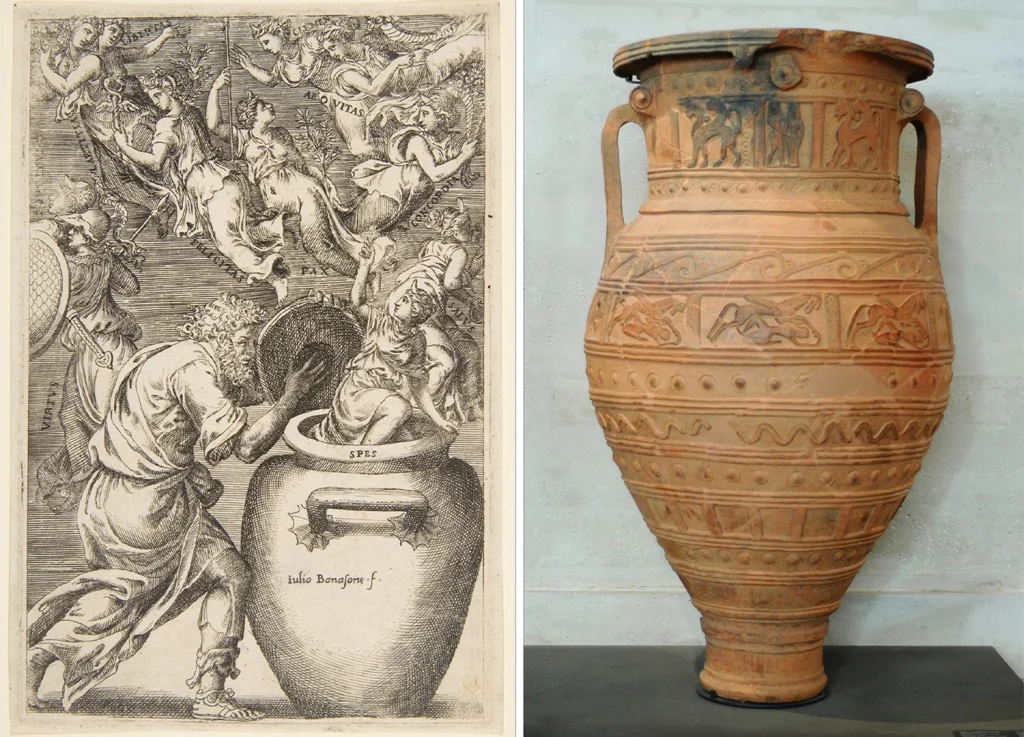
It turns out that many of our familiar ideas about Homer are rooted in historical misunderstandings – or translators’ mistakes. Take Pandora’s box. In Hesiod’s poem, it was actually a large clay jar (pithos) – the image Prof. Marek Węcowski uses to open his book. The word “box” itself came from a mistake by the Renaissance scholar Erasmus of Rotterdam.
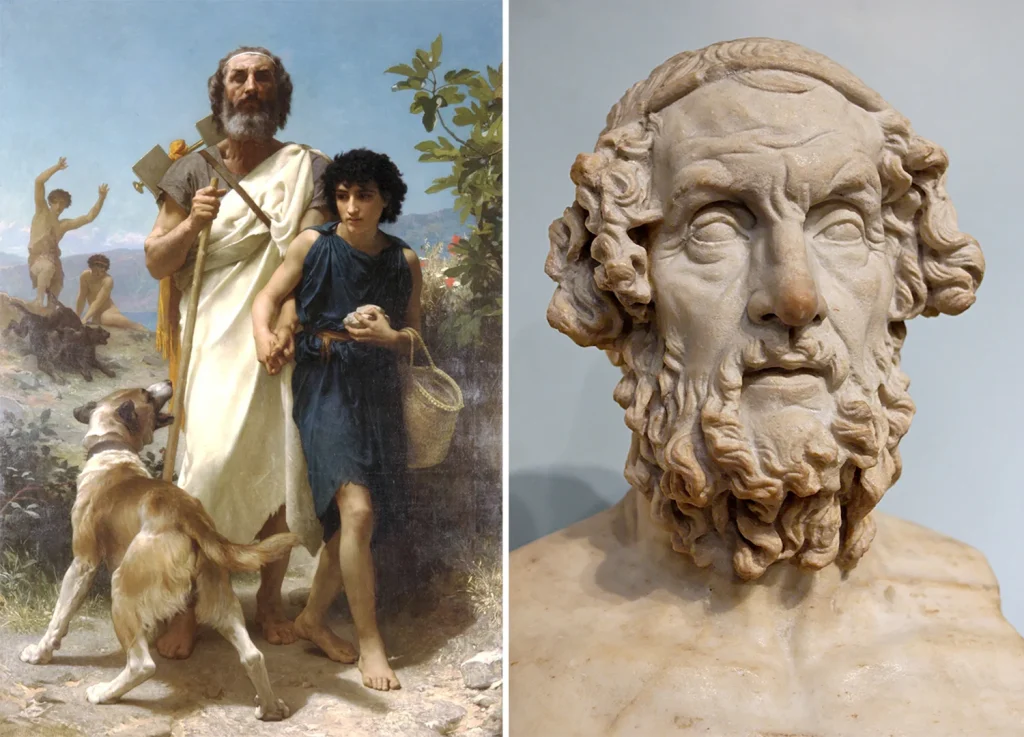
Even Homer may not have been a single person. The Greek word homēros usually meant “hostage,” while the blindness attributed to him may have been nothing more than legend. “Homerids” (“sons of Homer”), meanwhile, was a collective name for a guild of professional singers from the island of Chios.
“The Homer who exists in our minds and in every era is a little different, both for the poets and writers who read him and for scholars. And this stems from various events that have shaped Homer and our perception of him over the centuries, right up to the present day,” comments Prof. Węcowski.
And the poems themselves raise another question. Their analysis has led some scholars to reject the single-author theory and argue that The Iliad and The Odyssey were written by different poets.
From the trenches of Gallipoli to PTSD therapy
One revealing chapter is the story of how Germany’s elite ideologically appropriated the epic. After their defeats in the Napoleonic Wars, the Romantics proclaimed the medieval Song of the Nibelungs the “German Iliad,” looking to it for a spirit of national unity. In 1815, Prussian youths went off to war with pocket editions of the Nibelungenlied in their backpacks. In 1945, the last SS division bore the name “Nibelungen.”
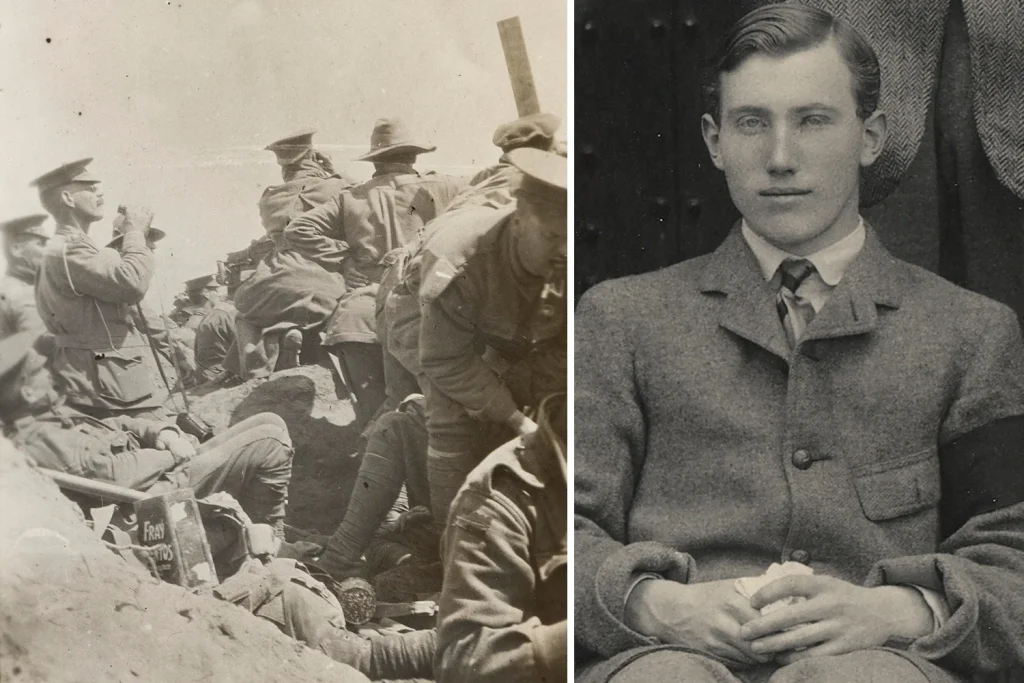
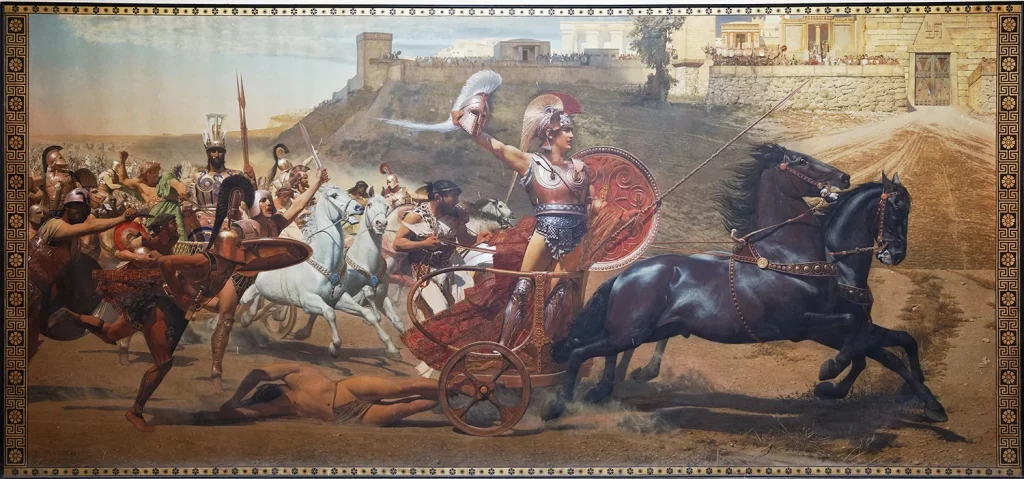
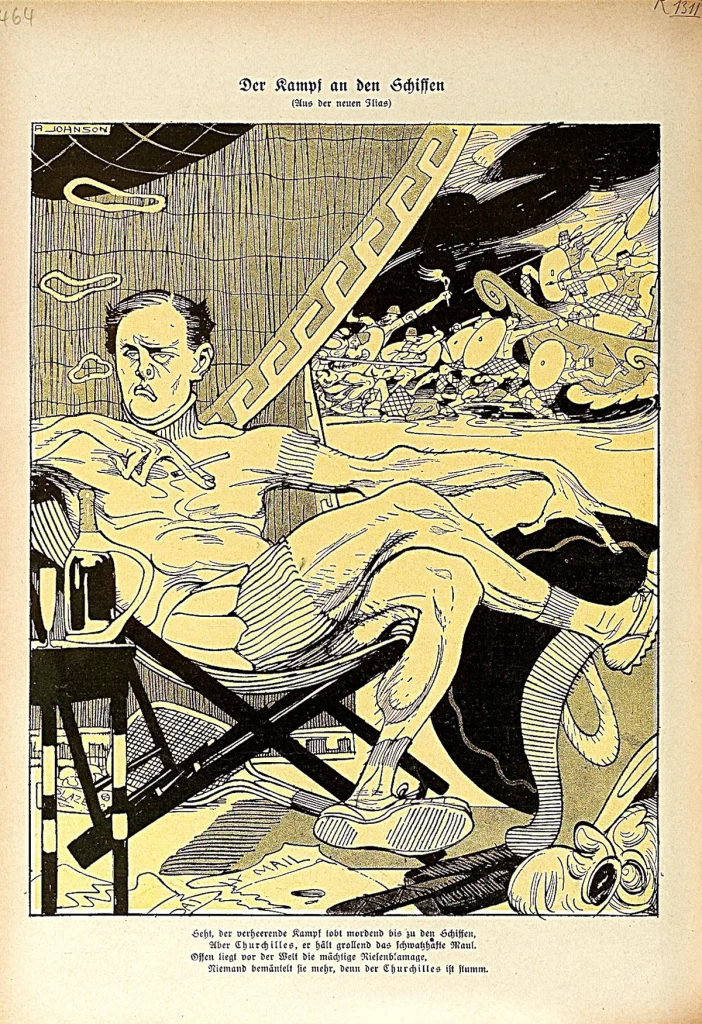
Turning to Homer in wartime is more than a literary escape. In 1915, on the island of Imbros, British poet and soldier Patrick Shaw-Stewart gazed toward the shores of Troy near Gallipoli and wrote poems in the trenches, addressing Achilles directly and asking what death on the battlefield meant.
Homer in modern warfare
Turning to classical literature in times of crisis is not necessarily an escape from reality. Ukrainian writer Oleksandr Myched, in his book The Language of War, notes that while literature cannot save us, invaders understand the threat it poses – which is why they destroy libraries.
Szczepan Twardoch, a Polish writer, draws on the ancient story of Princess Polyxena to portray the suffering of women during Russia’s aggression against Ukraine. Meanwhile, Ukrainian publishers are producing translations of Jonathan Shay’s Achilles in Vietnam and Odysseus in America.
Homeromancy
In ancient times, Homer also had a distinctly practical side. People could consult his poems for guidance and even – by reciting certain passages – avoid an unwanted pregnancy. Individual verses were also inscribed on amulets believed to protect against the effects of alcohol consumption.
“In many cultures, divination is practiced using texts of high status, usually sacred texts such as the Bible. This practice dates back even further to Greco-Roman Antiquity, when, for example, divination using Latin literature – specifically Virgil’s Aeneid – was very popular for a long time. In Greek literature, divination using Homer can take several different forms. The simplest is exactly like divination using Virgil or the Bible: we open the book at random, read a single verse, and, based on its interpretation, imagine what it tells us about the life situation we find ourselves in. There is also a magical, more practical application, where a particular verse is meant to help us avoid getting drunk or becoming pregnant,” explains the researcher.
Beyond simply opening the book at random and treating the chosen verse as an omen, there was a precise technique preserved on Greek papyri from Egypt.
“There are also more specialized methods, known from several surviving papyri from Greco-Roman Egypt. This is a specific divination technique in which someone selected 6x6x6 verses from Homer and grouped them. Then, by rolling a six-sided die three times, we obtain a sequence of numbers that allows us to find, in a table on a very long papyrus, the appropriate verse, which will serve as a guide to what we should do in the current situation. There’s no reason why we shouldn’t use this method today as well. Of course, with due caution,” explains Prof. Węcowski.
Philological madness
In the 19th century, classical philology became obsessed with tracking down so-called interpolations – later additions to the poems.
“An interpolation – that is, a foreign insertion into a literary work – arose when someone decided that only a correction or the addition of a line in The Odyssey or The Iliad would allow us to better understand the context or enrich the narrative. There are instances of major interpolations intended to introduce entirely new meanings that were important to someone decades or centuries later. We are familiar with many such instances, as are scholars studying the literature of other eras, such as the Renaissance. But ordinary readers of literary works often forget just how much forgery exists in the history of European literature – whether it be entire works attributed to great authors many hundreds of years later, or instances of interpolation that someone introduced long ago. There are a great many such instances in Homer,” asserts Prof. Węcowski.
In academic circles, it was even joked that no self-respecting German professor would sit down to breakfast unless he found at least one new interpolation in Homer. Although the method was overused, it allows modern historians to identify later sections of the text, such as the tenth book of The Iliad (the so-called Doloneia) or modifications to the ending of The Odyssey.
“We know for certain that the so-called tenth book of The Iliad is a later addition. There are clear differences in artistic sensibility, vocabulary, poetic imagery, and the structural features of this book, all of which indicate that it is a later addition. The second, though more controversial, is the ending of The Odyssey. Here, too, some scholars believe that large sections – beginning with the moment when Penelope recognizes Odysseus and they go to bed – are inauthentic. Others believe that the entire work is authentic, while still others think that this inauthentic final section is much shorter. Here, too, we can be certain that something is amiss, but in this case, we may be dealing not so much with an interpolation as with an editorial revision or a change introduced later, perhaps by the poet himself. So it’s not so much an interpolation as a self-correction,” explains Prof. Węcowski.”
Nolan for our times
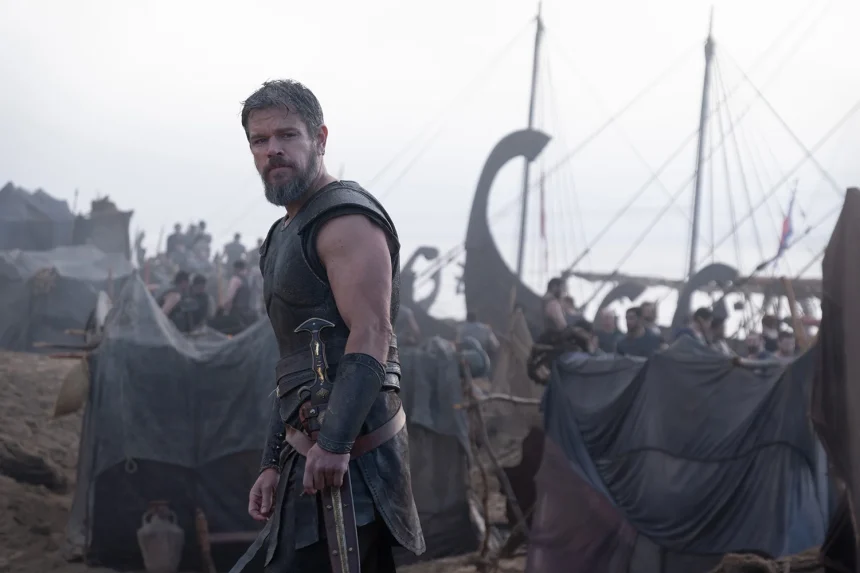
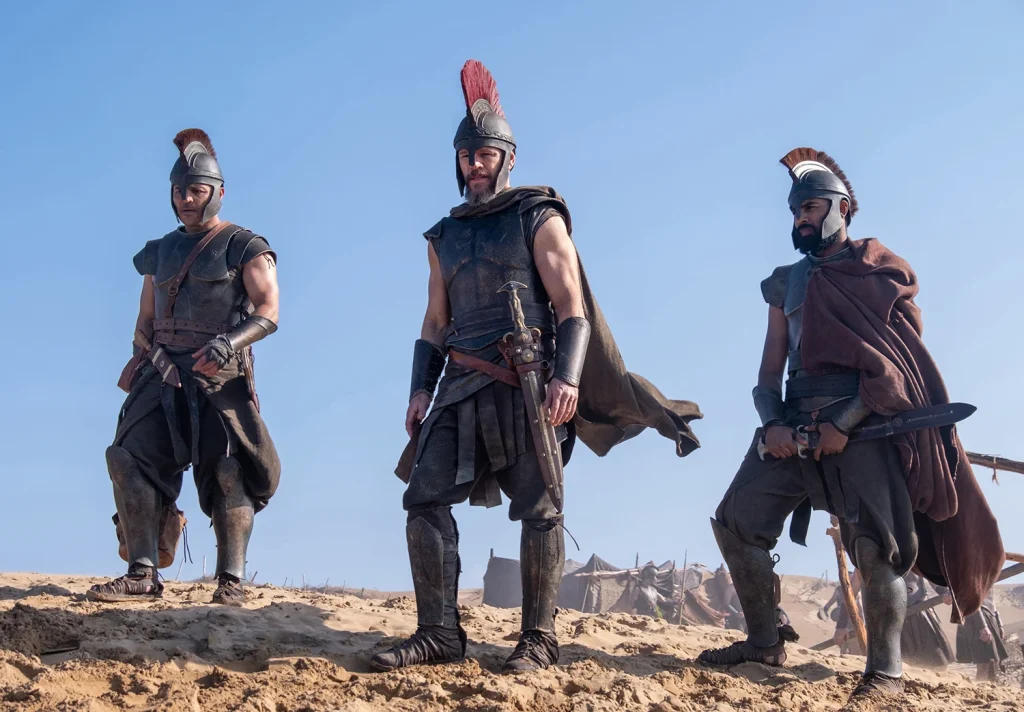
Christopher Nolan’s latest adaptation of The Odyssey is proof that Homer can still ignite cultural and ideological debate.
Even before the film reached theaters, it came under fire from ultra-conservative circles. Among their targets was the casting of a Black actress as Helen and a transgender actor as Achilles. The latter turned out to be nothing more than a rumor. The actress’s role, meanwhile, proves more complex than expected, but the new Helen has once again become a source of controversy – just as she was in Antiquity. Nolan has thus found a subversive way to play with the Greek tale.
The director also gives us more than the classic Hollywood happy ending. Instead, he opts for an ending drawn from a lesser-known Greek tradition. Odysseus’s westward journey is itself a reference to the direction of Greek colonization in the period when The Odyssey was written. In this way, Nolan’s film becomes a story of the destruction of the old order – its Trojan horse echoing the atomic bomb in his earlier film Oppenheimer – and the painful birth of an entirely new world.
“Both the ancients and we today can read The Odyssey in two ways. If we look at it from a certain distance, as Nolan intended to some extent, from a historical perspective – not to reconstruct the history of the Late Bronze Age, but to try to relate The Odyssey to our own contexts, to our world – we can treat it as a story about the end of an era, the collapse of a certain world, as well as a beginning – the dawn of a new world. And this is how Homer’s poems have been interpreted many times in the past.”
“I’d say that Nolan is trying to have his cake and eat it, so to speak. He wants to present The Odyssey simultaneously as a story of collapse and of a new beginning. And we must remember that when Odysseus, at the beginning of the film, plans to sail westward – toward where the sun sets into the sea – this is nothing other than the direction of the Greeks’ colonizing voyages in Homer’s time, both before and after, expeditions that led the Greeks to settle in Sicily, southern Italy, and further along the coast of Spain. And this new Greek world, which had already taken shape quite firmly in Homer’s time, is also present in this film. This ending has both ancient and historical significance. It is by no means a Hollywood-style happy ending,” comments Prof. Marek Węcowski.
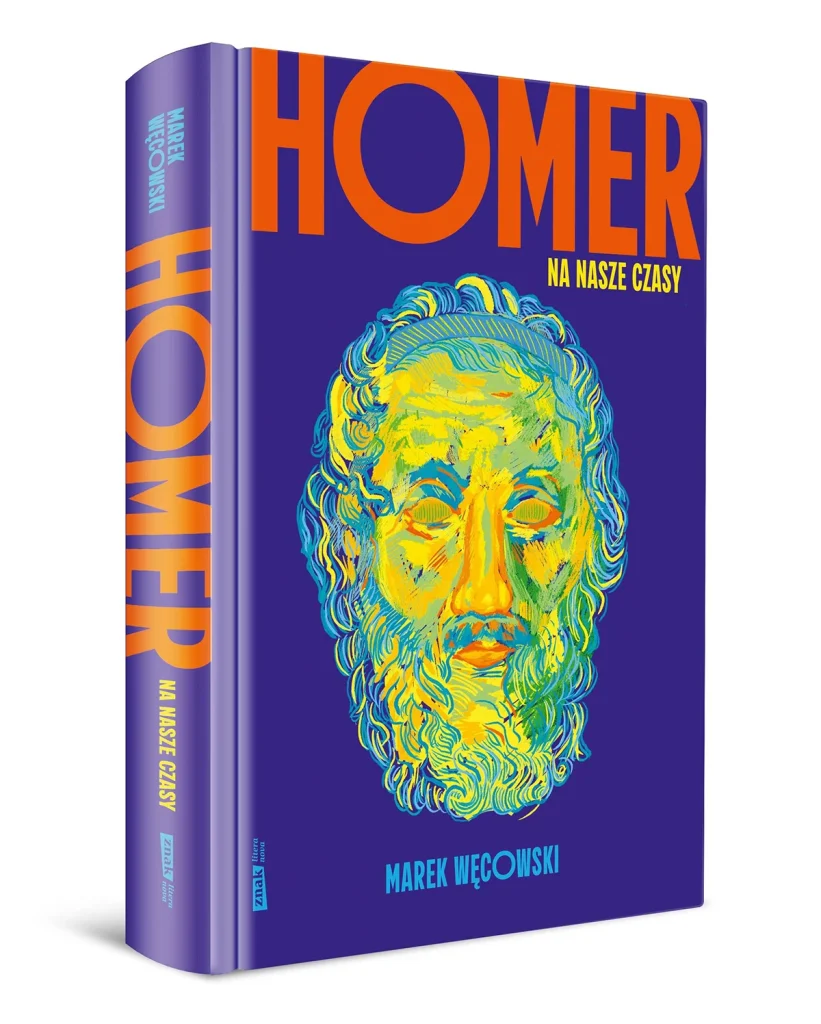
You can read about this and many other topics in Prof. Marek Węcowski’s Homer in our times, published by Znak in 2026.
The text was originally published in Polish on the Serwis Naukowy UW website on August 20, 2026.