
In September 2023, a tragic accident on Poland’s A1 highway claimed the lives of a family of three. Initial public reports did not disclose the cause of the crash – but internet users quickly began digging. They uncovered evidence suggesting the involvement of another car and launched their own online investigation. By sharing videos and amplifying the case across social media, they drew widespread attention and put pressure on authorities. An official search for the driver of a BMW was soon announced.
But the online sleuthing did not stop there. Internet users identified family connections of the alleged perpetrator, shared photos from his wedding, and revealed personal details – including the workplace of his wife. She is now taking legal action against them.
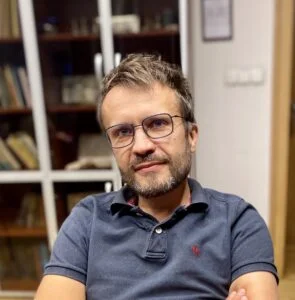
“Armchair detectives have existed for a long time, but it is only with the rise of the internet that the phenomenon has reached such a scale. It’s a double-edged sword: sometimes the persistence and activity of internet users – often supported by journalists – push law enforcement agencies to act. There are cases where grassroots initiatives have helped uncover and secure evidence that influenced the course of investigations. On the other hand, this phenomenon can lead to ‘witch hunts’ and online hate. That can result not only in personal tragedies but also in serious disruptions to official investigations,” explains Prof. Paweł Waszkiewicz from the Department of Criminalistics at the Faculty of Law and Administration, University of Warsaw. He leads the research project “Social Media in Law Enforcement,” funded by the National Science Centre (NCN).
The role of Facebook
Since its launch in 2004, Facebook has grown to more than 3 billion active users. Nearly 40% of the world’s population uses the platform every month. And Facebook is only one of many social media platforms.
According to the Digital 2024 report, more than 5 billion people – 62.3% of the global population – now use social media. That represents a 5.6% increase compared to the previous year. The report also shows that the average person worldwide spends 6 hours and 40 minutes online each day; in Poland, the figure is 6 hours and 17 minutes. In other words, we spend more than half of a 12-hour waking day in the digital world – and roughly one-third of that time on social media. In Poland, users spend an average of 1 hour and 54 minutes daily on Facebook and similar platforms.
Why do we use social media?
The most common reasons people give for using social media include staying in touch with friends (nearly half of respondents cite this as their primary motivation), filling free time, keeping up with news, seeking entertainment, and sharing photos and videos. The structure and functionality of social media platforms create numerous opportunities for law enforcement agencies.
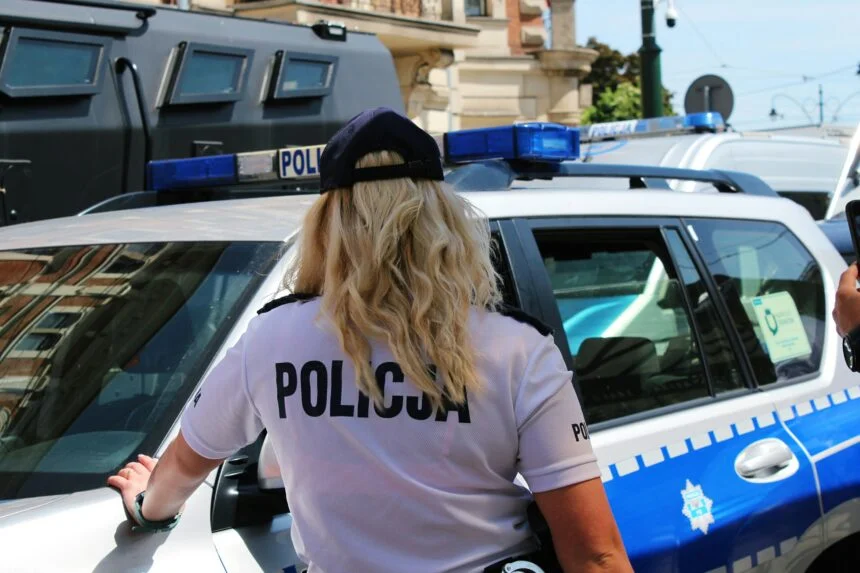
According to Prof. Waszkiewicz, police use of social media can be divided into three main areas: communication and information policy, investigative work, and evidentiary purposes. His research team found that 64% of surveyed police officers use social media in an official capacity.
“Technological pioneers within the police are very digitally savvy. They know how to use social media both for communication and investigative needs. When cases involve significant online activity – or when the internet reflects real-world events – they are able to find and secure relevant evidence for future proceedings,” Prof. Waszkiewicz explains.
Investigations on the internet
Researchers from the University of Warsaw found that police most frequently encounter social media materials while investigating crimes such as theft, defamation and insult, hate speech, sexual offenses (particularly cases involving minors), threats, and fraud.
The platforms most commonly used by officers for investigative purposes were Facebook (92.7%), Instagram (12.2%), and Twitter – now known as X – (7.3%). Social media helped officers identify individuals (51.16%), verify circumstances relevant to preparatory proceedings (39.53%), and confirm previously gathered information (34.88%).
How is such material handled procedurally? Just over half of the surveyed officers prepare memoranda or official notes when collecting social media evidence. However, these cannot replace formal procedural documentation in court. Meanwhile, 23.06% prepare a formal inspection report in addition to notes, and 9.1% rely solely on such a report. There is no uniform practice in this area.
Authenticating digital evidence remains another major challenge. To test judicial approaches, Prof. Waszkiewicz’s team presented judges with fabricated online evidence and examined how it would be assessed in court. The judges consistently stressed the need to verify the authenticity of such materials.
New technologies at police stations
Despite the growing importance of the internet in criminal investigations, officers sometimes still conduct inquiries using their own private devices. A comparison of 2022 data on digitalization within the police and prosecutor’s offices showed that the police were actually ahead in this regard.
Remarkably, only after Prof. Waszkiewicz’s field research concluded in January 2022 was internet access enabled on official computers used by prosecutors in Poland. Previously, prosecutors could access the internet only from designated administrative offices, due to cybersecurity concerns. The research team conducted what was likely the largest in-person interview study with Polish prosecutors – and this organizational barrier was frequently mentioned.
The police image on social media
Law enforcement agencies also use social media as tools for public communication and image-building. During the Independence March in Warsaw on November 11, 2020, a photojournalist was injured by a rubber bullet. The Warsaw Police first expressed sympathy to the victim via Twitter and later released a video showing the broader context of the incident. This helped quickly correct certain misleading narratives and limit the spread of disinformation.
However, maintaining an active presence online carries risks – from hostile comments to dilemmas over moderation. Should critical posts be deleted? Prof. Waszkiewicz notes that censorship or limiting user interaction can undermine institutional credibility and weaken previous efforts to build trust and cooperation with citizens.
“Nothing ever truly disappears from the internet,” and any misstep can be used against an institution. Given the lack of specialized social media managers within many police departments, such errors are perhaps unsurprising. Police press officers are often expected to gather information, communicate with traditional media, respond to inquiries, and manage social media profiles – all at once.
Moreover, there are still no clear guidelines defining the purpose, scope, or professional standards for police presence on social media. There is also little formal training in this area.
“We see police departments – even at the county level – moving beyond their original ‘habitat,’ Facebook, and expanding onto platforms such as X and TikTok. We were curious how they would handle it – and they are managing. The open question remains: what is the strategic purpose?” says Prof. Waszkiewicz.
His research indicates that humorous posts published on police social media profiles generate the highest engagement – but also a significant number of negative reactions. Just as law enforcement agencies are still learning how to operate effectively online – both in investigative and image-related terms – audiences may also need time to adjust to the growing presence of police in digital spaces.
The text was originally published in Polish on the Serwis Naukowy UW website on January 28, 2025.