

According to the Central Statistical Office (GUS), Poland has only 1,600 cubic meters of renewable water per capita per year. Croatia has 28,800. Neighboring Slovakia – 14,800 m³. The reasons are twofold: climate change, and poor water management. Poland has been draining wetlands, straightening rivers, and paving over cities. The result? Instead of being absorbed and retained, water accelerating the water deficits in soil and rivers that climate change is already driving.
Droughts, floods, poor water quality – these are already an everyday reality. And it will get worse. Projections for the second half of the 21st century predict an increase in the frequency and intensity of droughts in central Europe. Will it take a full-blown water crisis – water as a costly, contested resource – for us to grasp how central it is to our lives? Or can we get there sooner, by learning to see water not just as something we manage, but as something that surrounds us, shapes us, and with which we are in constant relationship?
That is precisely the question a team of researchers from the University of Warsaw set out to explore. Dr. Małgorzata Owczarska, Dr. Magdalena Kozhevnikova, and Magdalena Siemaszko, M.A., investigated how people across different regions of Poland experience water – its absence, its excess, and its everyday presence.
Their project, “Experiences of water excess, water deficit and water’s balanced presence. A study in Blue Anthropology,” is one of the first in Poland to bring together anthropology, ecology, and audiovisual research to document the local, cultural, and emotional dimensions of our relationship with water. This approach differs from classical hydrological research. It is not about measuring precipitation or water levels. It is about how we – as people – experience water: how we talk about it, how we remember it, how we react when it disappears or seeps into our basements; but also about how water actively co-creates social worlds.
How do you study a relationship with water?
The project examined three water scenarios across three locations, each revealing something distinct about how local residents relate to “their” water. The sites were chosen to cover a range of contexts: lowland water in an agricultural setting, water in an industrialized mountain region, and water in a major urban agglomeration. The research relied on qualitative methods: participant observation, in-depth interviews, conversations, and audio and video recordings.
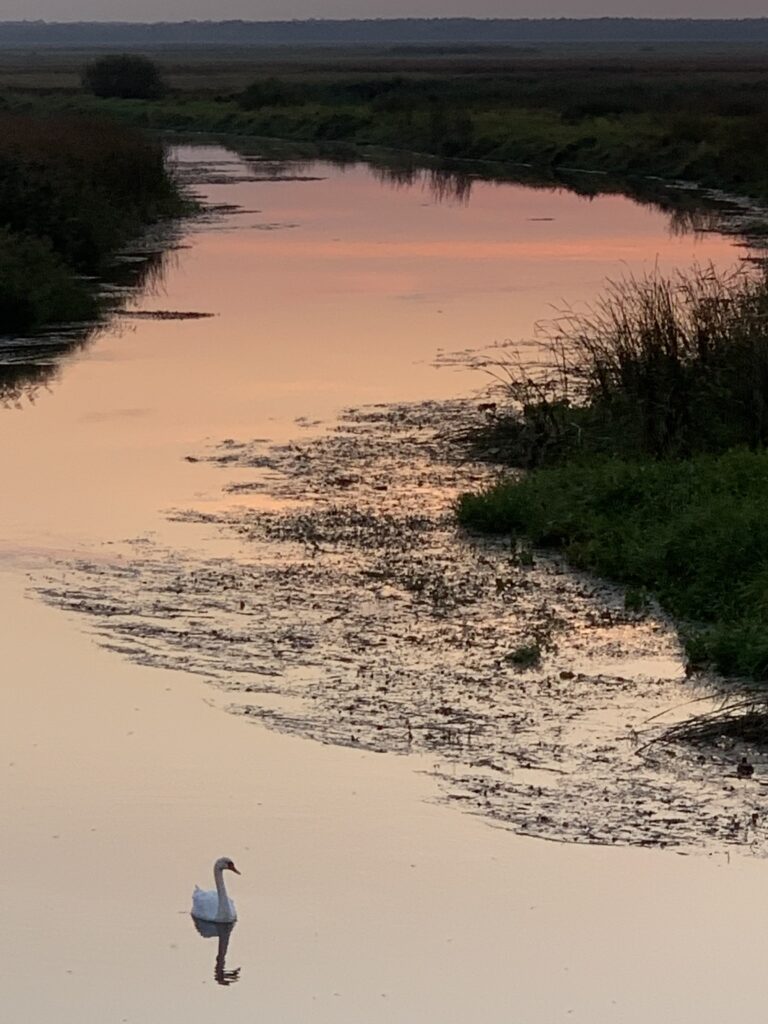
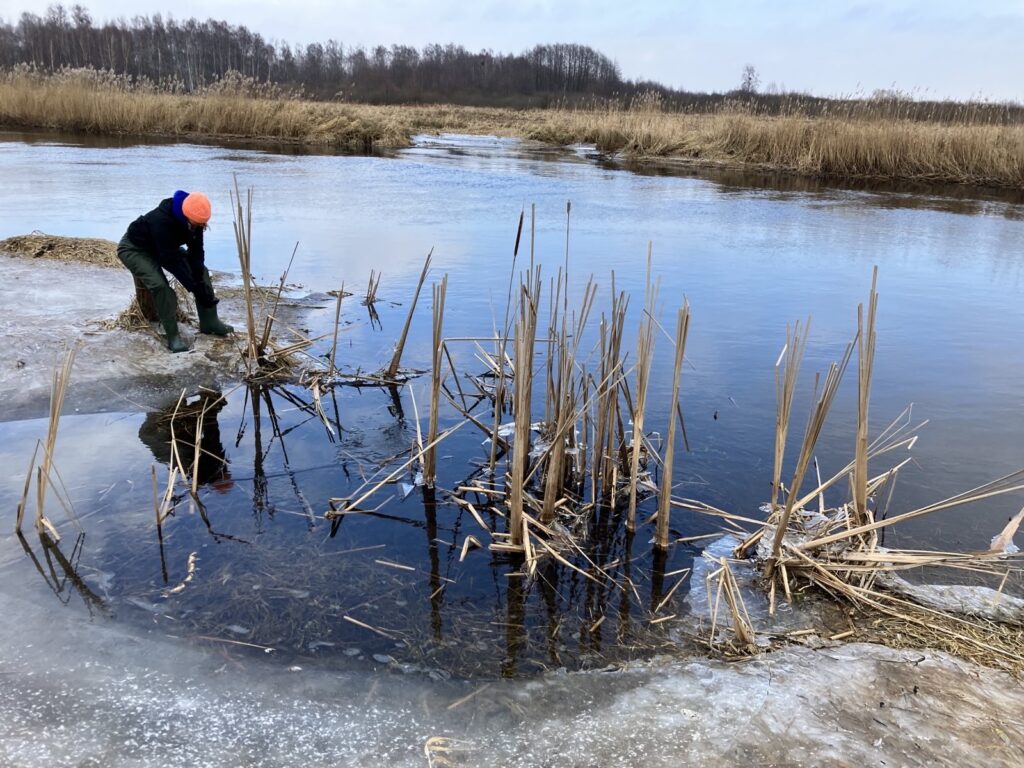
One of the study areas was the Biebrza National Park and its buffer zone. The region is known for its wetlands of a semi-anthropogenic character, unique on a European scale – places where water has never simply “flooded,” but followed a rhythm of annual inundation. Today, that rhythm is faltering: the region is struggling with drought and the disruption of the river’s flooding cycles. The researchers found that the practice most deeply linking people to the wetlands and the Biebrza River was “sianowanie” – the mowing of meadows. Once a form of care for land and livestock, it became, after the agricultural shifts of the early 21st century, a source of conflict between the National Park and the local farming community. The disagreement is rooted in the region’s history, conflicting aesthetics, and fundamentally different ideas about what it means to “care for” a river.
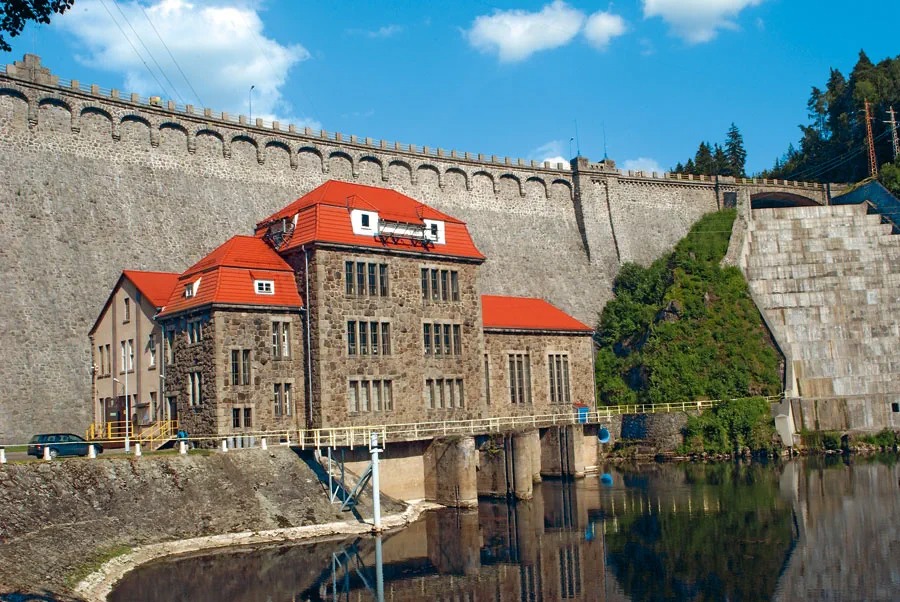
In the Bóbr Valley in Lower Silesia, it is flood control infrastructure – dams, power plants, weirs – that defines the landscape. The researchers examined how local communities live in the shadow of these structures. The rivers of Lower Silesia were regulated and put to work producing paper and textiles, a process that permanently transformed the region. Historical and contemporary infrastructure, the presence and disappearance of their wild inhabitants, and pollution levels. Residents shared memories of trout fishing in the local stream, or swimming in a river thick with toxic foam. Field interviews in the area gave rise to an interactive map of the approximately century-old, post-German water intakes of Pilchowice, featuring underwater recordings and conversations with residents that document the region’s water worlds. (https://powody.pl/pilchowice).
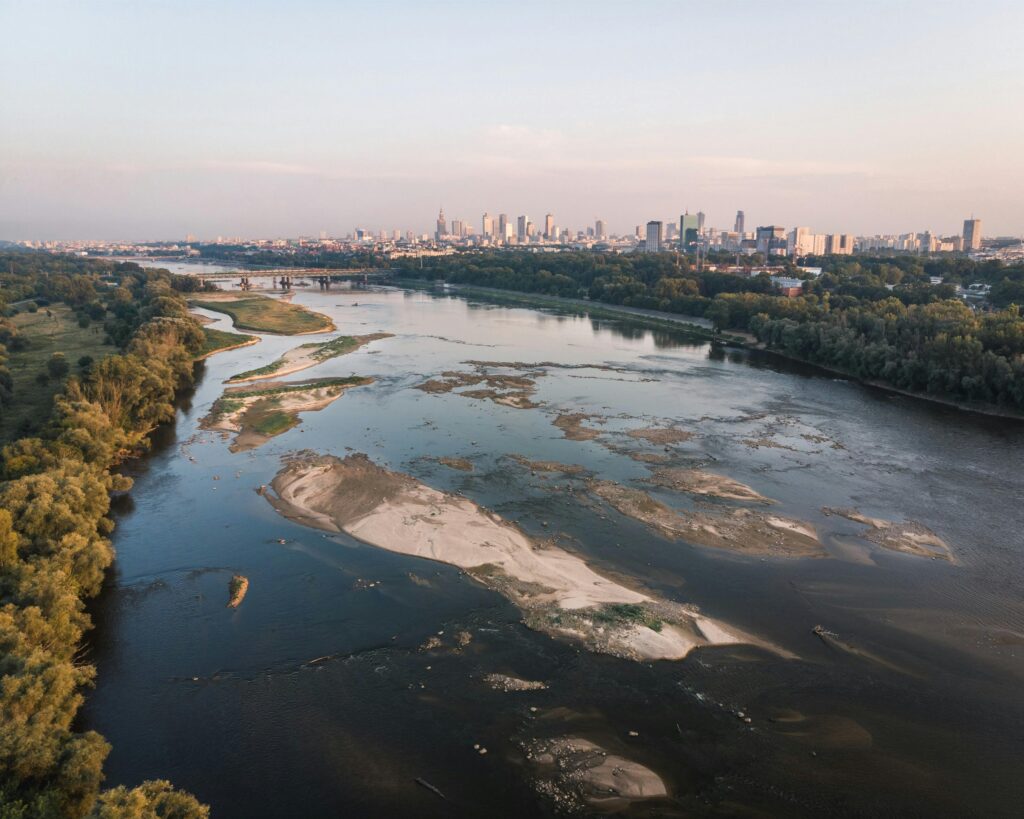
On the Vistula in Warsaw, the project took to the water itself. From the deck of the wooden boat “Rwij Gałązki,” the researchers spoke with people they encountered along the way, recorded sounds above and below the surface, and documented the river through photographs and video. They also turned their attention to urban fountains and disappearing watercourses. The aim was to show that water can be experienced in ways other than reading about it (https://powody.pl). A separate case study examined the use of mussels in urban water supply systems, focusing in particular on the ethical dimensions of that form of interspecies cooperation.
What has happened to water?
Research by anthropologists at the University of Warsaw points to a deep divide between humans and water – one that has been widening for the past 150 years. Modernity disrupted our relationship with water in a fundamental way. Since the 19th century, we have come to see water as an abstract chemical compound: something to be managed, measured, and regulated. It was then that large-scale drainage and land development programs began. Today, the total length of drainage ditches in Poland is nearly as long as the distance from Earth to the Moon!
“With modernity, water became abstract and lost almost all of its spiritual connotations. In the past, European bodies of water were home to water nymphs, and wells housed various kinds of spirits; every body of water had its own character. When the Romans built aqueducts, they did not connect watercourses, because each had its own specific nature and could not be mixed. All of that ceased to be important by the end of the 19th century,” says Dr. Małgorzata Owczarska.
At some point, water simply lost its subjectivity. As the Industrial Revolution gathered pace, it came to be seen both as a threat to be contained and a resource to be put to work. The regulation of watercourses was meant to make wastelands more productive and rivers more controllable for the common good. Ecological consequences were not part of the conversation.
“Another argument for draining wetlands was that standing water was deemed a health hazard. Wetlands were believed to emit so-called ‘rotten air’ and ‘marsh fumes,’ which were seen as the cause of disease and death. This served to legitimize the draining of wetlands and the regulation of rivers,” comments Dr. Owczarska.
Does water pay off?
We are seeing the consequences of this today. Water responds slowly, but persistently. Drainage systems – such as ditches and canals – which were originally intended to protect against excess standing water, now exacerbate drought. Concrete-lined, straightened riverbeds increase the risk of flooding: they act like gutters, carrying water away too fast for it to soak into the soil. When heavy rain hits parched ground, the water runs off instantly and levels rise suddenly. When concentrated in such a “gutter-like” channel, it cannot be contained; it surges forward, leading to local flooding and so-called flash floods.
“There is a synergy at play. The way we manage water is beginning to converge with climate change and the human-accelerated intensification of certain phenomena,” says the researcher – and water circulation, she adds, is already changing.
In Poland, annual rainfall still amounts to around 600 mm. But water no longer appears in the form of snowmelt and long, steady drizzle. Instead, we now experience intense downpours interspersed with long periods of drought.
Back to water
The project “Experiences of water excess, water deficit and water’s balanced presence” is, at its core, an attempt to reconnect with water – shifting our perspective toward the intersection of the human and the non-human, and bringing water back into a social context.
The researchers wanted to show what a different kind of relationship with water might look like, and to find the language to describe it.
“We wanted to start returning to the rivers – to understand our relationships through embodiment rather than narrative. The ‘from the water’ perspective changes how you see Warsaw entirely. The distinction between ‘with the current’ and ‘against the current’ is something completely different from the division between the right and left banks, which we usually think about in terms of bridges,” explains Dr. Owczarska.
To escape the pull of land-centric thinking, the researchers turned to an underwater camera and microphone – tools that could show a wider audience that a river is not just a blue ribbon in the landscape, but has its “above” and its “below.”
“And beneath the surface, something remarkable is happening. When we showed this footage at a meeting of a rural women’s association, the reaction was immediate – ‘How beautiful!’ It’s also about aesthetics. After seeing their own backyard landscape from underwater, the women decided they wouldn’t cut down yellow water lilies or other aquatic plants. And that, it turns out, actually helps retain water in the landscape and counteract drought,” says the researcher.
Me and water
Over the course of the project, hundreds of local water microhistories came to the surface. Some are singular; others are shared by whole communities. In the Biebrza Valley, “sianokosy” – haymaking – is a characteristic water-related experience for many residents. In Pilchowice, water calls to mind hydraulic structures, old German-era water supply systems, and floods. In Warsaw, the relationships with water multiply:
“There are so many of these relationships, and they are so diverse, that we would need several separate projects to explore them all. We’ve identified a whole range of themes: from trash and the homelessness crisis – the class-based use of water – to fountains where children bathe and the people who keep them running; urban bioindicators that make it possible to notice that we are dealing with drought at all; renaturalization projects, urban permeabilization, blue-green infrastructure; all the way to water sports enthusiasts, naturists, and other locally rooted micro-relationships,” explains Dr. Owczarska.
In their work, the researchers introduce the concept of hydroperformativity – the idea that the way we talk and think about water, when it meets water’s own material agency, helps shape not only our water worlds but our water crises as well. Water, the project shows, is not merely a physical phenomenon. It is a social and cultural reality. It doesn’t just flow from the tap – it shapes our decisions, influences our relationships, and stirs our emotions. Learning to understand that relationship may be one of the keys to responding to the climate crisis. Not only engineers and politicians, but residents, local communities, and institutions can learn to “see water” – not as something abstract, but as a close neighbor with a history, a voice, and a memory.
The text was originally published in Polish on the Serwis Naukowy UW website on June 9, 2025