

At a time when ChatGPT can answer nearly any question and online views are increasingly treated as a proxy for authority, it is becoming harder for scientists to reach the public. This is especially true when they address topics such as climate catastrophe or vaccination – issues that many people still find difficult to accept. Claims about a crisis of trust in science gained momentum during the COVID-19 pandemic, although countries with higher trust in science and scientists tended to handle the crisis more effectively.
Rather than rely on assumptions, researchers set out to test these claims by surveying tens of thousands of people across dozens of countries. The results of the large-scale Trust in Scientists and Science-Related Populism (TISP) project were published in Nature Human Behavior.
“The trust-in-scientists survey covered 68 countries and nearly 72,000 respondents. The questionnaire was translated into 36 languages and dialects. This is not the first study on this topic, but it stands out in terms of both scale and its approach to measuring trust,” says Dr. Adam Płoszaj from the Science Studies Lab at the University of Warsaw, one of 241 researchers from 179 institutions involved in the project.
Scientists are holding up well
“The narrative of a global crisis of trust in scientists is not supported by the data,” explains Dr. Płoszaj. “In most countries, trust levels are moderately high.”
The average level of trust was 3.62 on a five-point scale (1 = very low trust, 5 = very high trust). Scientists enjoy the highest levels of trust in Egypt (4.30) and the lowest in Albania (3.06). With a score of 3.51, Poland sits slightly below the global average –behind countries such as Norway and the Netherlands, but ahead of Germany and Switzerland. In Europe, Spain ranks highest, placing in the global top ten with a score of 3.90. Lower-than-average trust levels were observed in Russia and in several post-Soviet and formerly aligned countries, including Kazakhstan.
Who trusts scientists the most? Demographic factors play a clear role. Women, older adults, urban residents, higher-income individuals, and those with higher education levels or self-identified left-leaning or liberal views tend to show higher-than-average trust – particularly in Europe and North America. Interestingly, and somewhat contrary to earlier research, trust in scientists is also positively associated with religiosity. Muslim respondents, in particular, reported higher levels of trust. The study’s authors suggest this may be linked to the presence of scientific principles reflected in the Qur’an. At the same time, some Christians perceive science as being in tension with their religious beliefs.
This relatively high overall trust does not mean that the position of science and scientists is secure.
“The study shows that even relatively small groups with low trust in scientists can shape public perceptions of science,” says the researcher. “This could become a larger issue in the future if such groups gain political or media influence.”
The stakes are high. Science remains central to evidence-based decision-making. Public trust in scientists helps policymakers act more effectively, particularly in times of crisis. It also supports individuals in making informed choices about health, nutrition, and everyday life.
What does “trust” mean – and what can we do with it?
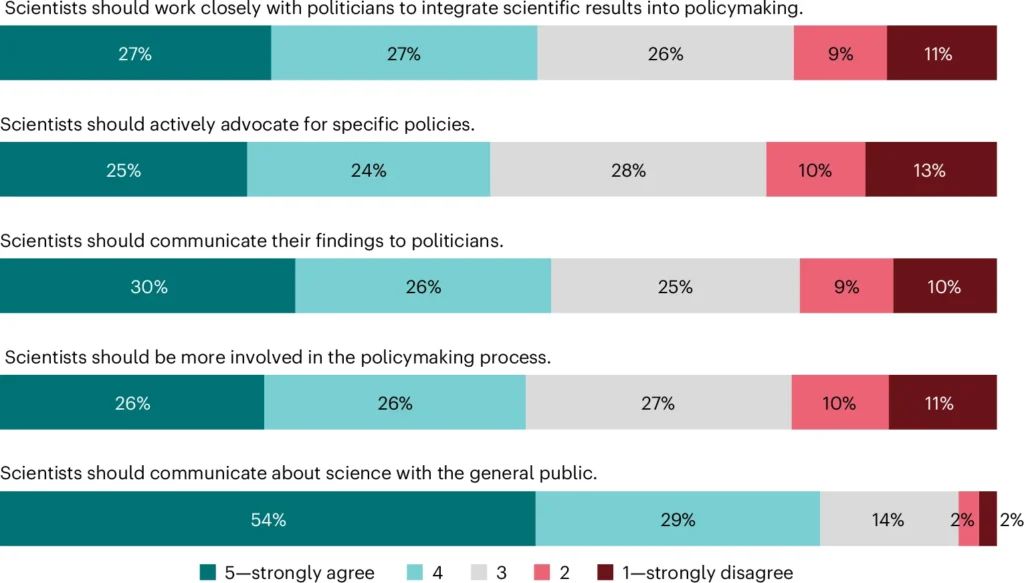
The TISP project did not measure trust in science as an abstract concept, but rather trust in scientists – specifically perceptions of their competence, honesty, benevolence, and openness. Most respondents viewed scientists as qualified (78%), honest (57%), and concerned about people’s well-being (56%). Importantly, 83% of participants believe scientists should actively communicate with the public about science. At the same time, 75% agree that scientific methods are the best way to determine whether something is true or false. What do these findings mean in practice?
“Scientists can engage more actively in public debate, knowing that such engagement is generally well received,” explains Dr. Płoszaj. “Science communicators can use these results to better tailor their messaging, as the study suggests that openness and transparency can strengthen trust.”
According to Dr. Płoszaj, the implications go beyond the scientific community. Policymakers, aware that most of the public trusts scientists, can lean more confidently on evidence-based decision-making. The media, in turn, are encouraged to avoid amplifying unsubstantiated narratives about a supposed crisis of trust. Educational institutions can place greater emphasis on teaching scientific methods and research integrity, helping the public better understand how scientific knowledge is produced – and ultimately strengthening trust in science and scientists.
Science for people
The study also shows that public expectations go beyond trust – they extend to research priorities. Improving public health, addressing energy challenges, and reducing poverty are seen as the most important areas for scientific focus. In particular, respondents believe poverty is currently underprioritized by science. Many suggest that scientists should focus more on poverty reduction rather than, as they perceive it, devoting too much attention to military and defense technologies.
Interestingly, these views are most common in Latin American and European countries, even though responses were collected between November 2022 and August 2023 – during the ongoing war in Ukraine. In contrast, respondents in Asian and African countries are more likely to expect greater scientific engagement in defense-related issues.
The text was originally published in Polish on the Serwis Naukowy UW website on July 4, 2025.