
The city’s name comes from the Ptolemaic dynasty that ruled ancient Egypt, which founded it in the late 4th or early 3rd century BCE. During the Roman period, from the 4th to 6th centuries CE, Ptolemais served as the capital of the province of Libya Superior. Its territory encompassed five economically interconnected cities – Kyrene, Apollonia, Taucheira, Berenice, and Ptolemais itself – which gave the region the alternative name Pentapolis, meaning “five cities.” Today, Ptolemais is a rare archaeological gem because it has not been built over in modern times, allowing researchers to study its urban fabric, public spaces, and residential areas in extraordinary detail.
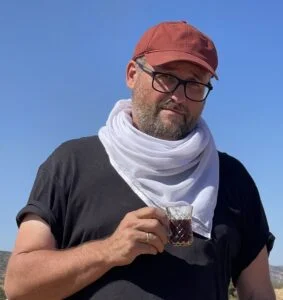
Polish archaeologists secured the necessary permits and returned to the excavation site after a 13-year hiatus. In 2023, a team led by Dr. Piotr Jaworski of the Faculty of Archaeology at the University of Warsaw resumed their research in Libya.
Polish Missions in Ptolemais
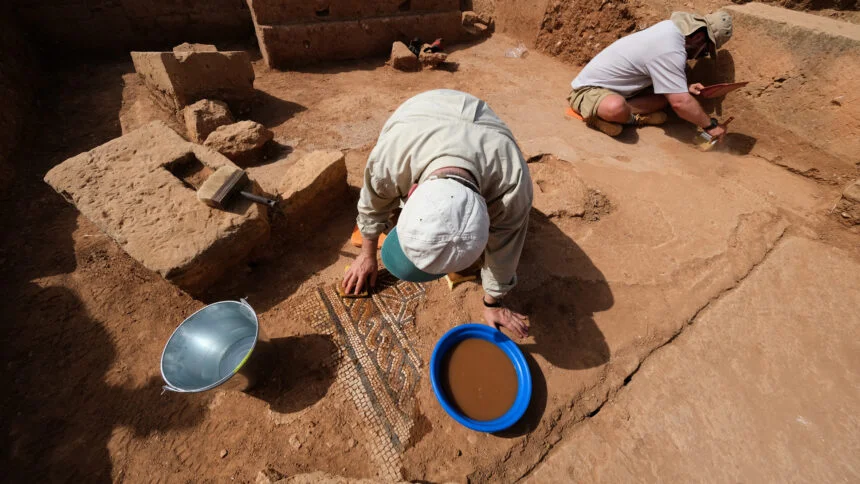
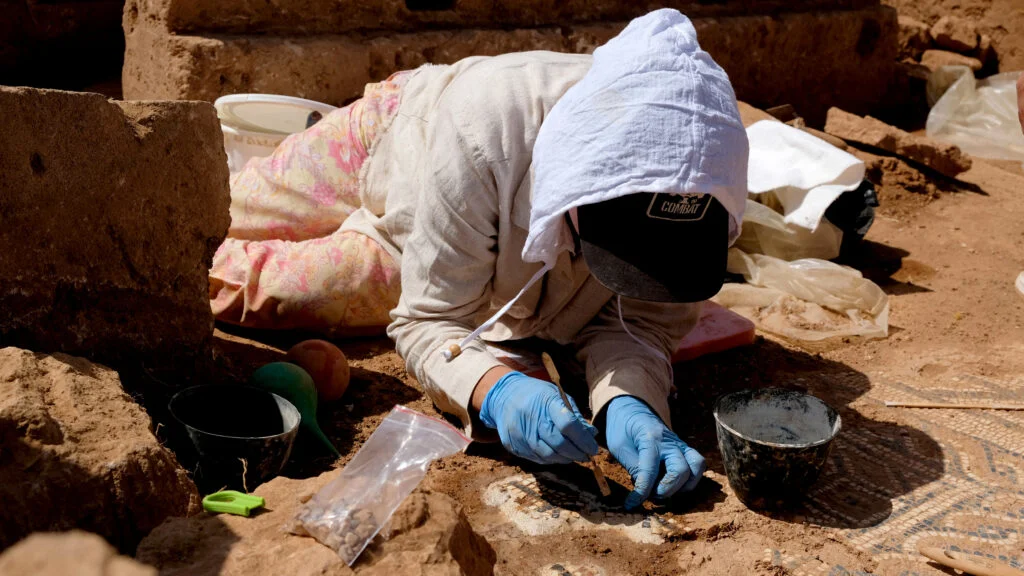
The University of Warsaw’s mission in Ptolemais began in 2001 under Prof. Tomasz Mikocki, opening a new chapter in archaeology conducted by Polish researchers in the Mediterranean basin. The excavations quickly proved fruitful. Among the notable discoveries was the “House of Leukaktios,” a lavish residence from the 2nd–3rd centuries BCE, adorned with a rich collection of mosaics and wall paintings. However, the mission was halted in 2010 due to Libya’s political instability and the outbreak of civil war.
After 13 years, the team returned, working in collaboration with the Academy of Fine Arts in Warsaw. Initially, they focused on conserving artifacts uncovered between 2001 and 2010. Soon, new discoveries followed, including a fragment of a Roman-era dignitary’s house.

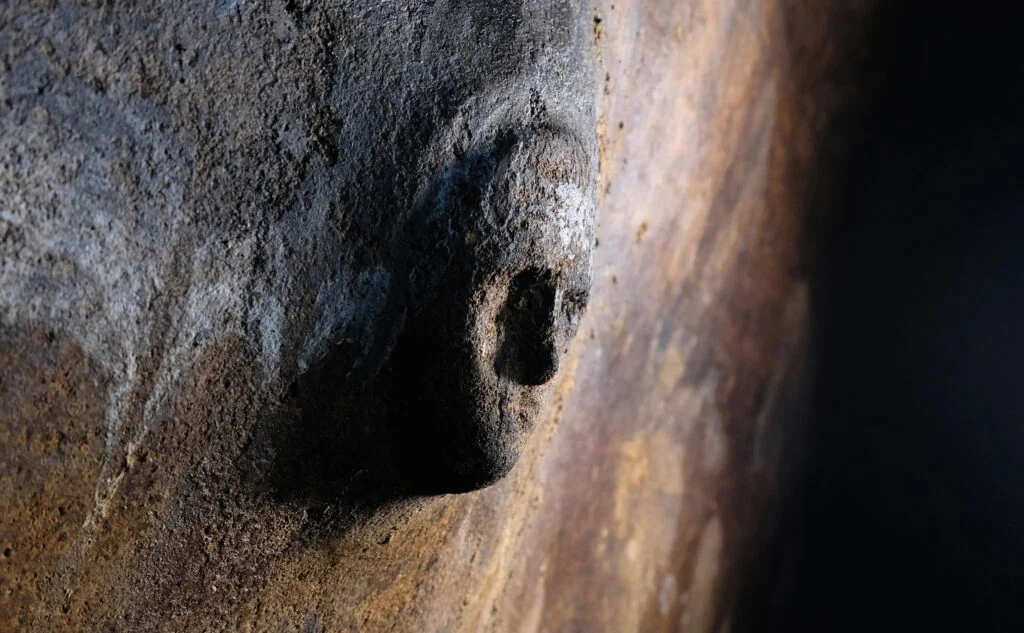
The structure revealed an inner courtyard surrounded by a kitchen, a staircase to an upper floor, and a room decorated with mosaics. At the center, a pool collected rainwater as part of an advanced water system, draining into two underground cisterns. A mask depicting a human face was found on the wall of one cistern.
According to Dr. Jaworski, three stone containers near the entrance suggest that in its later phase, the house served not only as a private residence but also for public functions – likely a place where residents paid taxes or made offerings. The building appears to have been destroyed in an earthquake and later rebuilt during the Late Roman period.
Underwater archaeology
Many more groundbreaking discoveries may be on the horizon. Polish archaeologists are preparing to carry out underwater research in an area that has never before been explored. Their primary focus will be the port, a crucial hub of the ancient city. Plans also include surveying the coastline and reconstructing the original shoreline, which has shifted over the centuries due to rising sea levels. So far, the team has conducted sonar surveys – using sound waves to map the seabed.
The archaeologists will also dive, hoping to locate submerged structures and elements of the port’s infrastructure.
“First and foremost, we want to study the topography of the ancient port and its infrastructure. This is urgent rescue archaeology. We need to act quickly because ongoing breakwater construction has been literally reshaping the port’s cultural landscape before our eyes. If we delay, it could soon be lost,” emphasizes Dr. Jaworski.
Shipwrecks may also be discovered, potentially providing invaluable insights into the city’s history, including its economic life and trade with other centers. However, Dr. Jaworski notes that while such finds are possible, they are not the main focus of this mission.
Previous research teams in the area have already excavated amphorae used to transport goods by ship and, fittingly for a port city, coins. Archaeologists from the University of Warsaw have uncovered thousands of coins during excavations in Ptolemais. Numismatic research is particularly important for understanding the economic history of urban centers and can shed light on other aspects of city life.
“Many bronze coins bearing the names of Mark Antony and Cleopatra were minted by a temporary ‘traveling’ mint accompanying the Roman army. These finds indicate that, at the end of the Roman Republic, a Roman fleet was likely stationed in the city under Mark Antony’s command. Other evidence also suggests military activity in the port at different periods,” explains Dr. Jaworski.

Plans for the future
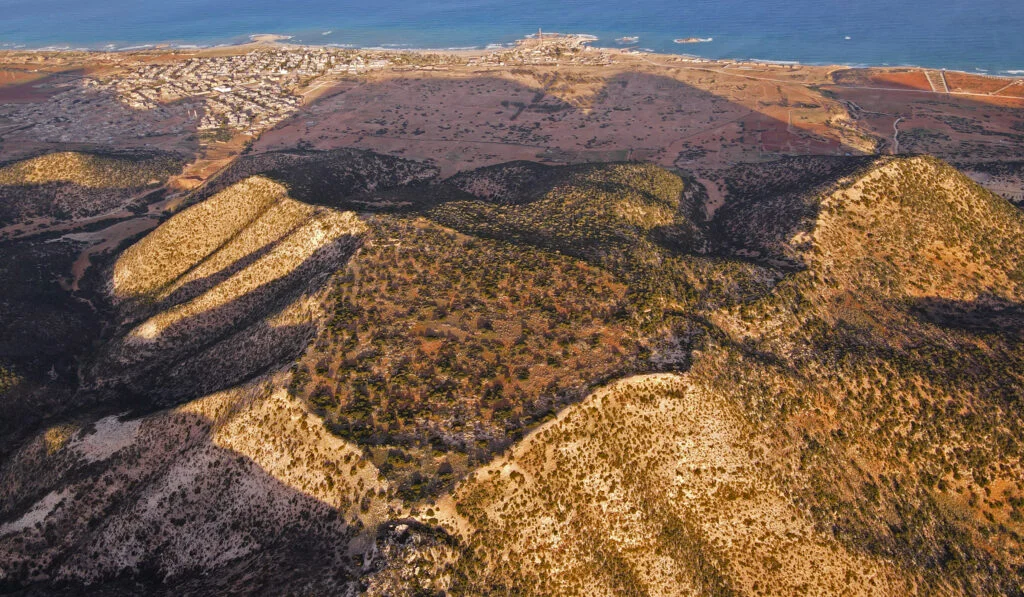
Research is ongoing. Since June 2024, a team from the University of Warsaw has been working at the site, with their next goal being the city’s acropolis – the area that served a defensive purpose. Situated on a hill 285 meters above sea level and covering 11 hectares, the acropolis was protected by defensive walls with multiple towers and provided safety for the entire population. At its base were a theater and a hippodrome, and the acropolis had its own water supply system.
This area has not yet been subject to systematic archaeological research, so many unique discoveries are expected. Researchers have already created a 3D model of the acropolis to guide further non-invasive investigations. These methods allow them to identify and document archaeological finds without disturbing the ground, ensuring that the site is preserved for future generations. Over the next few years, the team will explore what other structures may have stood on the hill, including residential buildings or places of worship.
Religious life is another area ripe for discovery.
“To date, no pre-Christian worship sites in Ptolemais have been excavated. However, there is no doubt that temples and sanctuaries existed. Their remains are visible both on the surface and in geophysical surveys, which reveal structures buried beneath archaeological layers and invisible to the naked eye,” emphasizes Dr. Jaworski.
The team is also studying settlements that existed before the founding of Ptolemais.
“We aim to uncover material remains from the Archaic and Classical periods – before Ptolemais was established. At that time, the settlement – whose name has not survived in written sources – functioned as a port for the inland city of Barke. We still cannot precisely determine the extent of the surrounding rural territory, known in Greek as the chora, so comprehensive non-invasive research is necessary. Related to this is mapping ancient roads connecting the city to its hinterland and to other settlements across Cyrenaica. These are just some of our future plans,” Dr. Jaworski explains.

The article was originally published in Polish on the Serwis Naukowy UW website on March 13, 2025.