
How did Christianization transform funerary practices in Pomerania? And what can burial sites dating back more than a thousand years still reveal today? Since 2022, a team of archaeologists from the University of Warsaw, led by Dr. Sławomir Wadyl in collaboration with Dr. Paweł Szczepanik from Nicolaus Copernicus University in Toruń, has been working to answer these questions. Their research has resulted in a paper published in the prestigious journal Antiquity focusing on discoveries from the cemetery in Nowy Chorów, Słupsk County. The researchers analyze the structure of the burial mounds, document a range of funerary rituals, and explore how these practices reflect the religious and political transformations at the turn of the 10th and 11th centuries.
Rectangular burial mounds
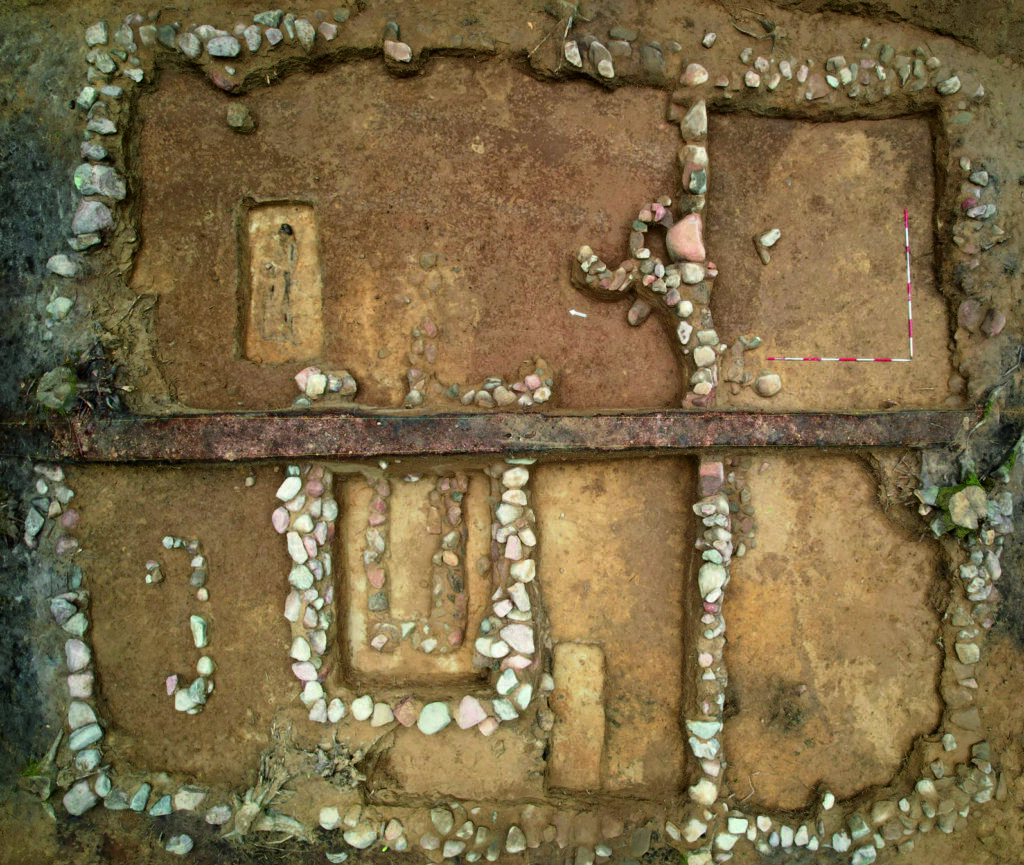
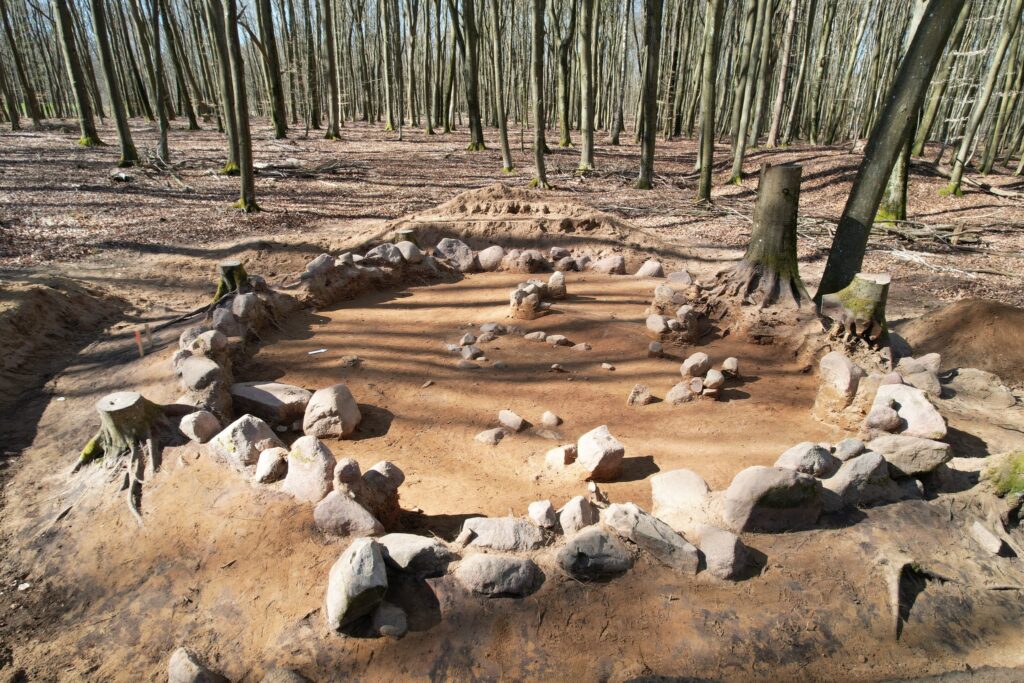
Barrows, or kurhany in Polish, are earthen or stone mounds beneath which the dead were buried – often as part of elaborate funerary rituals. In Nowy Chorów, archaeologists are investigating burial mounds of the so-called Orzeszkowo type. These are distinctive rectangular mounds surrounded by stone enclosures. Inside, they contain stone structures and evidence of two burial practices: inhumation and cremation. Inhumation, or skeletal burial, involves placing an unburned body in a grave, while cremation involves burning the body before the burial.
The name of this type of burial mound comes from the village of Orzeszkowo in Łobez County, where archaeological work began as early as the 1920s. At that time, more cemeteries of this type were being excavated in Pomerania, but their chronology remained uncertain – some were even attributed to the Roman period. Today, we have a much clearer picture. When a burial mound has a rectangular form with both external and internal stone structures, it is now recognized as characteristic of the early Middle Ages.
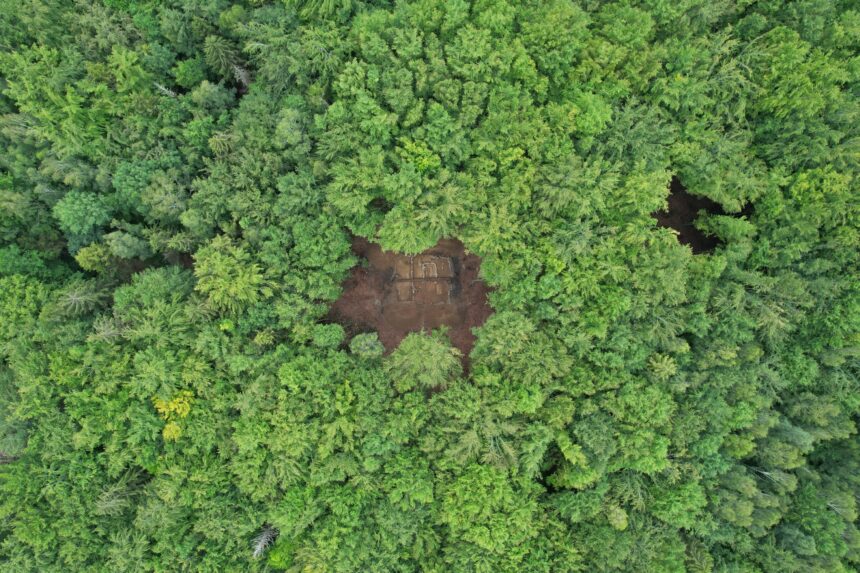
Before excavation begins, archaeologists sometimes carry out geophysical surveys to detect stone structures beneath the surface. This was also done at the Nowy Chorów site. However, excavation is still necessary to obtain detailed information about funerary practices and burial chronology.
“We now know of at least 120 sites. Publications from just a decade or so ago mentioned only around 25, so the growth in our knowledge has been enormous. How do we locate burial mounds? We even scan the Pomerania region using Geoportal, looking for square-shaped features, then go into the field to verify them. We check for stone enclosures. Square burial mounds were once thought to be a rare variation of funerary practice, but we now know they were actually the dominant form,” explains Dr. Sławomir Wadyl, who leads the research team in Nowy Chorów.
During fieldwork, archaeologists use tools such as ground-penetrating radar, which allows them to “see” beneath the surface without disturbing it. They also conduct trial trenching – small trial excavations that help confirm the presence of burial structures. At times, however, no instruments are needed: a trained eye can spot burial mounds as low rises in the landscape, while subtle differences in vegetation may also reveal their presence.
Time captured in bones and pixels
One of the most important aspects of archaeological research is the accurate dating of finds. At Nowy Chorów, archaeologists use radiocarbon dating to determine the age of bones recovered from inhumation graves. The method relies on the analysis of carbon isotopes – different forms of the same element that occur naturally in living organisms. After death, the amount of one isotope, carbon-14, begins to decline at a predictable rate. By measuring how much of it remains, scientists can estimate how much time has passed since a person’s death and place the burial within a specific historical context.
The results obtained from five inhumation and two cremation burials point clearly to the first half of the 11th century. Interestingly, the cremation graves proved to be slightly later than the inhumation ones – a conclusion supported by stratigraphic evidence, or data derived from the sequence of soil layers.
This season, the research team has also introduced a new method of documentation: photogrammetry. This technique involves taking a series of photographs from different angles and using specialized software to combine them into a highly detailed three-dimensional model. These digital reconstructions allow researchers to analyze finds with exceptional precision while preserving a permanent record of the site’s condition.
Similar techniques are widely used in museum reconstructions, as well as in the film and video game industries, where meticulous attention to detail is equally important. In archaeology, photogrammetry is not only a cutting-edge tool but also a highly practical one, enabling researchers to continue studying finds even after they are no longer accessible in the field.
Traces of coexistence
The beginnings of Christianization in Eastern Pomerania remain shrouded in mystery, largely because of the lack of written sources. This is what makes the discoveries at Nowy Chorów so valuable: they offer rare insight into a time of profound religious and cultural change. Archaeologists have found evidence that pagan and Christian beliefs coexisted, reflected in the funerary practices preserved at the site.
Inhumation burials may point to the growing influence of Christianity, while the presence of cremation graves suggests that older, pre-Christian traditions remained alive. Even the position of the body can offer valuable clues. The Church prescribed that the dead should be buried with their heads to the west. At Nowy Chorów, however, most individuals were buried with their heads facing east.
“The Church did not permit burials outside designated spaces – those associated with churches or centers of power. Yet here we find barrows, a form of burial that Christianity explicitly rejected. What is more, these burial mounds appear alongside flat cemeteries, which are typically associated with Christian practices. All of this points to syncretism – the blending of elements from both ritual systems,” explains Dr. Sławomir Wadyl.
Such a situation was possible because Christianization in peripheral regions, far from the main centers of authority, was a gradual process. Rather than immediately replacing older beliefs, the new religion coexisted with them. As a result, mixed funerary practices combining elements of both traditions continued to be used for some time.
What remains of faith and everyday life
Among the most intriguing discoveries at Nowy Chorów are material traces of early medieval religious beliefs. In two barrows, archaeologists uncovered stone arrangements resembling a triskellion – a three-armed symbol formed by interlacing arcs.
While this motif appears in many cultures, in this context it may be linked to the cult of Triglav, a three-headed god worshipped by the Pomeranian Slavs. Such deities, often associated with different aspects of the world – heaven, earth, and the underworld – symbolized strength, unity, and the cyclical rhythm of natural world. The presence of a triskellion within the burial site suggests it may have held ritual significance, perhaps offering protection to the deceased or indicating their religious adherence.
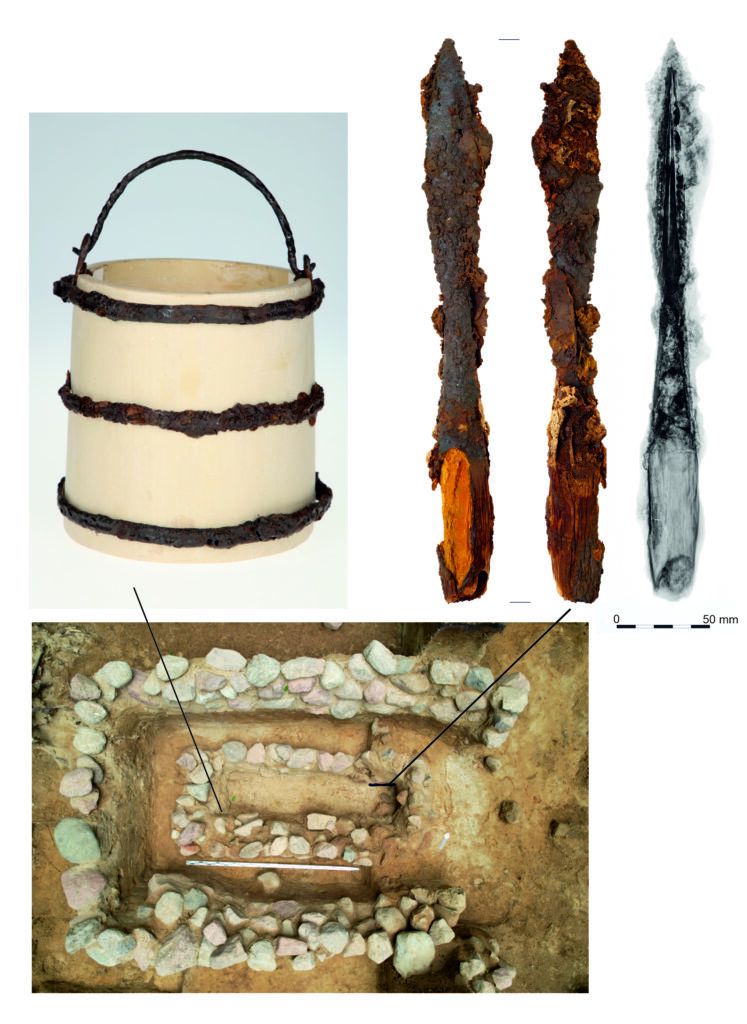
Alongside traces of belief, the graves also contained objects from everyday life. Among the grave goods, the most common finds were iron knives – often still preserved in leather sheaths – simple belt buckles, and pieces of medieval jewelry. In one barrow, archaeologists also discovered a spearhead with fragments of textile still attached, possibly the remains of a banner. Another remarkable find was a yew-wood bucket with iron fittings Another remarkable find was a yew-wood bucket with iron fittings – a highly durable and valuable material at the time. Yew itself was also symbolically significant, often associated with death and the afterlife.
Not all graves contained grave goods. In four of the seven graves excavated during the 2025 season, none were found – a pattern consistent with broader funerary practices in Poland during this period. The absence of grave goods does not necessarily indicate poverty; it may instead reflect changing funerary customs or the growing influence of Christianity, which discouraged the practice of equipping the dead for the afterlife.
One female burial drew particular attention from researchers. A silver temple ring was found near the skull – an ornament typical of Slavic women, worn at the temples or attached to a headdress. Temple rings were not only decorative but may also have indicated social status or local tradition. Near the jaw, archaeologists also found an iron knife preserved in a leather sheath with metal fittings – a rare case of such a well-preserved assemblage. Together, the jewelry and tool suggest a complex social identity for the deceased.
A mysterious custom
One of the most puzzling discoveries at the burial mound site in Nowy Chorów is evidence that graves were deliberately reopened some time after burial – before the bodies had fully decomposed. Archaeologists have identified this practice – previously known from other parts of Europe – for the first time with such clear evidence in Poland. In the Middle Ages, it likely provoked fear and unease; today, it poses an intriguing puzzle for researchers.
What did this process involve? The graves were originally inhumation burials, in which the deceased were laid to rest in the traditional manner. After some time, before the soft tissues had fully decomposed, the graves were reopened. The bodies were exhumed and subsequently cremated. Evidence for this sequence of events includes fractures in the cremated bones, likely caused by burning partially decomposed remains, as well as clear signs that the graves had been reopened independently of any later burial activity.
Why was this done? Although archaeologists are familiar with grave reopening from other parts of Europe, including Scandinavia and England, its causes remain unclear and are still debated. The simplest explanation is grave robbery – the search for valuable objects. However, in many cases no evidence of looting was found, suggesting that ritual, religious, or even psychological factors may have been involved.
Some researchers propose that the practice may have had a protective function, intended to guard the living against the “restless” dead or to ensure the peace of the deceased’s soul. Other interpretations point to purification rites, transitional rituals, or even magical practices. A more practical explanation is also possible: reopening graves may have allowed the recovery of valuable objects such as weapons and ornaments, or the reuse of burial space in densely occupied cemeteries.
Next season…
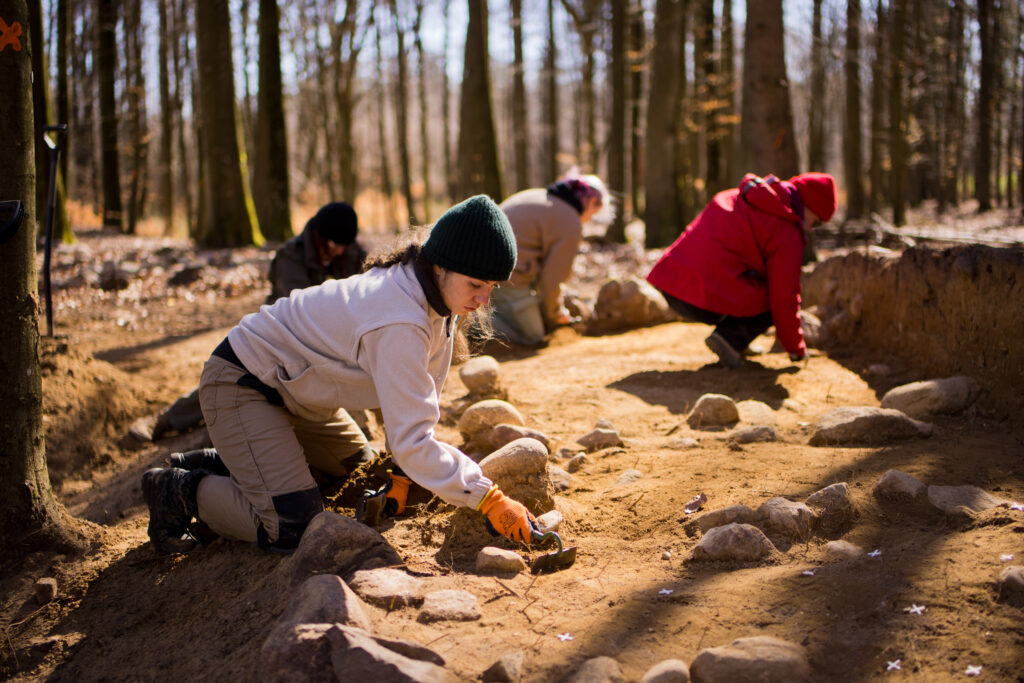
The archaeological team from the University of Warsaw is not yet finishing its work at Nowy Chorów – the researchers still have at least four more excavation seasons ahead. Their plans include investigating additional burial mounds and conducting DNA analyses that may help reconstruct kinship ties among the individuals buried there. It is already known that a single mound could contain as many as a dozen burials, suggesting that some of these structures may have functioned as family tombs.
The analysis of human remains from these graves opens up entirely new research perspectives. Every burial, every bone, can offer new insights into daily life, death, disease, and the movements of early communities. Although researchers have already uncovered many of the site’s secrets, the barrow cemetery in the Pomeranian forest likely still holds many more.
The text was originally published in Polish on the Serwis Naukowy UW website on July 28, 2025.