

The history of Poland’s first public collection of prints and drawings dates back to the early 19th century. In 1818, the newly established Royal University of Warsaw became the custodian of a unique royal collection. At that time, on the initiative of Minister Stanisław Kostka Potocki, the Commission for Religious Denominations and Public Enlightenment purchased King Stanisław August’s renowned Print Room from his successors. Potocki, himself a collector and eminent art historian, later donated a substantial part of his own collection to the university, further enriching its holdings. Together, these acquisitions laid the foundation of the university’s collection of prints and drawings, which took over the name “Print Room” from the royal collection.
The collection has had a turbulent and often difficult history. World War II proved particularly devastating: the Print Room, which had flourished in the interwar period, lost as much as 60% of its holdings. Despite these severe losses, a significant portion of King Stanisław August’s collection – the pride of the holdings – survived and retained much of its original character. Today, thanks to postwar donations and acquisitions, the university’s collection comprises over 50,000 prints and drawings dating from the 16th to the 20th century.
The holdings are divided into four main sections: engravings by Old Masters from the 16th–18th centuries; Old Masters drawings from the 16th–18th centuries; architectural and decorative drawings; prints and drawings from the 19th–20th centuries. The collection is further complemented by illustrated printed volumes and collectors’ albums containing engravings or drawings.
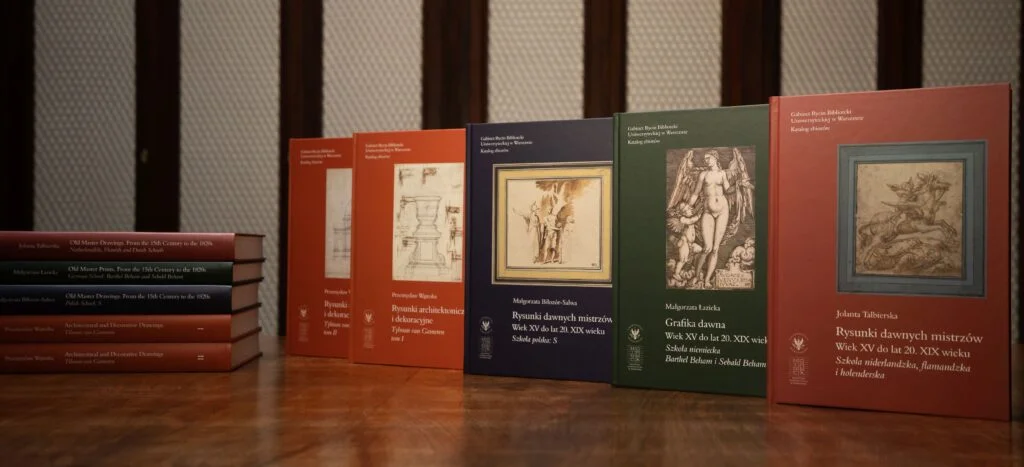
The treasures held at the University of Warsaw Library can be explored through collection catalogues describing selected groups from the Print Room’s four main collections. These publications were prepared as part of a project funded by the National Programme for the Development of Humanities, led by Prof. Jolanta Talbierska.
A showcase of the collections
A team of researchers from the Print Room prepared a 10-volume set of catalogues raisonnés, led by Prof. Jolanta Talbierska, with contributions from Małgorzata Biłozór-Salwa PhD, Małgorzata Łazicka, and Przemysław Wątroba. Each volume offers meticulously prepared descriptions of works, supported by a full scholarly apparatus: footnotes, a comprehensive bibliography, indexes, appendices, and high-quality illustrations.
The publications cover key segments of the collection: foreign Old Masters drawings (from the Netherlandish, Flemish, and Dutch schools), Polish Old Masters drawings (including works by the painter Franciszek Smuglewicz), architectural drawings (notably the Archive of Tylman van Gameren, a distinguished Dutch architect active in Poland in the second half of the 17th century), as well as Old Masters prints (represented by artists of the German school, such as Barthel and Sebald Beham). Preparing the catalogues required extensive research stays at institutions in Poland (Kraków, Warsaw, Wrocław) and abroad (the Netherlands, Denmark, France, and Germany).
As Prof. Talbierska emphasizes, “Scholarly cataloguing of one’s own collection of works on paper – drawings and prints – is impossible without studying holdings in other institutions, as this is a fundamental research method. Online access to collections is only a starting point; in-person research stays remain essential.”
The catalogues include both works already known to scholars and those previously unpublished. In this sense, they act as a true showcase of the Print Room’s holdings and a valuable research resource for Polish and international scholars alike. As Prof. Talbierska explains the aim of the project:
“The catalogues have two main objectives: first, to document the collection in line with current research and methodological standards; and second, to disseminate knowledge about it as widely as possible, encouraging further research within the international academic community.”
Great and “minor” masters
As part of the project, Prof. Talbierska undertook the cataloguing of a collection of drawings representing the Netherlandish, Flemish, and Dutch schools. Today, the collection comprises 211 works – unfortunately only around 40% of its prewar holdings. What, then, can we find within it?
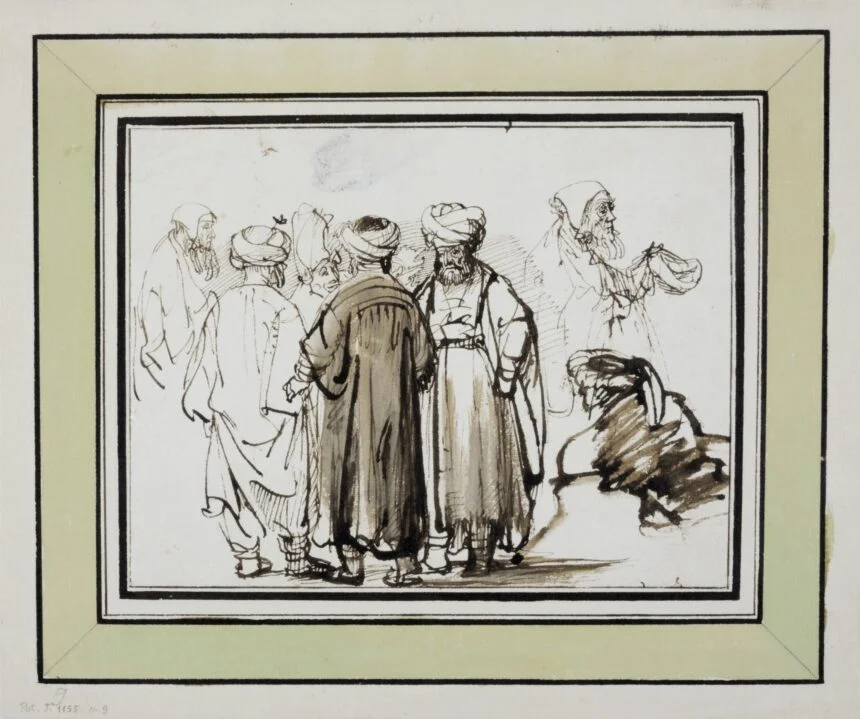
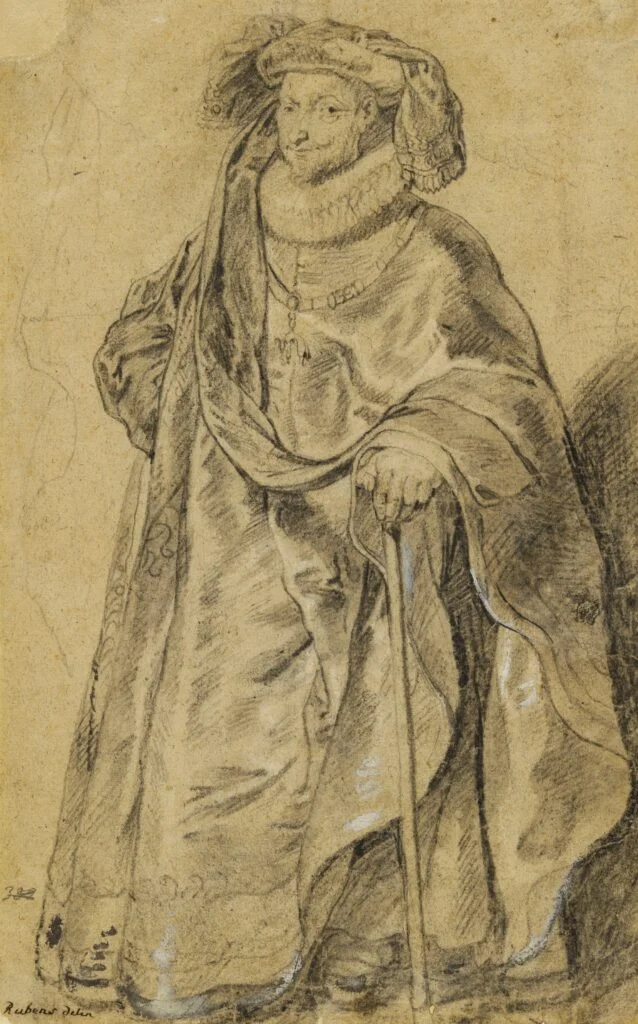
“Despite such significant losses, it remains a highly interesting collection, featuring drawings by renowned masters such as Rembrandt and Rubens, as well as rare works and pieces by artists not represented in Polish collections. Eighty of the 211 drawings have not been published to date,” explains Prof. Talbierska.
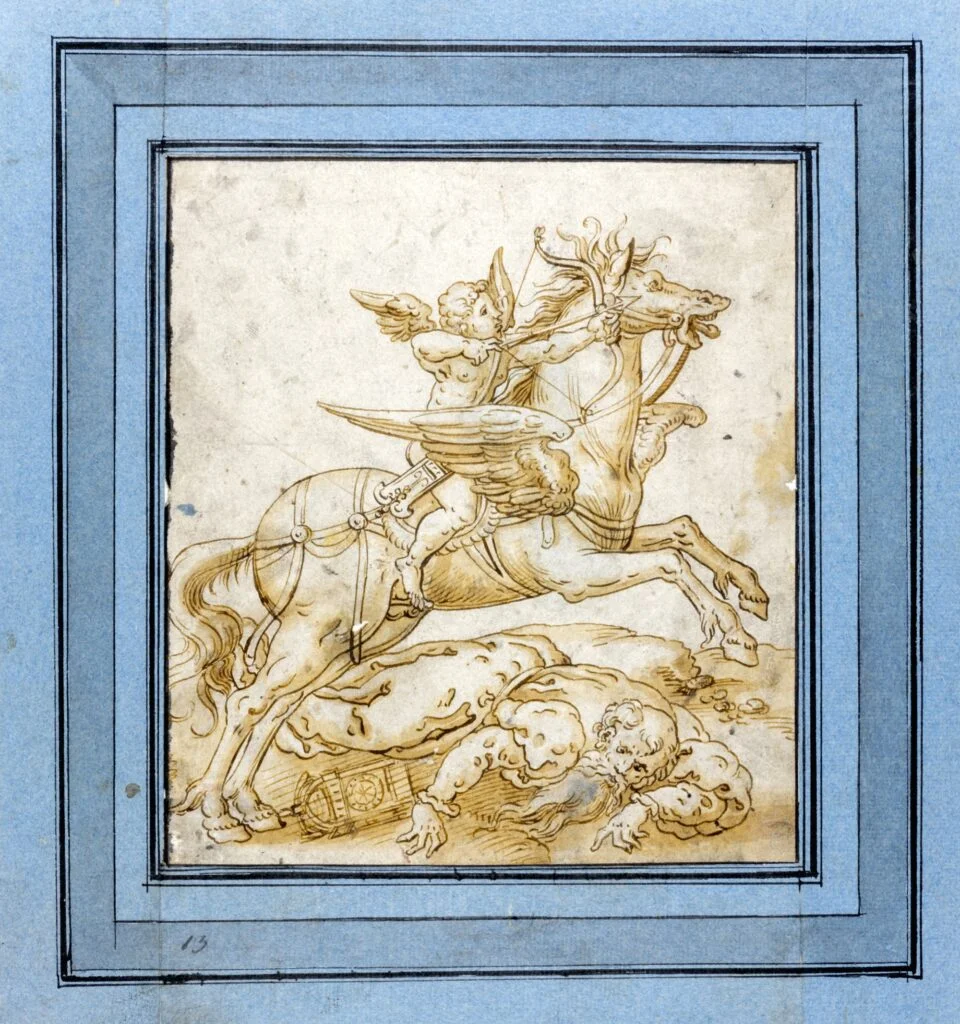
The project has also led to new scholarly attributions. Some drawings have been reexamined, resulting in revised conclusions about their authorship. One example is a work previously attributed to Hieronymus Bosch; as Prof. Talbierska notes, that attribution was ultimately incorrect. Based on its technique, the drawing was instead linked to the Antwerp school and identified as the work of an artist active in the 1520s.
The text was originally published in Polish on the Serwis Naukowy UW website on July 18, 2025