

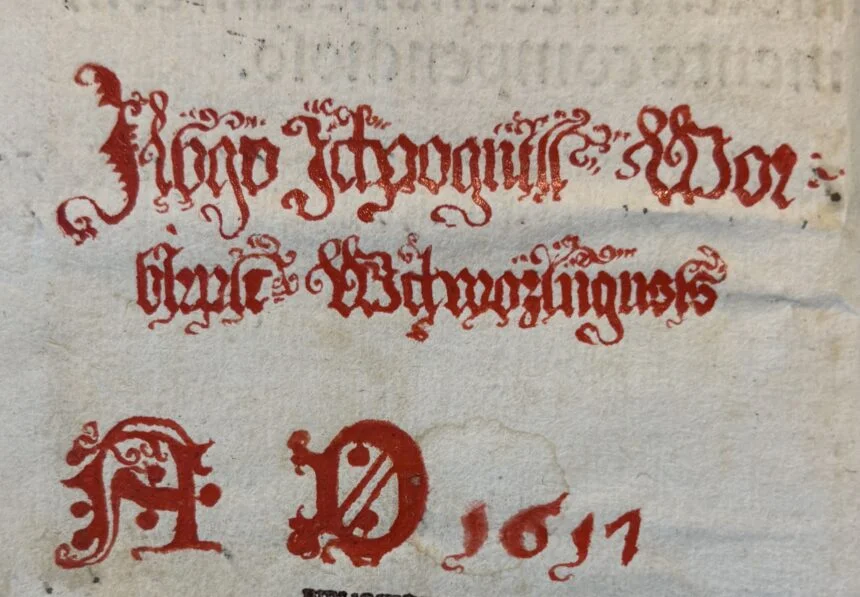
Every book, especially an old one, has a story to tell – not only about what is inside, but also about the people who read it and passed it on. For contemporary readers, these traces serve as guides to understanding how literary tastes have changed, which books were popular and why, and what role they played in the everyday lives of their owners. This is one of the topics addressed by provenance research conducted at the Early Printed Books Department of the University of Warsaw Library, where Dr. Martyna Osuch and Dr. Wojciech Kordyzon work on creating the Polish Provenance Database.
Provenance research, or a detective investigation
Researchers leaf through the pages of early printed books, analyzing every note, stamp, and signature. They often have to use magnifying glasses, ultraviolet lamps, and backlighting plates to help them uncover the content of scratched or smudged notes left by readers. Sometimes they seek the help of conservators to uncover ownership marks hidden by subsequent owners. Every detail can shed light on the history of a copy.
“We try to reconstruct the book’s journey from its first owner to its last. It is interdisciplinary work, often involving consultations with specialists from various fields. When examining a book from the 15th century, we need to know both medieval and more recent history. The movement of incunabula was often caused by historical events, environmental or social factors,” says Dr. Martyna Osuch.
White gloves as an element of suspense
What does provenance research look like in practice? Books must be handled with care. However, the white gloves that can be seen in films are more a form of myth-making or suspense than a true reflection of the work of book curators. Cotton gloves leave lint, so it is recommended to simply wash and dry your hands thoroughly. Unless there are traces of green paint on the cover. In that case, nitrile gloves should be used. Why? To achieve this color, arsenic was added to the paint. When researchers have to deal with collections in poor condition or disinfected with toxic substances in the 20th century, they also use protective masks.
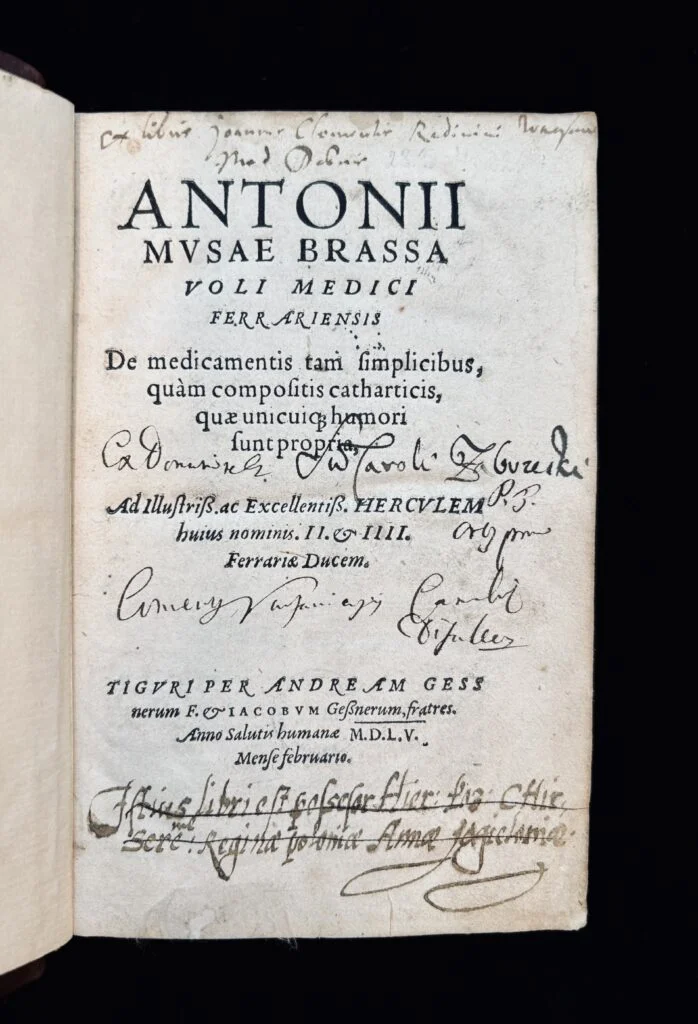
Dr. Martyna Osuch explains that the researcher first examines the book from the outside. They check the binding – what it looks like, what it’s made of, what era it comes from, because it’s often younger than the print itself. There’s a separate branch of research called bookbinding studies that helps match the cover to the era and geographical location. Next, they open the book and on the first pages and the inside endleaves, they can find various types of ownership marks, such as inscriptions, stamps, and bookplates. Researchers look for the owner who identified with them… They check archive sources to arrange in chronological order those who inscribed and left their stamps. After acquiring the book, the new owner often removed the names of the former owners. For this reason, it is also important to compare the volume with other copies from the collection.
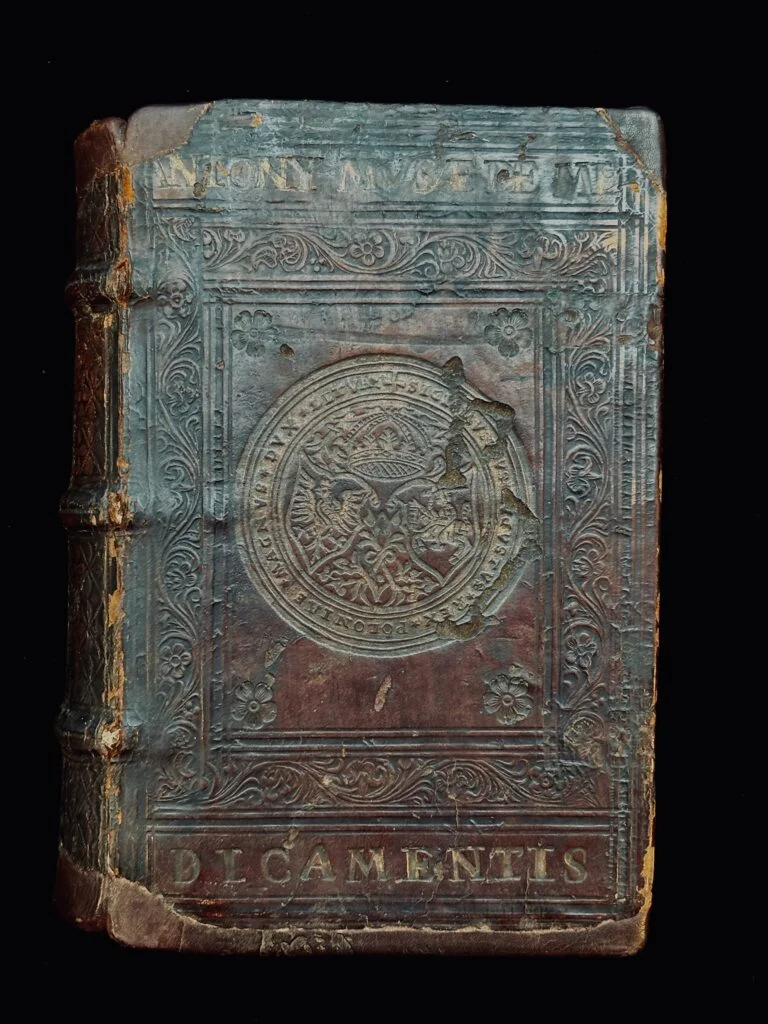
For example, Sigismund II Augustus, King of Poland, was an avid bibliophile. His collection, assembled from the mid-16th century, contained over 4,000 volumes, most of which had leather bindings with distinctive gilded supralibros bearing the coats of arms of Poland and Lithuania. One of the preserved books is a 16th-century medical volume, bound with great care.
The cover features a royal supralibros, while inside the book there are traces of successive owners – from the surgeon of Queen Anna Jagiellonka to the mayor of 17th-century Warsaw, Karol Zabrzeski, and the capital’s Carmelite order. Each ownership record is a chapter in the history of the book, as well as in the history of the people who came into contact with it.
Notes are like time capsules and… smartphones
Provenance research is also based on traces left by readers in the margins: all kinds of notes, underlining, and marks indicating specific passages. Marginalia constitute a kind of dialogue between the reader and the text. Although at first glance they may seem like nothing more than chaotic scribbles, for provenance researchers they are like time capsules that allow us to reconstruct the thoughts and reactions of people from centuries ago. We can learn which parts of the book were most important to them, what intrigued them, what they understood, and what caused controversy.
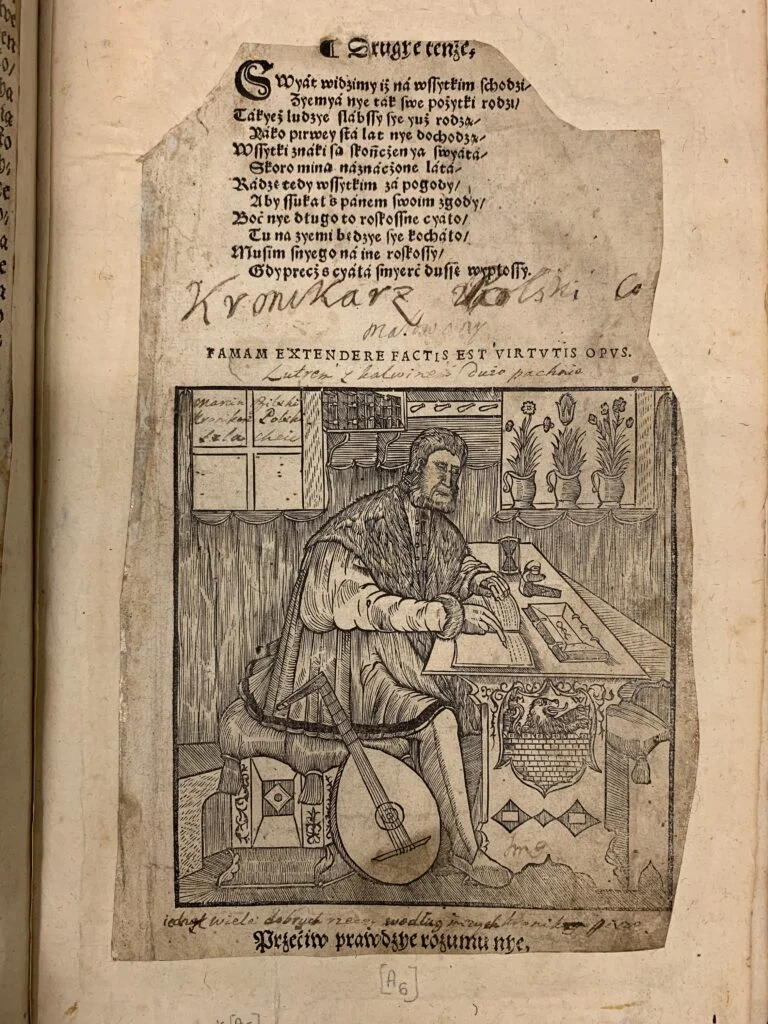
“In the early modern era, there were recommendations to make notes in books,” says Dr. Osuch. “Readers used the wide margins for this purpose. Sometimes these are simple notes about the content, but very often they also include opinions about the text or even insults directed at the author, because reading in the past was much more emotional. For example, Catholics reading Protestant texts would sometimes make quite aggressive comments in the margins.” “In Luther’s biography, they would erase his name or even make a hole in that place,“ explains Dr. Osuch, adding that notes such as ”you are wrong“ or ”my book says otherwise” are often found.
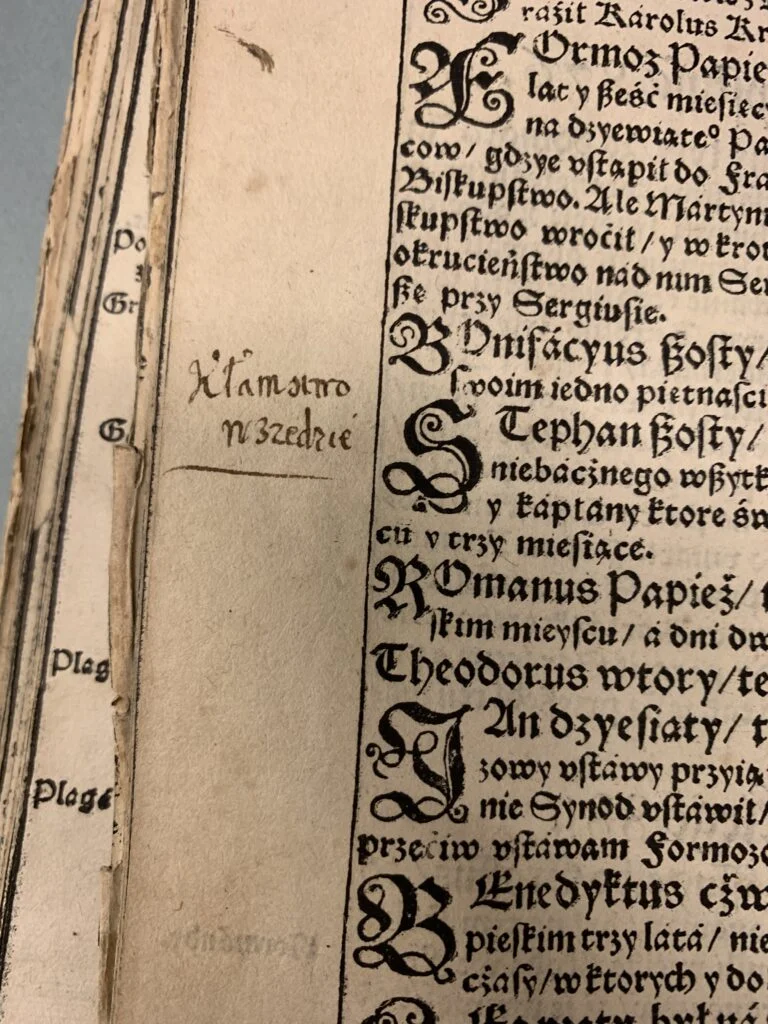
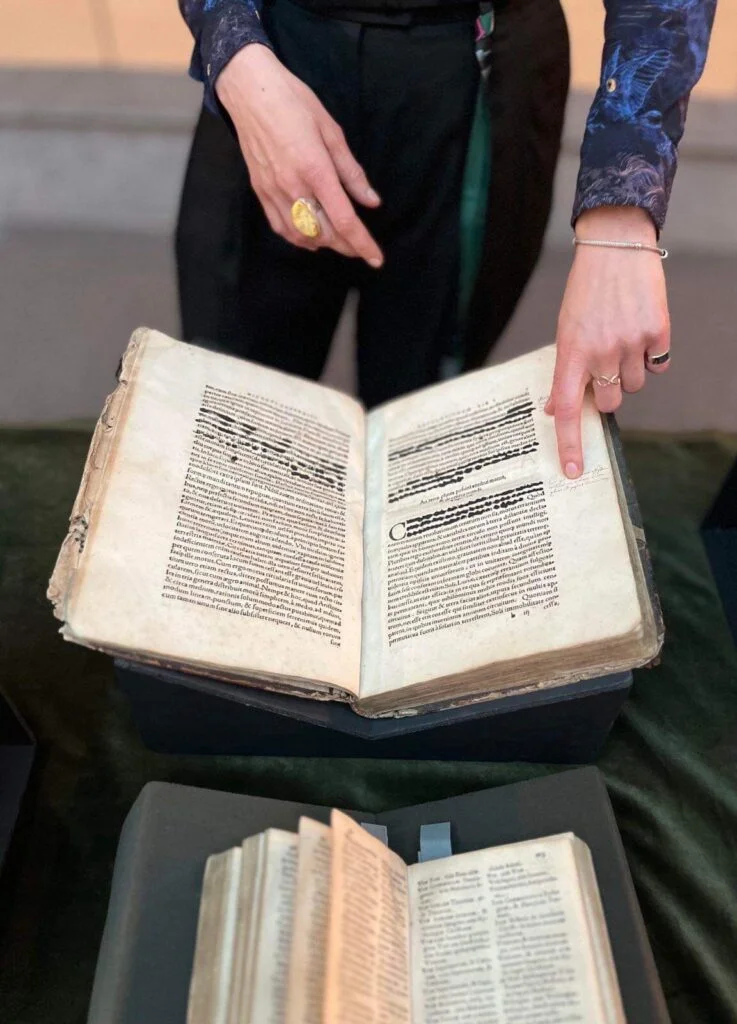
There are also traces of censorship and personal notes.
“Books were as much a part of everyday life as smartphones are today. People would write things like ‘my child was born today’ or ‘my aunt died’. People had a very close relationship with books,” says Dr. Osuch.
The researchers are trying to organize the collected material chronologically. This is how the history of a specific volume is reconstructed.
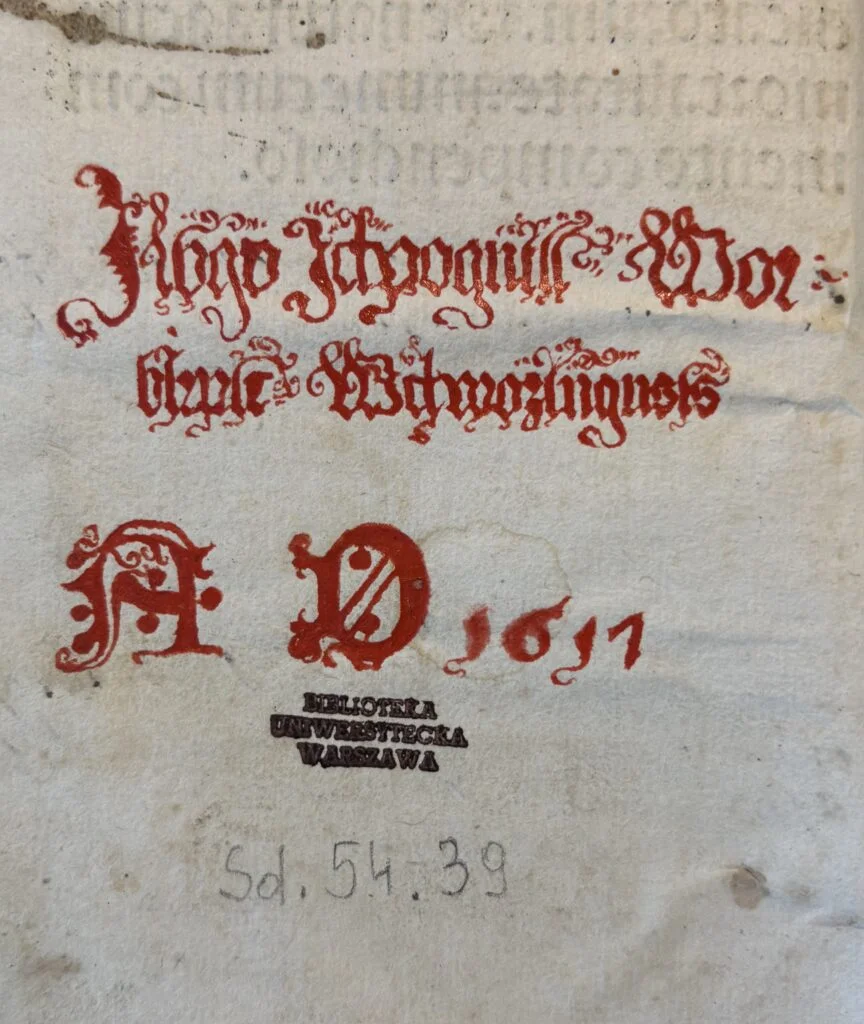
Polish book collections scattered around the world
The University of Warsaw Library holds 12,000 copies from the Załuski Library (the first Polish public library), while the entire collection numbered around 400,000 books. Historical circumstances led to their large-scale relocation, and books from Polish collections can now be found all over the world.
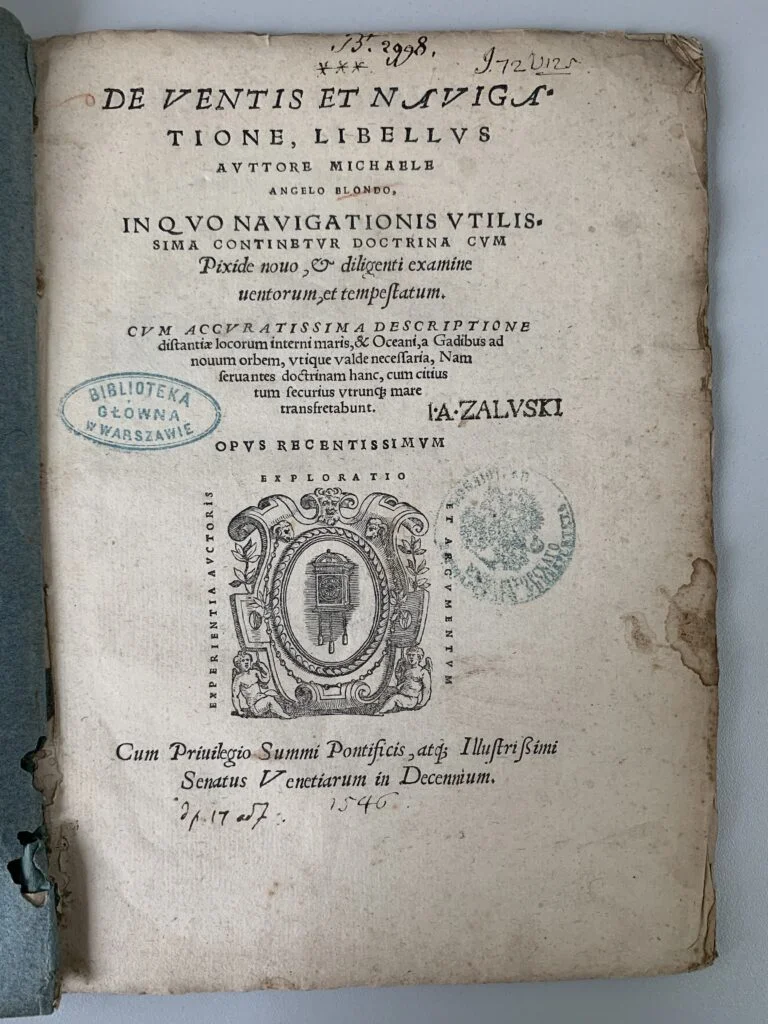
While working on the creation of the Polish Provenance Database, which will be a tool for collecting data on copies, researchers create a kind of Gutenberg galaxy – a map that allows you to find out, for example, how much a given book cost at a specific time, what path it took, and how people perceived it over the centuries. Researchers analyze all the information collected about the early printed book and try to link the traces to individual owners. They then arrange the data chronologically and geographically, thus reconstructing the movement of the volume in time and space.
The Provenance Database, developed in collaboration with the Provenance Working Group and the Consortium of European Research Libraries (CERL), also aims to virtually consolidate Polish book collections scattered over the centuries. Provenance research shows that books are not just a collection of words on paper, but a living testimony to history – both grand and everyday.
The text was originally published in Polish on the Serwis Naukowy UW website on February 20, 2025.
Update:
The official launch of the Polish Provenance Database was held at the international Hinc Omnia Conference in December 2025. The database is available at: https://data.cerl.org/ppd/_search.