

How to study extinct civilizations?
Pre-Columbian Andean cultures were characterized by a complex social system based on kinship and family ties, organized around the belief in a common, mythical ancestor. How do we know this? For example, thanks to research into what has been preserved quite well from these cultures – mummies. Mummification, which was performed on the remains of the most important members of the community, was not only a funeral practice, but also a deeply rooted religious ritual. Members of the Yauca Valley community believed that the bodies of their ancestors, called mallqui, had great power and could influence the lives of their descendants.
For archaeologists, burial customs are a treasure trove of knowledge about ancient societies. If we assume that rituals related to caring for the dead were intended to protect the community and strengthen social bonds, we can learn more about the power of these relations.
According to a hypothesis by Dr. Dagmara Socha from the Andean Research Center of the University of Warsaw, the analysis of the remains of minors can provide a great deal of information about the class diversity in ancient civilizations, such as the ways of gaining social status or the possibility of inheriting social position from parents.
Equality in death
The study was conducted at the San Francisco site (Yauca Valley) on the southern coast of Peru, which dates back to the Late Transitional Period (900-1476 CE). By analyzing the quality of the fabric in which the mummies were wrapped, deliberate modifications to the head (discussed later), body position, or mummification techniques, Dr. Socha attempted to determine whether minors were treated differently depending on their social status or age. The comparison of adult and juvenile burials aimed to examine whether children were identified as equal members of the community in beliefs about the afterlife.
What do mummies say?
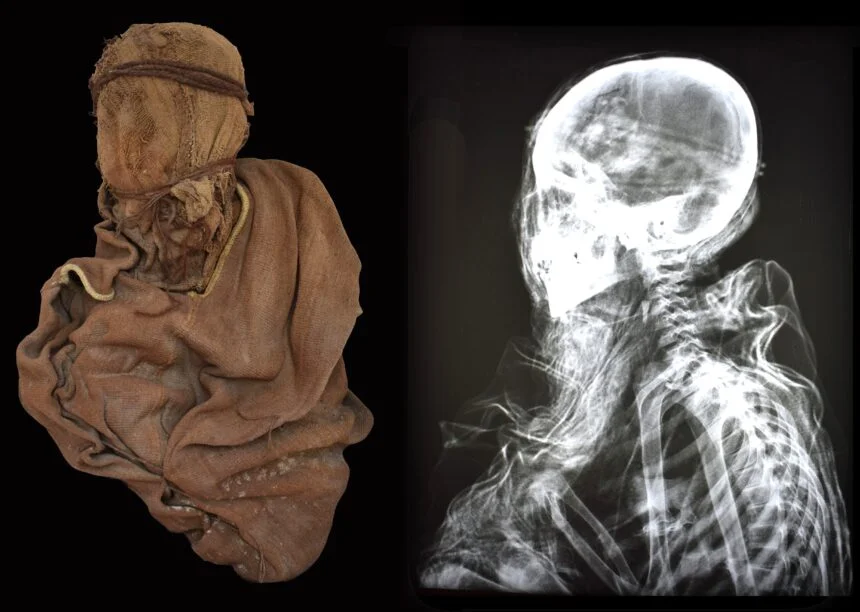
In the Andes region, bodies were buried in a sitting position, a characteristic practice in this part of South America. According to some scientists, it symbolizes the position of a fetus in the womb. In the Yauca Valley, we can find examples of both natural and artificial mummification. Natural mummification is the result of dry climatic conditions and alkaline soil, which were conducive to the preservation of bodies. Artificial mummification, on the other hand, required much more complicated procedures, such as wrapping the body in many layers of fabric, known as fardo, using chemicals, and carefully protecting it from air exposure. Intentional mummification therefore indicates the high social status of the buried person.
Not such a carefree childhood
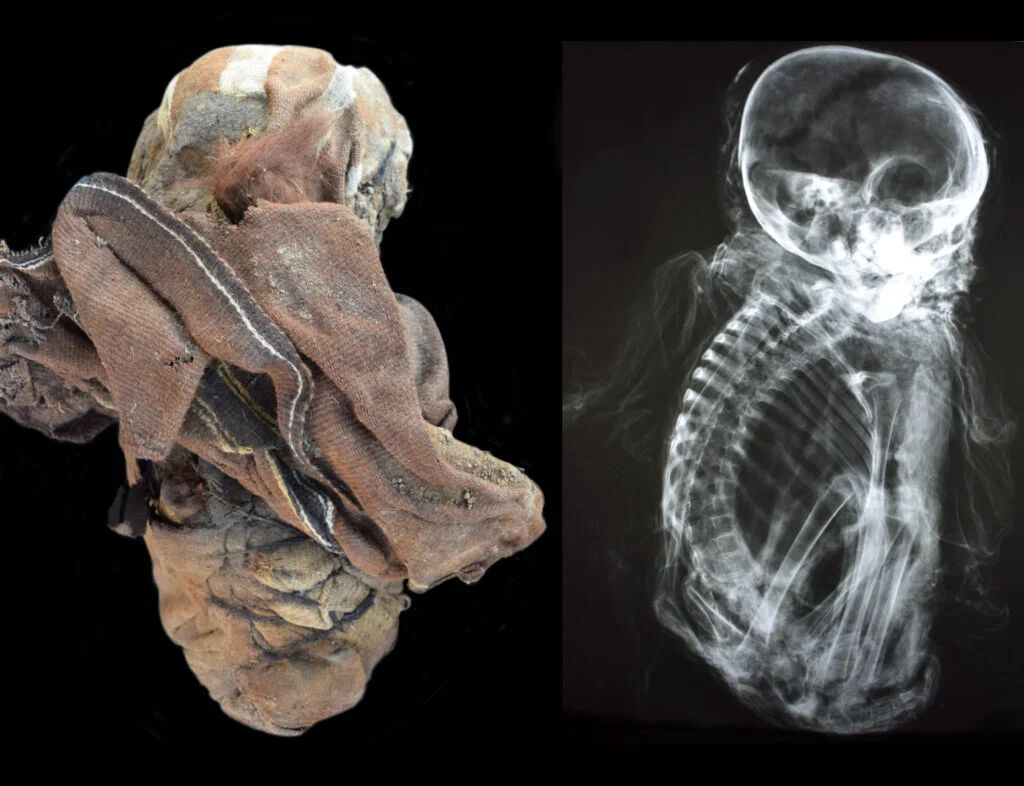
“Thanks to X-ray scans of the mummies, we were able to examine the burials in a non-invasive way. The images provided us with a lot of information. For example, based on the degree of tooth eruption, we were able to determine the age of the individuals, as well as indicators of living conditions in the population. The first five years of life were the most dangerous period, during which most children died. Once this threshold was crossed, the chances of reaching adulthood increased significantly. Five-year-olds began to actively participate in society, for example by caring for younger children, cooking, or herding animals,” explains Dr. Socha, adding that for women, the second period of increased mortality was their first childbirth.
The evidence of deliberate mummification of children found by Dr. Socha and her team suggests that social status was probably inherited and top-down assigned to even the youngest members of the community. The presence of insect cocoons inside and outside the fardos suggests that the mummies may have been exposed to external environmental factors for some time before burial. The cocoons must have been made shortly after death or during funeral ceremonies. After burial, the insects no longer had access to the bodies, and there is no contemporary insect activity. Thus, we can assume that the rites associated with bidding farewell to the body were celebrated to some extent and that the remains – even those of the youngest – were venerated.
Prestigious coca
The mummies examined differed in the quality of the fabrics used to create the fardos and in the variety of deliberate modifications to the skull. For example, the fardo belonging to the mummified six-year-old had the simplest structure, while other burials examined, belonging to younger children, were wrapped in richly decorated fabrics. We see a similar variety in the quality of fabrics in adult burials. Some child mummies were equipped with chuspas bags containing coca leaves, which were very important in religious rituals. Dr. Socha says that differences in how the dead were treated suggest that the Yauca Valley society was a highly stratified one.
Children had a say
Radiographic and anthropological studies of 22 mummified children showed that they underwent the same funeral rituals as adults. The results therefore suggest that identification with a social group began at birth. And the diversity of burials among the youngest children – regardless of gender, but taking into account their position in the hierarchy – indicates a complex structure in which social status was inherited from parents. Children, although not necessarily equal to each other, were treated as equal to adult members of the community – at least in the face of death.
The text was originally published in Polish on the Serwis Naukowy UW website on February 5, 2025.