


Cubic membranes: where to find them
Cubic biological membranes are among the most structurally complex membrane systems known. They have been observed in a range of hard-to-access tissues, including the retina of the treeshrew, a small mammal from Southeast Asia. Because such samples are so difficult to obtain, scientists are looking for more accessible model systems that would allow them to collect enough material for detailed study and address a number of open questions.
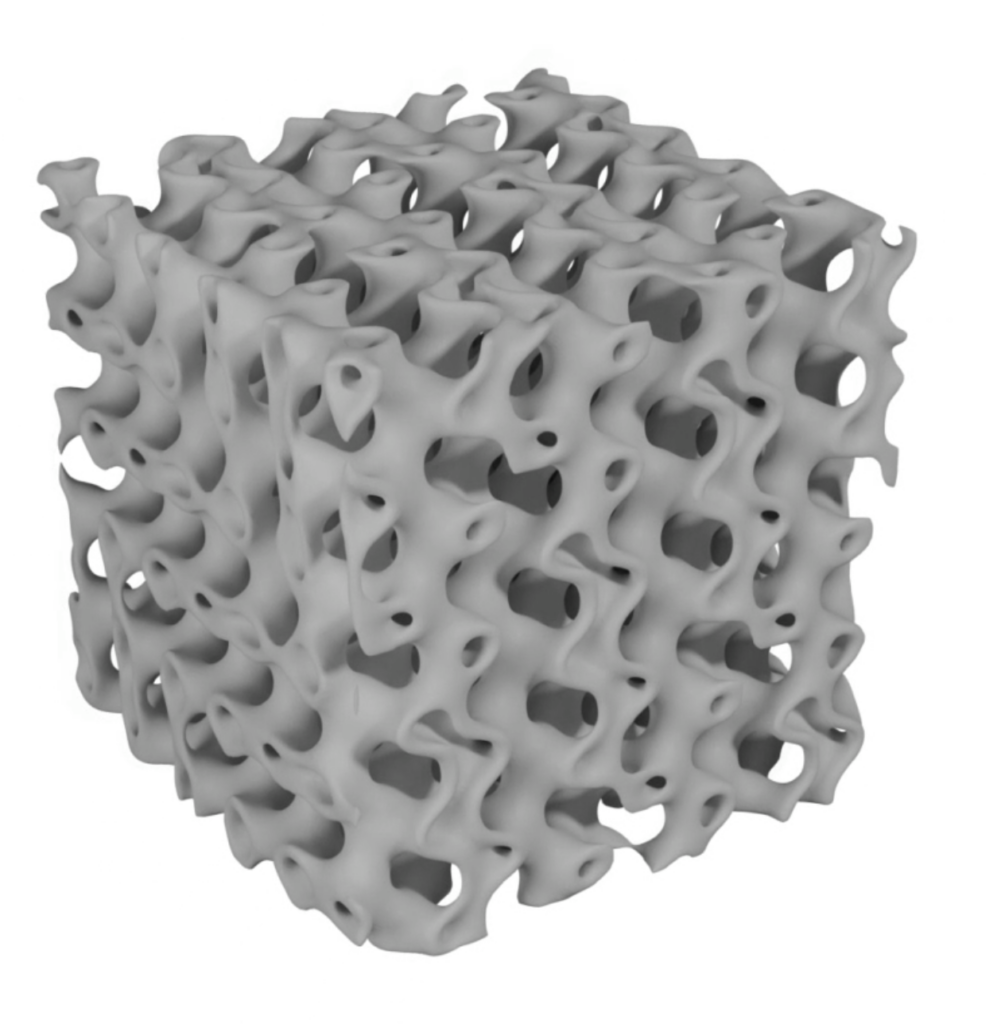
A research team from the Faculty of Biology at the University of Warsaw, led by Prof. Łucja Kowalewska, has been studying prolamellar bodies – highly ordered, three-dimensional networks of curved membranes that form early in plant development, before the plant is exposed to light.
“Prolamellar bodies are readily available, and we can obtain large amounts of material because they develop in dark-grown seedlings of all angiosperm plants,” Prof. Kowalewska explains. “That makes them an excellent model for studying cubic membranes – not only in terms of structure, but also biochemistry, where relatively large sample sizes are needed to determine, for example, the composition of specific components.”
How do such structures form in biological systems?
Science still leaves thousands of questions unanswered, including some at the most fundamental level. One of them concerns the structural pathways that lead to the formation of prolamellar bodies. We know that cubic membrane–like structures can emerge under specific conditions – such as stress, nutrient deprivation, changes in pH, or exposure to light – but the mechanisms behind their formation remain unclear. This is precisely what the team led by Prof. Łucja Kowalewska is investigating.
So far, the limits of nanoscale biological imaging have made it impossible to reconstruct the full sequence of steps involved in prolamellar body formation. New hope comes not only from advances in imaging and data analysis, but perhaps above all from an interdisciplinary approach. Since neither electron microscopy nor electron tomography provides a complete picture on its own, mathematics steps in – drawing on disciplines such as topology and differential geometry, as well as applied mathematics that enables the development of computational tools to reconstruct the process step by step.
Scientists from the University of Warsaw are collaborating with mathematicians from Potsdam and Perth, who use mathematical models to describe the spatial structure and its evolution over time through formulas. These calculations allow for precise estimates of the internal and external volume of prolamellar bodies, as well as their surface area – information that is crucial for potential future applications of this fundamental research.
Industry, pharmaceuticals, food production
When Zbigniew Herbert, a Polish poet and essayist, wrote that “aesthetics can be helpful in life,” he was unlikely to have the prolamellar body in mind – but the phrase fits it remarkably well. The mathematical elegance of this structure points to highly practical applications across multiple industries.
A deeper understanding of how it forms could allow scientists to recreate and harness similar architectures – for instance, in long-acting drug formulations or targeted delivery systems for chemotherapeutic agents. The idea is to encapsulate active compounds in a “capsule” that releases them at a precisely controlled time, through a membrane engineered with specific structural properties.
The food industry would also benefit from a more optimal “preservation” of aroma and taste – for example, cold chocolate, which does not taste as good as warm chocolate.
The text was originally published in Polish on the Serwis Naukowy UW website on May 8, 2025. It was updated in April 2026.
Read and see more:
https://www.youtube.com/watch?v=g_UmfORiqEg&t=3295s
https://academic.oup.com/plphys/article/188/1/81/6400263
https://www.youtube.com/watch?v=r75NRt9UhfA
https://advanced.onlinelibrary.wiley.com/doi/10.1002/adma.202206110